Clear Sky Science · en
The impact of smartphone addiction on comorbid loneliness, anxiety, and depression in Chinese adolescents: mechanisms and mediators
Why our phones and teens’ feelings are linked
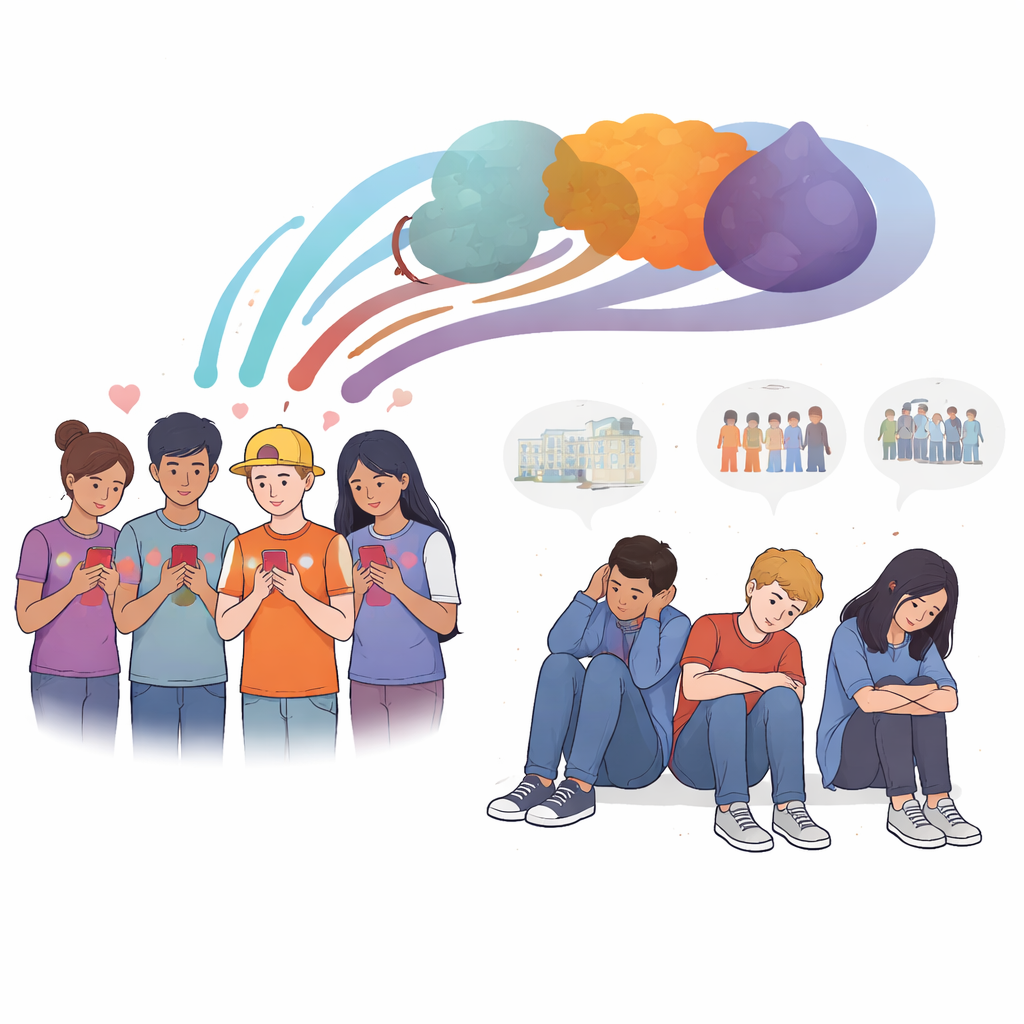
For many young people, smartphones are constant companions—from the moment they wake up to when they fall asleep. This study asks a pressing question for parents, teachers, and policy makers: when early teens seem glued to their phones, does that simply reflect normal modern life, or can it help trigger a dangerous mix of loneliness, anxiety, and depression? Focusing on Chinese middle-school freshmen, the researchers map out how heavy, hard-to-control phone use can set off thought patterns and emotional struggles that leave some youngsters caught in several serious feelings at once.
A closer look at troubled feelings
The authors focus on three common emotional problems—loneliness, anxiety, and depression—and especially on when they occur together in the same teenager. They call this cluster “comorbid” loneliness, anxiety, and depression, meaning that the three conditions overlap instead of appearing one by one. When that happens, young people are more likely to struggle in school, withdraw socially, and have a harder time responding to counseling or treatment. To find out how often this happens, the team surveyed 1520 first-year students at a secondary school in northern China, most of them around 11 to 12 years old. Using standard psychological questionnaires, they grouped students into eight categories, ranging from no problems at all to different combinations of loneliness, anxiety, and depression.
How common is the emotional pile-up?
The results show that emotional pile-ups are far from rare. Overall, 10.6% of these students had at least two of the three problems at the same time—whether all three together or any pair. The single most frequent pattern was students who felt lonely, anxious, and depressed all at once. Another sizeable share had just one of the three difficulties, but the researchers stress that stacked problems are especially worrisome because they tend to bring stronger thinking distortions, more health risks, and greater chances of self-harm. In the same sample, nearly 9% met the threshold for smartphone addiction, defined not just by frequent use but by loss of control and clear harm to daily life, such as poorer grades or conflicts at home.
From screen habit to tangled thoughts
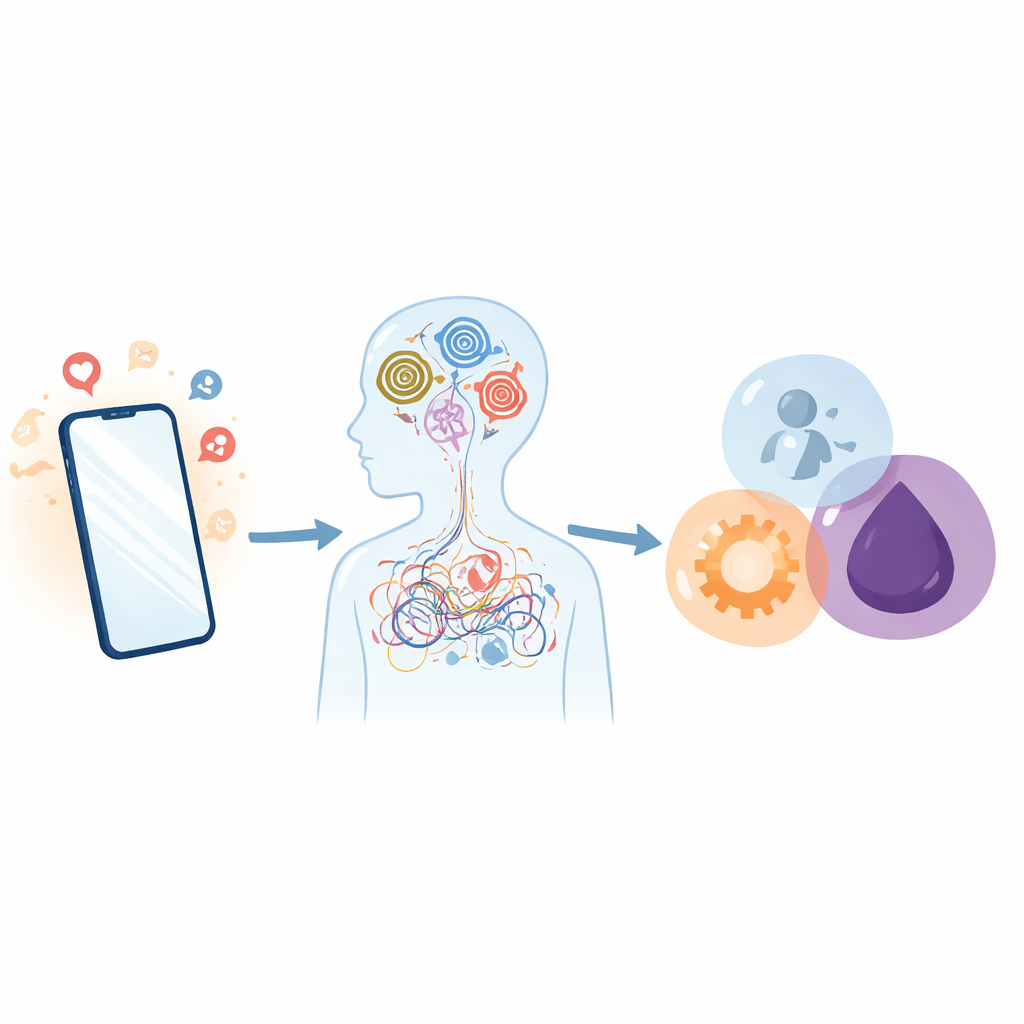
To understand how phone addiction connects to this cluster of feelings, the team used statistical models that trace pathways between variables. They found that heavy, compulsive smartphone use directly raised the odds that a student would fall into the comorbid group. But it also worked indirectly, by shaping how students think about bad events and handle their emotions. Teens with higher addiction scores were more likely to rely on what the authors call negative cognitive strategies: blaming themselves, blaming others, dwelling on problems over and over, or imagining the worst possible outcome. These patterns did not calm their distress; instead, they fed into broader difficulties managing feelings, such as trouble staying focused when upset, acting impulsively, or not knowing how to soothe themselves.
When coping breaks down
These emotion-regulation difficulties turned out to be a key bridge between phone addiction and the triple burden of loneliness, anxiety, and depression. In particular, one style of thinking—catastrophizing, or mentally blowing problems out of proportion—played a standout role. Teens who both overused smartphones and tended to catastrophize were especially at risk of developing several emotional problems at once. The study suggests that constant phone use may drain self-control, crowd out face-to-face support, and expose young people to online conflicts and negative content. When a teen already feels overwhelmed, reaching automatically for the phone may offer brief distraction but leave the underlying emotions even harder to manage.
What this means for families and schools
Put simply, the authors conclude that smartphone addiction is more than a harmless habit: in a notable minority of early adolescents, it is intertwined with a dangerous blend of loneliness, anxiety, and depression. This link is not only direct; it also operates through unhelpful ways of thinking and a weakened ability to handle strong emotions. The findings suggest that tackling problematic phone use, teaching healthier coping strategies, and helping students recognize and rein in catastrophic thinking could reduce the chances that everyday stress hardens into a serious, overlapping set of mental health problems.
Citation: Tian, Y., Ding, H. & Yue, W. The impact of smartphone addiction on comorbid loneliness, anxiety, and depression in Chinese adolescents: mechanisms and mediators. Humanit Soc Sci Commun 13, 239 (2026). https://doi.org/10.1057/s41599-026-06568-7
Keywords: smartphone addiction, adolescent mental health, loneliness and depression, emotion regulation, China teenagers