Clear Sky Science · en
Efficiency analysis of elementary education development in an eastern state of India: a two-stage DEA approach
Why School Efficiency Matters
Across the Indian state of Odisha, nearly every child can now enroll in primary school, yet big differences remain in how well districts turn resources into real educational progress. This article asks a deceptively simple question: given the teachers, classrooms, and facilities already in place, which districts educate children most effectively—and why do some areas, including many tribal regions, do better than expected while others lag behind?
Looking Beneath the Enrollment Numbers
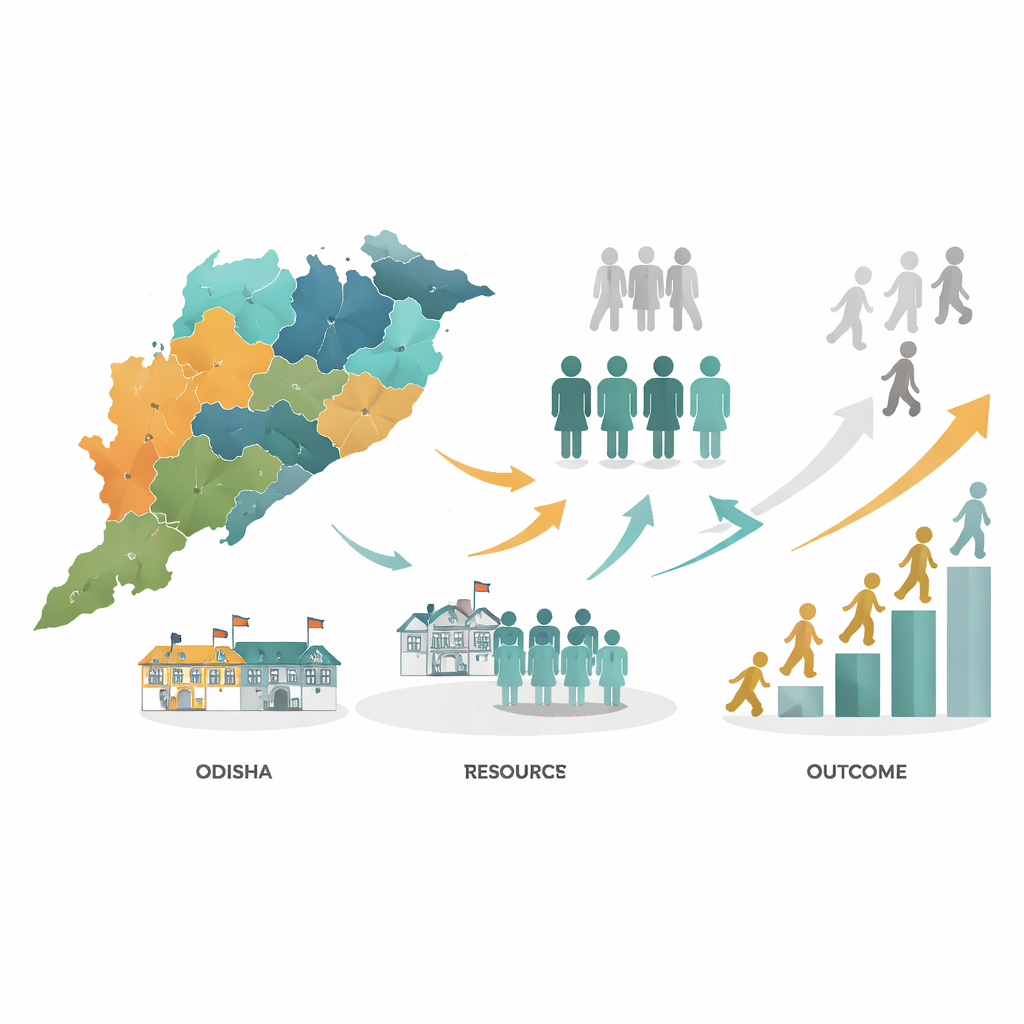
For years, education success in India has been judged mainly by how many children enroll or pass exams. The authors argue that this view hides a crucial part of the story: students who quietly disappear from school. To capture a truer picture of performance, they examine all 30 districts of Odisha over 14 school years (2008–09 to 2021–22), taking into account not only desirable outcomes, such as enrollment and girls’ participation, but also an undesirable one—dropouts. They use a measurement approach that compares districts to the best performers, asking: with similar resources, how much more could a district realistically achieve if it reduced waste and loss?
Unequal Progress Across Regions
The study highlights sharp contrasts between two well-known regional groupings: the historically disadvantaged KBK districts and the rest of the state, as well as between scheduled (largely tribal) and non-scheduled districts. Surprisingly, once enrollment levels, girls’ participation, and dropout rates are examined together, many KBK and scheduled districts appear more efficient than their non-KBK and non-scheduled counterparts. On average, KBK districts score about 0.97 on the efficiency scale, compared with about 0.95 for non-KBK districts. Scheduled districts also outperform non-scheduled ones. This happens partly because aggressive outreach, special residential schools, and local campaigns in tribal areas have brought many previously excluded children—including overage students—into classrooms, despite difficult terrain and poverty.
Districts That Lead and Districts That Lag
Looking district by district, the researchers find that most places operate at reasonably high efficiency, but a few stand out at the extremes. Deogarh and Nabarangpur achieve perfect scores throughout the study period, suggesting that they almost fully convert their available teachers, classrooms, and facilities into enrollment and retention. At the other end, districts such as Bhadrak and Keonjhar show persistently lower scores, indicating that similar resources there yield fewer educational gains. A map of efficiency scores reveals clusters of high-performing districts and pockets that require urgent support, underscoring that “one-size-fits-all” policies will miss important local realities.
What Makes Schools Work Better
To explain these differences, the authors run a second-stage analysis linking efficiency to district characteristics. Several patterns emerge clearly. Districts with higher shares of teachers from Scheduled Castes and Scheduled Tribes, more female teachers, and more qualified teachers tend to be more efficient. Infrastructural features also matter: schools connected by reliable roads, those with computers, and those that provide ongoing in-service training and dedicated space for the head teacher use their resources more effectively. Interestingly, some amenities usually assumed to help—such as playgrounds, libraries, or internet access—show a negative statistical association with efficiency in this model. The authors suggest this does not mean these facilities are harmful, but that in weaker systems they are often added without the support and training needed to translate them into better learning and lower dropout.

Turning Findings into Action
In everyday terms, the article concludes that Odisha’s big challenge is no longer simply getting children into school, but ensuring that every classroom makes the most of the resources it already has—especially in places where children are most likely to drop out. The evidence points toward policies that go beyond building more schools or adding equipment. Strengthening teacher training, recruiting and supporting educators from marginalized communities, improving access roads, and closely tracking and responding to dropout can all raise efficiency, particularly in rural and tribal districts. By focusing on how well each district transforms inputs into lasting participation and progress, Odisha—and other regions facing similar divides—can move closer to an education system that is both inclusive and truly effective.
Citation: Mahala, R., Kumar, P., Bhardwaj, M. et al. Efficiency analysis of elementary education development in an eastern state of India: a two-stage DEA approach. Humanit Soc Sci Commun 13, 280 (2026). https://doi.org/10.1057/s41599-026-06558-9
Keywords: elementary education, school efficiency, dropout, tribal districts, Odisha India