Clear Sky Science · en
ChatGPT: the artificial intelligence for fostering grit in second language writing classes
Why Sticking With a New Language Is So Hard
Anyone who has tried to learn a new language knows that the real challenge is not just grammar or vocabulary—it is staying motivated when progress feels slow. This article looks at whether ChatGPT, an artificial intelligence chatbot, can help university students keep going with their foreign-language writing, even when it is difficult. The study focuses on a quality called "grit": the tendency to work steadily toward long-term goals without giving up. By blending classroom experiments with in-depth interviews, the researcher asks a timely question: can a digital writing partner make students more persistent writers, not just better ones?
What the Study Tried to Find Out
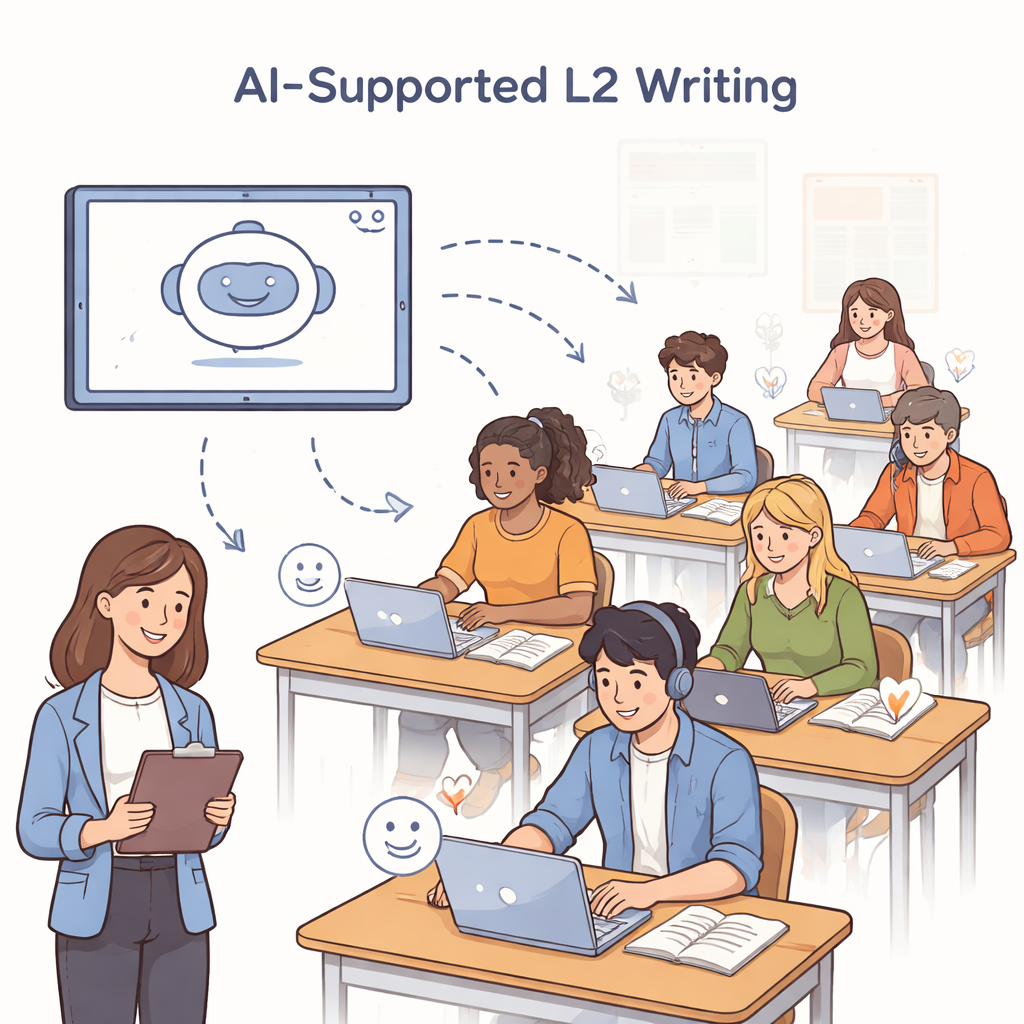
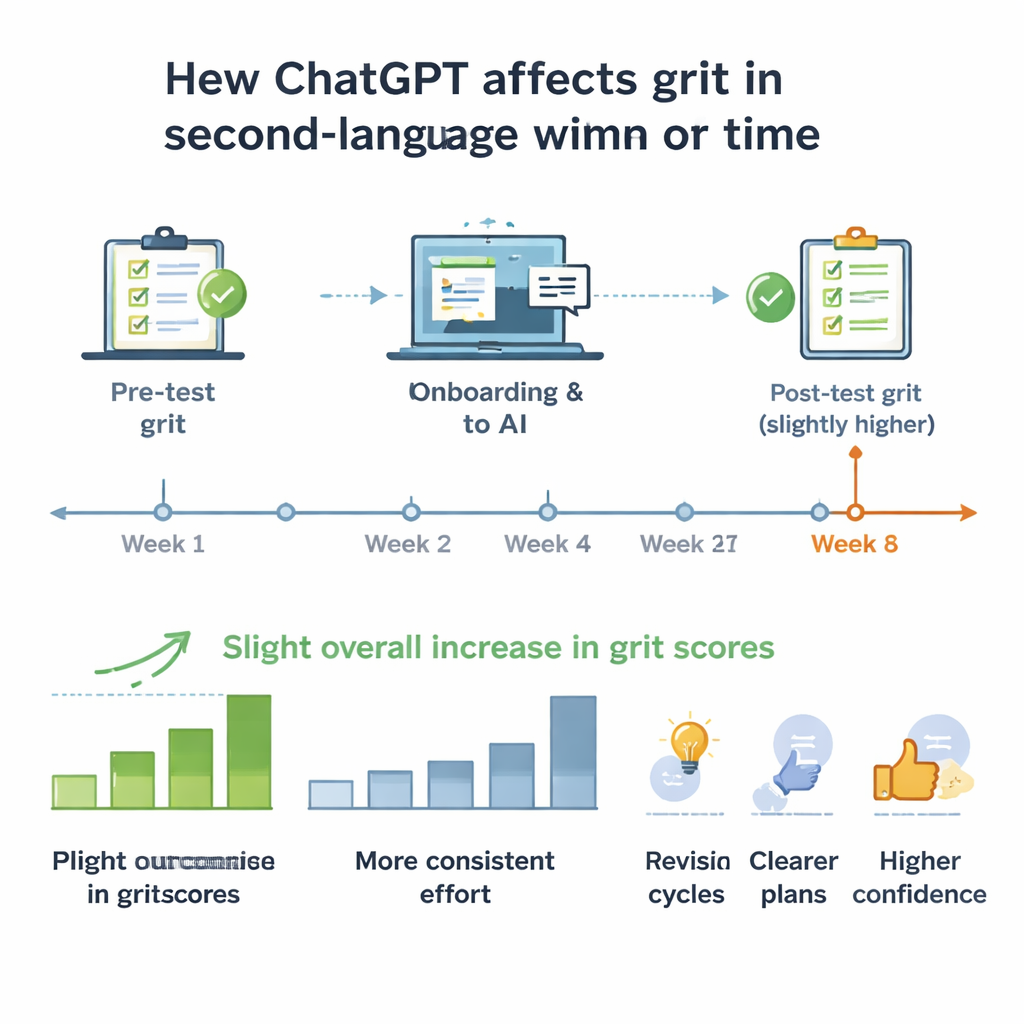
The research followed 20 university students in Turkey who were learning a foreign language at the beginner–elementary level and taking a writing course. Over eight weeks, six of which involved intensive practice, students used ChatGPT twice a week in 90-minute sessions to draft, revise, and improve short essays on everyday topics like how to study, why people need vacations, or what makes them laugh. Before and after the program, students filled out a standard grit questionnaire tailored to their language-writing tasks. The main goal was to see whether regular, guided use of ChatGPT in the classroom would change their overall level of grit, and how students themselves described its impact on their effort, confidence, and interest in writing.
How ChatGPT Joined the Classroom
To keep the focus on genuine learning, the teacher followed a clear rule: students had to write their first drafts on their own, and only then were they allowed to ask ChatGPT for help with revision. The chatbot was used for brainstorming ideas, organizing paragraphs, checking grammar and vocabulary, and suggesting clearer sentences. The teacher modeled how to write good prompts, watched for over-reliance, and sometimes required "no-AI" work to see what students could do independently. Throughout the six-week core of the course, students cycled repeatedly through drafting, getting feedback from ChatGPT, and revising—exactly the kind of steady, effortful practice that grit is supposed to support.
What the Numbers Did—and Did Not—Show
On paper, the grit scores told a modest story. Average grit rose slightly after the program, and students’ scores became more similar to one another, especially at the lower end. More students moved into the "higher grit" band, and none were left in the weakest category. But when the researcher used standard statistical tests to compare the before and after scores, the change was too small to count as clearly meaningful for such a small group. In simple terms, the study could not prove that the short ChatGPT program raised overall grit in a reliable way. The author argues that six weeks and 20 students are probably not enough to shift a broad personality-like trait, especially when starting levels are already moderate.
What Students Felt and Noticed
The interviews painted a richer, more encouraging picture. Most students said ChatGPT helped them plan their writing, catch mistakes, and try more than one version of a sentence or paragraph. Many reported feeling less anxious about handing in work and more willing to revise several times, because feedback was immediate and non-judgmental. They described clearer structures, richer vocabulary, and a sense of progress that made them want to keep practicing. Some did warn that the tool could become a crutch or suggest language that felt too advanced, which sometimes left them confused. Still, 18 out of 20 students expressed mainly positive views, and several linked ChatGPT directly to greater persistence and confidence in their writing.
What This Means for Learners and Teachers
For everyday learners, the key message is that a chatbot will not magically transform your personality, but it can make the hard work of writing in a new language feel more manageable and less lonely. In this study, ChatGPT seemed to support grit at the level of day-to-day behavior: students stayed on task longer, revised more often, and worried less about making mistakes. However, their overall grit scores did not jump in a clear-cut way during such a short period. For teachers and schools, the findings suggest using AI as a careful partner in the writing process—encouraging human-made drafts first, then AI-assisted revision—while planning longer, larger studies to see whether these small process gains can grow into lasting perseverance over time.
Citation: Bekdaş, M. ChatGPT: the artificial intelligence for fostering grit in second language writing classes. Humanit Soc Sci Commun 13, 203 (2026). https://doi.org/10.1057/s41599-026-06557-w
Keywords: ChatGPT in language learning, second language writing, student grit, AI in education, motivation and perseverance