Clear Sky Science · en
Bridging the digital divide: a comparative study of digital literacy and access in rural communities in China and Nigeria
Why Life Offline Still Matters in a Wired World
As the internet reshapes how people learn, work and stay in touch, whole communities are being left behind. This study looks closely at older adults in rural China and Nigeria to understand why many still struggle to get online, and what that means for their health, income and daily lives. By listening directly to villagers in both countries, the authors show that the “digital divide” is not just about owning a phone—it is about power, money, language, age and culture all at once.
Two Villages, One Global Problem
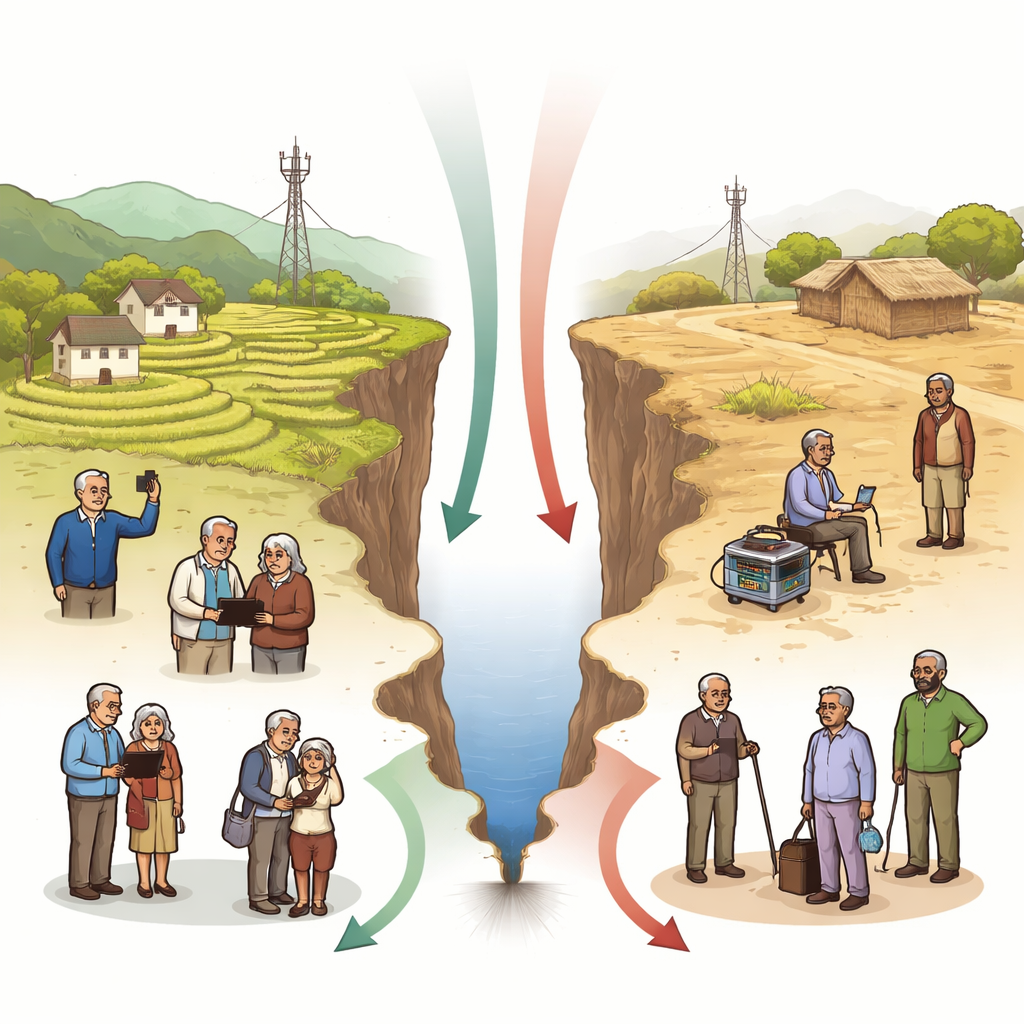
The researchers compared six rural communities: three in China and three in Nigeria, speaking with men and women aged 50 and above in group discussions. Everywhere, people recognized that phones and the internet could make life easier—helping with banking, farming advice or keeping in touch with family. Yet many still felt shut out. The team found that Nigeria faces deeper basic access problems: weak or missing mobile networks, little or no broadband, and long stretches without electricity. In some villages, people pay a neighbor with a generator just to charge a simple phone. In rural China, internet coverage is far better and more people own smartphones, but older residents still struggle with small screens, complex steps and fear of online fraud.
When Cost, Wires and Power Stand in the Way
Money and infrastructure emerged as powerful gatekeepers. In Nigerian villages, mobile data is expensive compared with people’s incomes, and many households cannot afford modern smartphones at all. Even when they can, unreliable electricity makes it hard to keep devices charged, and poor signals mean data goes unused before it expires. This leaves many older Nigerians stuck with basic “feature phones” used only for calls and light. Chinese villagers also complained about device prices and patchy signals in bad weather, but their basic connections and power supply were mostly in place. In other words, Nigeria is still fighting for the first step—getting stable access—while China is wrestling with how well people can use what they already have.
How Age, Language and Gender Shape Digital Confidence
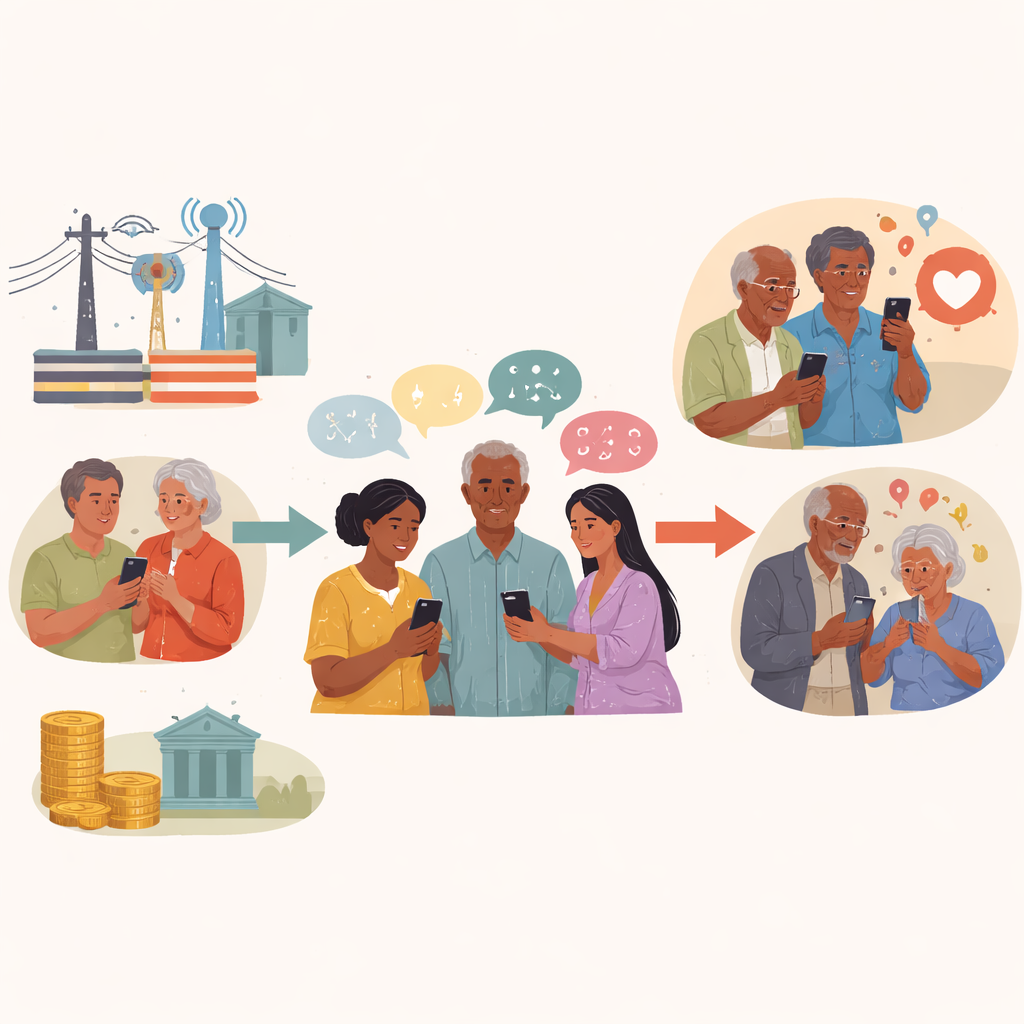
Beyond cables and towers, human factors mattered just as much. Many older participants in both countries had little or no formal schooling and felt too old to “go back to school” to learn digital skills. Language was a major barrier: Chinese villagers who spoke Tibetan, and Nigerian villagers who spoke Fulfulde or other local tongues, often faced phones and apps set only in national or global languages. That made menus feel confusing and risky. Women, especially in Nigerian villages, were less likely to own phones and had less time to learn, because farm work, household chores and childcare filled their days. Some participants feared making mistakes on banking apps or being cheated online, choosing to stand in line at a bank rather than trust a screen.
Different Paths, Uneven Progress
The study argues that China and Nigeria now sit at different “levels” of the digital divide. In Nigeria, the primary challenge is first-level access: electricity, network coverage, affordable devices and data. In China, the main gap is second-level: who has the skills, confidence and meaningful reasons to use digital tools. China has rolled out more training programs and subsidies, including efforts linked to poverty reduction and modern farming. But even there, many workshops are one-off events with little follow-up, and older rural women in particular remain on the margins. In Nigeria, government plans for broadband and digital literacy exist mostly on paper or in cities, leaving older rural dwellers largely untouched by official initiatives.
Keeping Human Connection at the Center
For many participants, screens could not replace face-to-face conversation. Both Chinese and Nigerian villagers worried that “doing everything by phone” might weaken trust and community life. The authors conclude that closing the digital gap is not just a matter of dropping more cables or phones into rural areas. True inclusion will require reliable power and cheaper access, but also teaching in local languages, patient support for older users, and respect for existing ways of living and relating. Done well, digital tools can complement—rather than erase—traditional practices and help older rural residents share in the benefits of the online world.
Citation: Guo, D., Ogbodo, J.N. Bridging the digital divide: a comparative study of digital literacy and access in rural communities in China and Nigeria. Humanit Soc Sci Commun 13, 243 (2026). https://doi.org/10.1057/s41599-026-06553-0
Keywords: digital divide, rural communities, digital literacy, China and Nigeria, older adults