Clear Sky Science · en
China’s diplomatic image in news reporting: a comparative critical discourse analysis of the belt and road initiative’s 10th anniversary
Why This Story Matters
How we see the world is often filtered through news headlines. This article explores how different countries’ media describe China’s Belt and Road Initiative (BRI) on its 10th anniversary, and how those descriptions influence China’s diplomatic image. By comparing coverage from countries involved in the BRI with that from countries standing aside, the study shows how word choices, story angles, and quoted voices can subtly shape public opinion about a major global project. 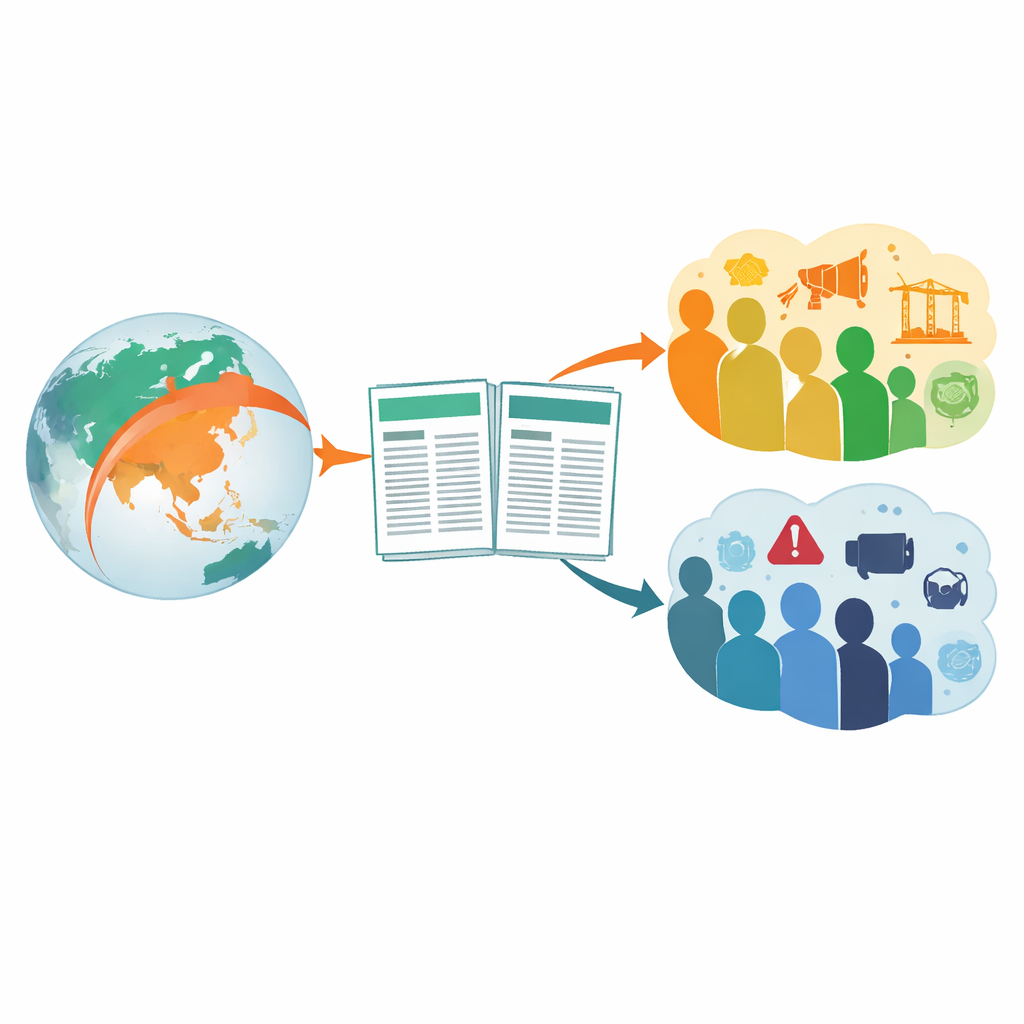
One Project, Many Storylines
The Belt and Road Initiative is China’s flagship effort to build trade routes, infrastructure, and economic links across Asia, Europe, Africa, and beyond. To mark its 10th anniversary, the authors examined 60 English-language news reports from four outlets over four months: Daily News Hungary and The News International in Pakistan (both from BRI partner countries), and the BBC and Voice of America in the U.K. and U.S. (non-partner countries). Together these reports formed a corpus of just over 50,000 words. Using a well-known critical discourse approach, the study asked three questions: how the anniversary was portrayed, what language strategies were used, and what underlying beliefs about China and global power could be detected.
Positive Partners, Skeptical Observers
When the researchers looked at the most frequent words in each group of articles, two distinct patterns emerged. Stories from Hungary and Pakistan commonly used terms such as “cooperation,” “development,” “green,” and “ties,” emphasizing mutual benefit, long-term partnerships, and environmental themes. These outlets framed China as a reliable partner and the BRI as a chance to boost local economies, upgrade infrastructure, and connect regions from East to West. In contrast, the BBC and Voice of America more often used words like “debt,” “loans,” “power,” and references to places such as Africa or the Arctic, suggesting a strategic, global chessboard view. Their reports frequently raised worries about financial dependence, hidden costs, and the political influence that could accompany large-scale Chinese funding.
How Language Steers Perception
Beyond vocabulary counts, the study examined how sentences were built and whose voices were heard. Across all outlets, action-focused sentences—describing who is doing what—dominated, but they served different stories. Partner-country reports highlighted concrete projects and training programs, presenting China as actively helping to create jobs, research labs, and transport links. Non-partner outlets often described China as acting on a wider stage, hinting at competition, influence, or a struggle for advantage. Emotional terms in U.S. and U.K. reports conveyed “worry” and “fear,” while Pakistani and Hungarian pieces expressed “hope” and long-standing friendship. The authors also tracked how sources were cited. All outlets frequently quoted named officials and experts, yet partner media relied more on these specific sources to support positive interpretations. Non-partner coverage used a mix of named experts and vague references to “critics” or “analysts,” which can lend weight to negative claims without clearly showing who is speaking. 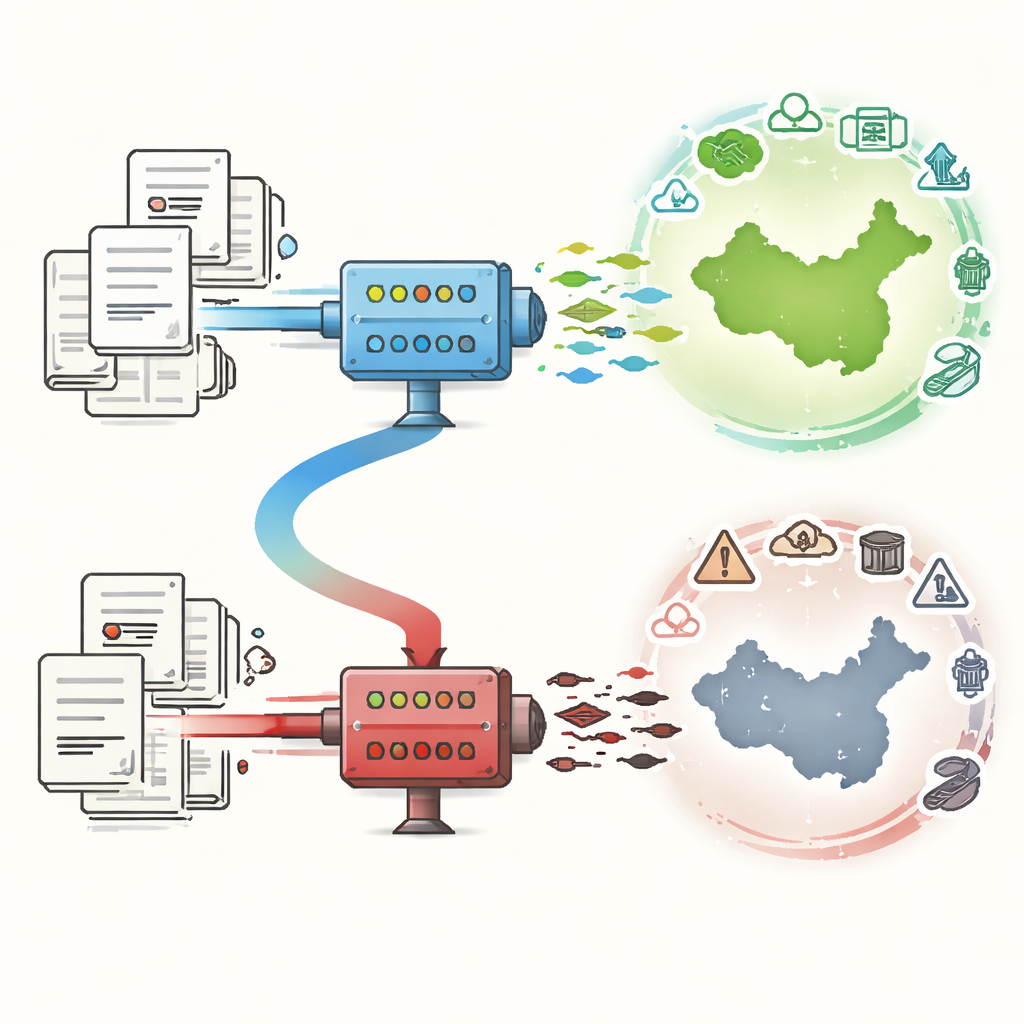
Quoting Voices and Quiet Biases
The way quotations were handled further revealed contrasting approaches. U.S. and U.K. stories leaned heavily on direct quotations, especially when highlighting complaints about failed projects, heavy debts, or threats to national sovereignty. First-person remarks from local residents or analysts gave these concerns a sense of authenticity. By contrast, Hungarian and Pakistani reports more often summarized what leaders and commentators said in indirect speech, which softens emotional impact but maintains a calm, official tone. When the authors stepped back to consider politics, economics, and media traditions, they argued that these patterns reflect broader national interests: partners whose economies are tied to Chinese investment tend to spotlight opportunity and cooperation, while countries that see China as a strategic rival are more likely to stress risk and competition.
What It All Adds Up To
For a general reader, the study’s main message is straightforward: the same international project can look very different depending on where you get your news. Media in BRI partner countries often present China as a pragmatic, development-minded ally, while major Western outlets commonly portray the initiative as a tool of power and influence, albeit with some balanced voices. The research does not claim that any one side is entirely right or wrong. Instead, it shows that news language is never neutral and that subtle choices—what words are repeated, whose opinions are quoted, and which facts are emphasized or omitted—quietly shape China’s diplomatic image around the world. Understanding these patterns can help readers approach coverage of big global projects with a more critical and informed eye.
Citation: Zhang, R., Chen, Y. China’s diplomatic image in news reporting: a comparative critical discourse analysis of the belt and road initiative’s 10th anniversary. Humanit Soc Sci Commun 13, 258 (2026). https://doi.org/10.1057/s41599-026-06549-w
Keywords: Belt and Road Initiative, media framing, China diplomacy, international news, critical discourse analysis