Clear Sky Science · en
Women-led sustainable innovation in small island agriculture: challenges and barriers
Why this matters beyond the shoreline
Across the world’s small islands, farming is a lifeline for food, jobs, and culture—but it is also on the front lines of climate change and resource scarcity. This paper explores how women, who already do much of the day‑to‑day work from farm to table, can also lead the way in creating smarter, fairer, and greener forms of agriculture. By uncovering what makes island farming unique, how innovation can be made sustainable, and which barriers hold women back, the study points to practical ways island communities can become more resilient and self‑reliant.
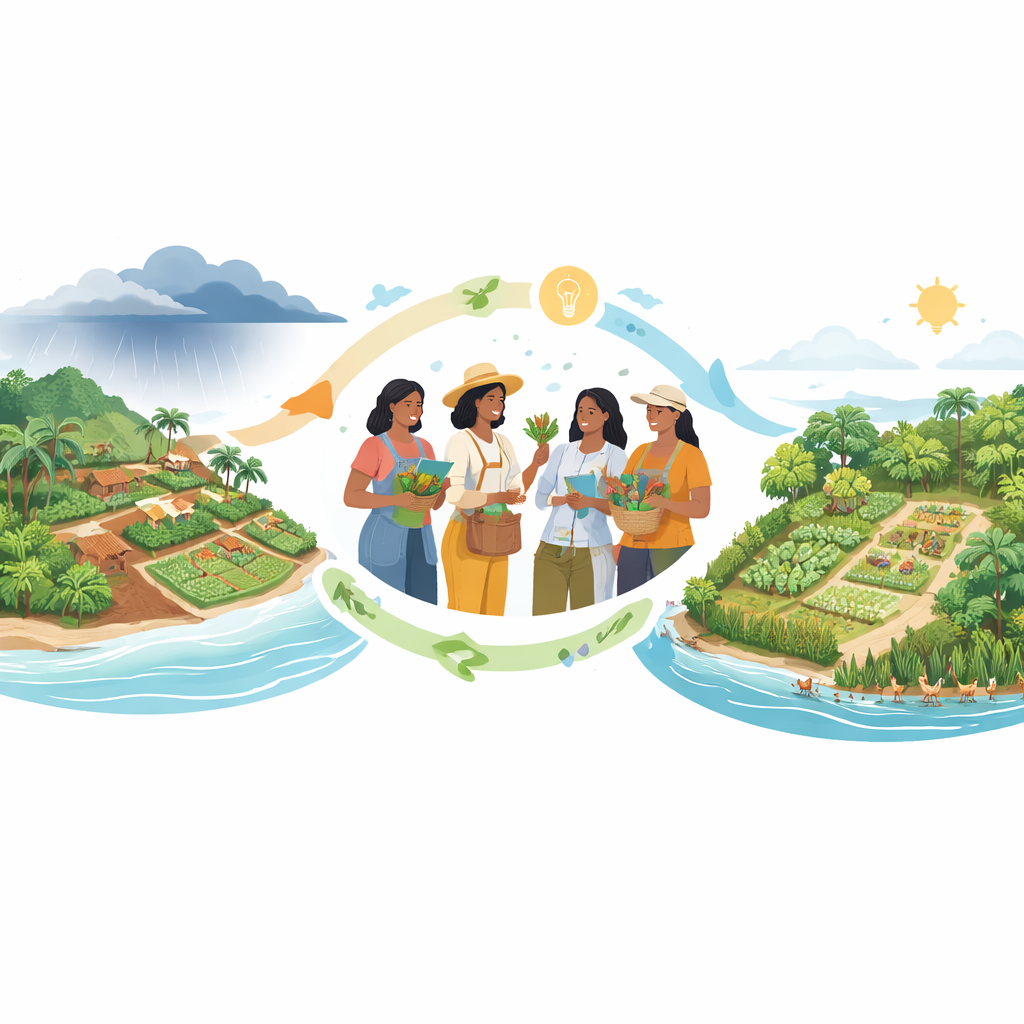
Life and farming on small islands
Small islands have very limited land, few people, and fragile environments. Their farms often sit close to the sea, depend on seasonal rain, and are easily damaged by storms, droughts, and rising sea levels. Because space is tight, fields are small and usually mix crops with livestock such as chickens or goats, and many families also rely on fishing or seaweed farming. Food imports fill the gaps but make islands vulnerable to price shocks and shipping disruptions. At the same time, close‑knit communities and traditions of working together create fertile ground for local experiments in new ways of growing and sharing food.
New ideas that keep land, people, and incomes in balance
The authors bring together research and expert views to map eighteen “orientations,” or directions, for innovation that can keep island agriculture productive without undermining nature or society. Some are common to farms everywhere: making labor more efficient, improving the quality and safety of food, cutting pollution, sharing knowledge, and strengthening businesses and value chains. Others are especially important for islands, such as using water and soil with great care, restoring damaged ecosystems, turning waste into resources, and designing solutions that fit local culture, geography, and climate threats. Rather than a single high‑tech fix, the paper argues for a web of changes in tools, practices, organizations, and community life that together shift farming toward long‑term resilience.
Women at the heart of island food systems
Women in small islands are deeply involved in every part of the food system: planting, harvesting, tending animals, processing and preserving food, selling at markets, and managing household budgets. Using a “triple bottom line” lens—looking at environmental, social, and economic effects—the paper shows how women’s knowledge and labor sustain soils and water, keep traditional crops and recipes alive, and stabilize family incomes. Women often lead community gardens, school feeding efforts, and small food businesses that link local farms to tourism or urban buyers. They are early adopters of climate‑smart practices such as agroforestry and water harvesting and play key roles in passing on know‑how between generations.
Walls that block women’s leadership
Despite these contributions, the study identifies nine major barriers that keep women from shaping decisions and leading innovation. These include poor access to land, credit, inputs, tools, and technology; lower levels of formal education and training; weak roads, storage, and communications; and deep‑rooted gender norms that cast men as decision‑makers. Women also face heavier unpaid workloads at home, scarce childcare, few chances to join networks or cooperatives, and limited representation in farmer groups and policy forums. Together, these factors make it harder for women to test new ideas, invest in better practices, or influence how resources and support programs are designed.
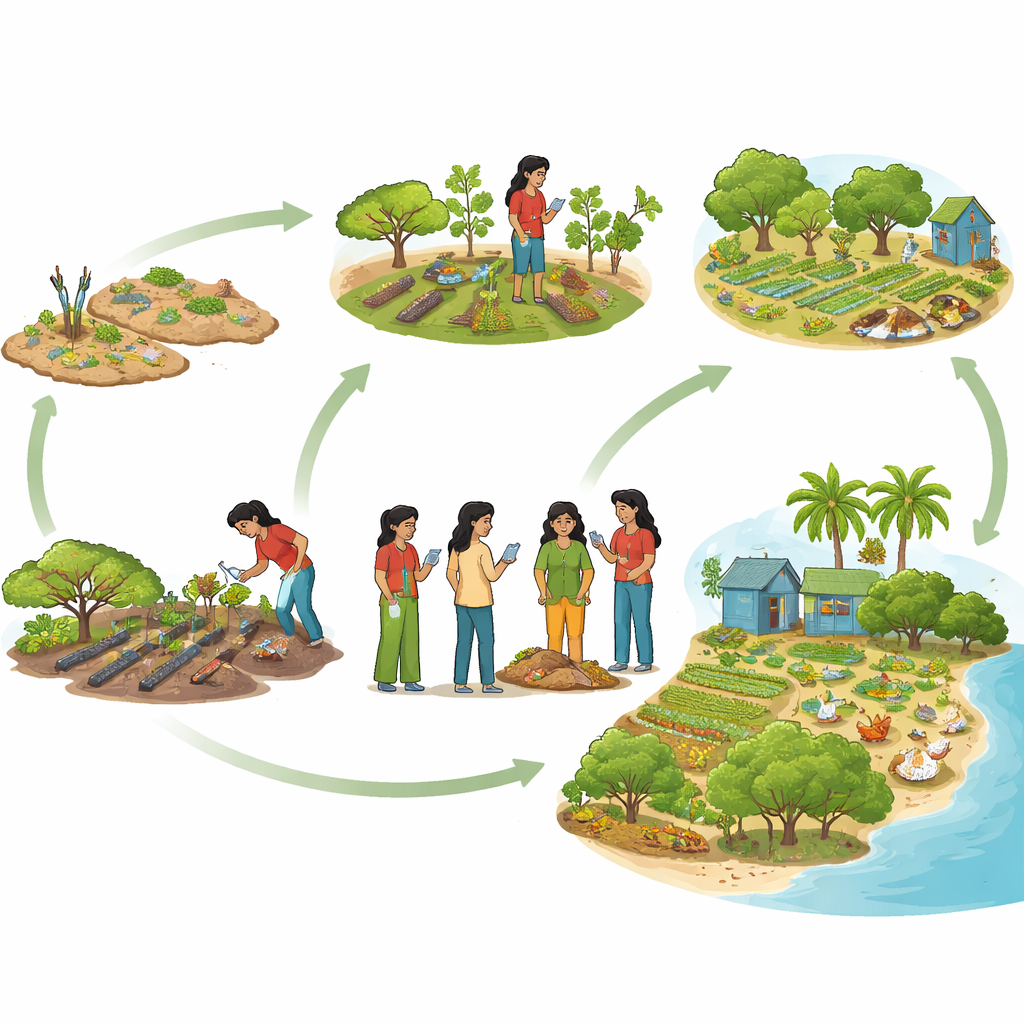
Pathways to unlock women-led change
To confront these obstacles, the authors outline nine clusters of measures. They range from securing women’s land and inheritance rights and tailoring microfinance products to island realities, to investing in women‑friendly tools, better local infrastructure, and digital advisory services. The paper stresses education and leadership training, mixed‑gender farmer groups, and community dialogues that challenge restrictive norms while respecting local culture. Building women’s networks and ensuring they have seats at decision‑making tables are seen as crucial steps so that island policies, extension services, and climate programs reflect women’s priorities and knowledge.
What this means for island futures
In clear terms, the paper concludes that small islands cannot reach lasting food security or climate resilience without women at the helm of innovation. It does not present field trials, but it weaves together scattered studies and expert insights into a practical framework that policymakers and practitioners can test and adapt. If islands invest in removing the barriers described—especially around rights, finance, time, and voice—women’s everyday problem‑solving can power a shift toward farming systems that are productive, fair, and in tune with local ecosystems. In short, supporting women as innovators turns the constraints of island life into opportunities for stronger, more self‑reliant communities.
Citation: Nikghadam-Hojjati, S., Marchetti, E. & Barata, J. Women-led sustainable innovation in small island agriculture: challenges and barriers. Humanit Soc Sci Commun 13, 248 (2026). https://doi.org/10.1057/s41599-026-06546-z
Keywords: small island agriculture, women in farming, sustainable innovation, climate resilience, gender equality