Clear Sky Science · en
“Take a break!”: the role of off-job detachment in the relation between demands and work performance in elite athletes
Why Top Athletes Need Real Time Off
Elite athletes may seem like tireless machines, but behind the medals and headlines lies a simple human truth: no one can perform at full throttle all the time. This study looks at what happens when professional handball players in China truly "switch off" from their sport after training and competition—and what happens when they don’t. By examining how different kinds of demands and different kinds of rest interact, the researchers offer practical clues for anyone interested in peak performance, from weekend warriors to high-pressure professionals.
The Hidden Job Behind Playing Sport
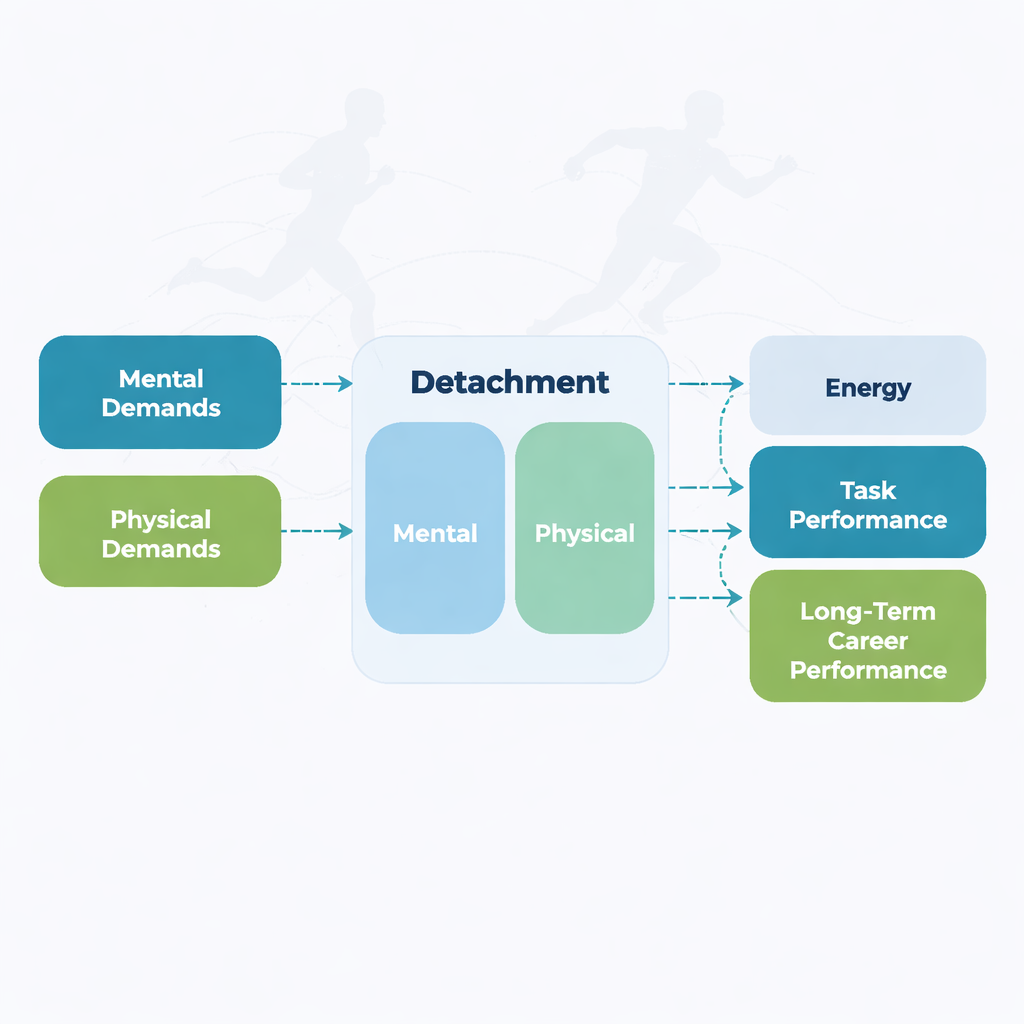
For elite athletes, sport is more than the hours spent on the court. Much like a demanding job, it includes constant travel, strict schedules, social expectations, and the need to interact smoothly with coaches, teammates, and managers. The authors treat sport as a form of work, with "mental demands" (such as staying focused, making quick decisions, and handling pressure) and "physical demands" (intense movement, strength, and endurance). They argue that to understand performance in this setting, one must look beyond wins and losses to a broader picture: the athlete’s day-to-day energy, their ability to do tasks well, and how far they can sustain a high level of performance over an entire career.
Two Ways of Switching Off
The central idea in this research is detachment—the ability to step away from sport during off-hours. But detachment comes in two flavors. Physical detachment means giving the body a break: no drills, no gym, no pushing through soreness. Mental detachment means turning the mind away from the sport: no rehearsing plays, no thinking through mistakes, no worrying about the next match. Both are thought to help people recover from demanding work. However, theories borrowed from organizational psychology suggest that how these two kinds of detachment combine with different types of demands can either boost or blunt performance.
What the Study Found on the Court
The researchers surveyed 191 Chinese elite handball players about their training demands, how well they were able to detach physically and mentally after sport, and how they rated their own energy, task performance, and long-term career prospects. Statistical analyses showed a nuanced picture. Physical detachment played a clearly helpful role: when athletes experienced heavy mental demands but also managed to physically step away from their sport afterward, they reported higher liveliness, greater physical strength, better task performance, and stronger expectations of sustaining their performance over time. In other words, giving the body a break helped translate demanding mental work into better outcomes.
When Too Much Mental Distance Backfires
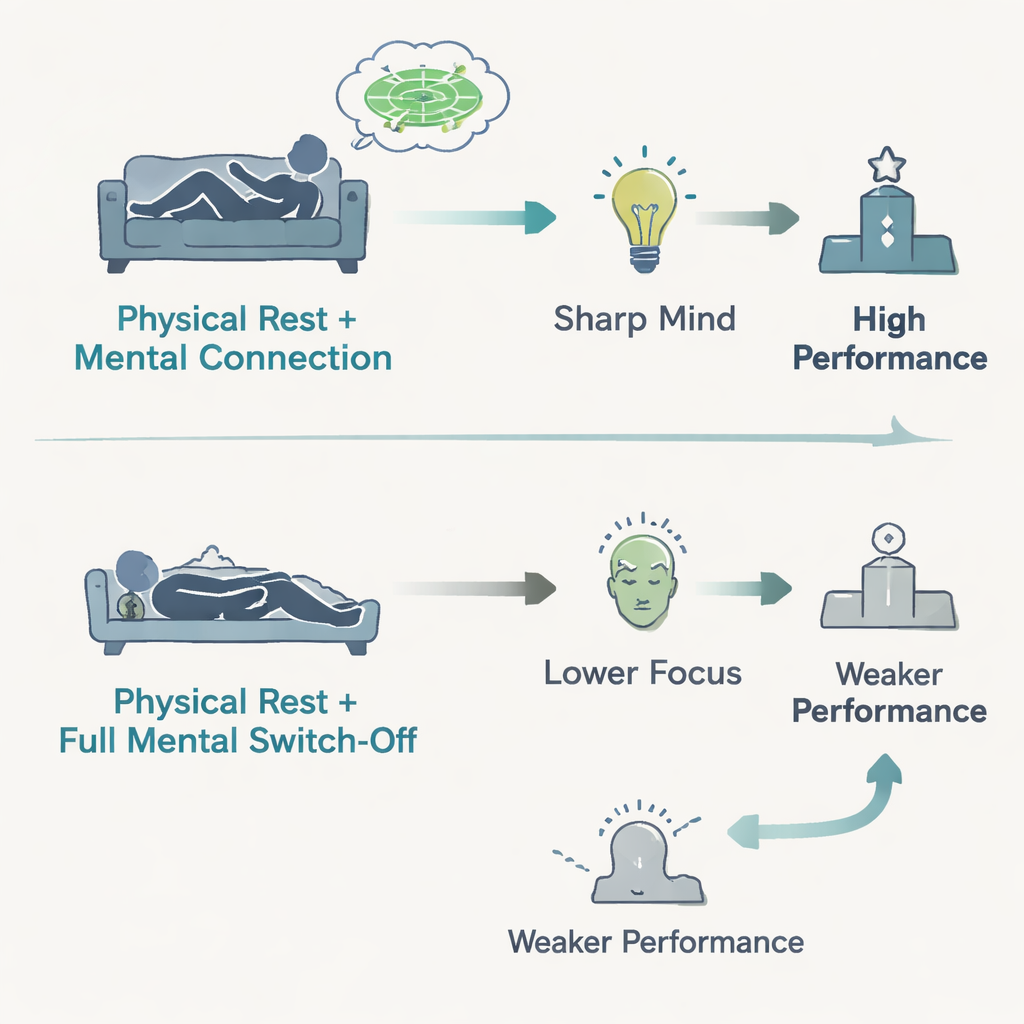
Mental detachment, however, behaved differently. Athletes who faced higher mental demands tended to perform better—feeling more energetic, stronger, and more effective—when they did not fully shut their minds off from sport. High levels of mental detachment weakened the link between demanding thinking and good performance. The authors suggest that, beyond a certain point, completely switching the mind away from sport may disrupt motivation and make it harder to "restart the engine" when training resumes. Maintaining a light, purposeful mental connection—such as visualizing plays or reviewing tactics in a positive way—may help athletes stay sharp without exhausting themselves.
What This Means for Athletes and Coaches
To a layperson, the message is straightforward: the best-performing athletes do not live in a permanent "all in" or "all out" state. Instead, they strike a balance. The body needs real time off from physical strain to restore strength and avoid the downward spiral of chronic fatigue and injury. At the same time, completely turning off the mind from sport can weaken focus and drive. Short, restorative breaks that combine physical rest with a light, motivated mental connection to sport—rather than total mental escape—appear most promising for staying energetic, performing well in key tasks, and keeping a career going over the long haul.
Citation: Ji, T., de Jonge, J., Peeters, M.C.W. et al. “Take a break!”: the role of off-job detachment in the relation between demands and work performance in elite athletes. Humanit Soc Sci Commun 13, 222 (2026). https://doi.org/10.1057/s41599-026-06541-4
Keywords: elite athletes, recovery, mental detachment, physical rest, sports performance