Clear Sky Science · en
Transdisciplinary reflections for assessing the mental well-being of university undergraduates within the African context for sustainable problem-solving
Why student well-being matters
Across Africa, more and more university students are struggling with stress, anxiety, and pressure, yet many never seek formal help. This article explores a new way to understand and measure students’ mental well-being that fits African realities, rather than simply importing ideas and tests from Western countries. By listening closely to experts from different fields and respecting local culture, the study offers a richer picture of what it means for an undergraduate to be mentally well — and how universities can support that.
Looking at the whole student, not just symptoms
Instead of treating mental health as only the presence or absence of illness, the authors focus on well-being as a positive, multi-layered state. In many African communities, mental well-being is tied to family, spirituality, and belonging, not just to individual feelings or thoughts. The study argues that common Western models, which emphasise personal achievement and inner resilience, can miss this communal dimension and the way distress is often expressed through physical complaints rather than open talk about sadness or fear. To respond fairly and effectively, mental health tools in African universities must take account of both the body and the mind, the individual and the community.
Many voices, one shared framework
To build such a tool, the researchers used a transdisciplinary approach: they brought together consultants in behavioural and clinical psychology, educational psychology, medical research, educational sociology, and educational measurement. Thirteen experts from West and Southern Africa took part in in-depth, online interviews. Rather than imposing a fixed questionnaire, the team asked open questions about what really matters when judging a student’s mental well-being in an African university setting. The conversations were transcribed and analysed using qualitative software, blending human judgment with AI-assisted coding to tease out recurring ideas and themes.
Eight everyday pillars of student well-being
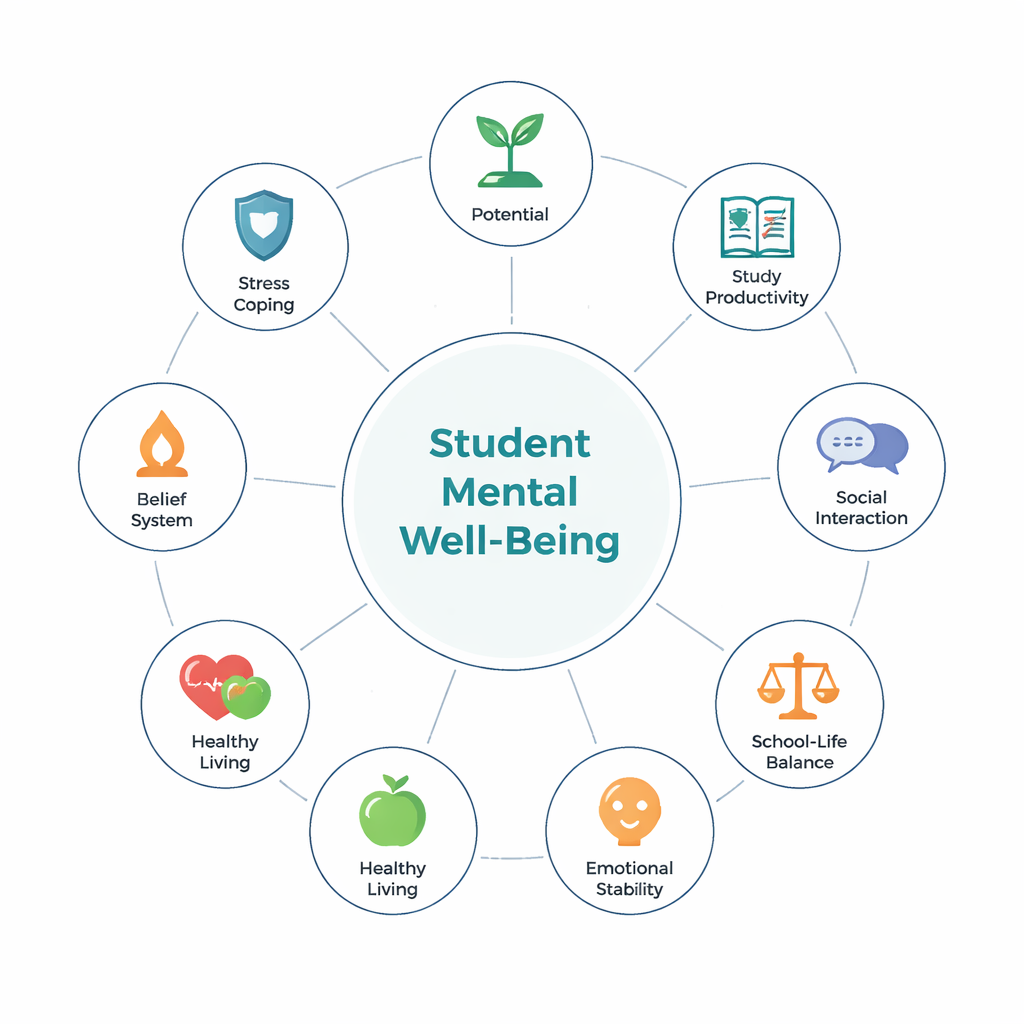
From hundreds of coded statements, the team distilled eight key pillars that together define mental well-being for undergraduates in this context. These are: coping with normal life stresses; realising one’s potential; studying productively; social interaction; school–life balance; emotional stability; healthy living; and belief system. Each pillar is grounded in concrete student experiences. For instance, stress can come from sleeplessness, exam failure, or information overload during crises like COVID-19. Potential is linked to soft and hard skills, life purpose, and the pain of feeling “left behind.” Productive study is not just hard work, but work that leads to meaningful results and a sense of accomplishment, which in turn feeds confidence and hope.
Community, balance, and beliefs as protective forces
Other pillars highlight how deeply social and spiritual student life can be. Social interaction includes supportive relationships with peers, lecturers, and wider community networks, which can buffer stress and prevent the harm of isolation. School–life balance covers the strain of long strikes, financial hardship, and the need to mix academics with sport, hobbies, and rest so that one domain does not crush the others. Emotional stability touches on mood, self-esteem, body image, and the ability to interpret events in less damaging ways — an important challenge where students may hide depression behind physical complaints. Healthy living reflects the tight link between physical and mental health, from sleep to diet to exercise. Finally, belief systems — spirituality, religion, and personal values — shape how students explain hardship, find comfort, and decide whether life feels meaningful.
From expert insight to practical action
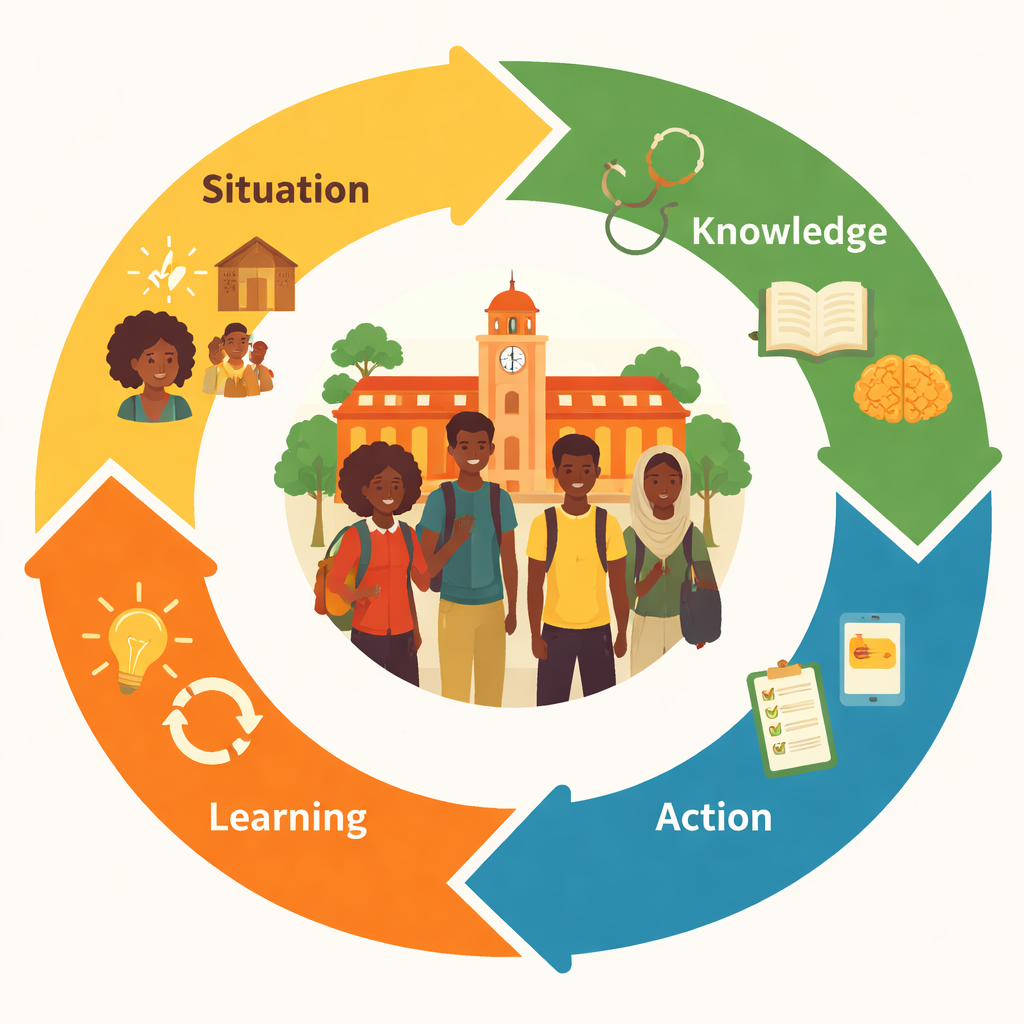
Beyond naming these eight pillars, the study weaves them into a practical framework for change. It describes a cycle that starts by carefully defining the situation of students, then gathering knowledge from many disciplines, then designing actions such as better surveys, peer-led programmes, and digital screening tools, and finally learning from the results to improve the system. This process has already guided the development of a culturally rooted, computer-based scale for assessing mental well-being among African undergraduates. For lay readers, the main message is simple: student mental health cannot be reduced to a checklist of Western symptoms. It is a living, interconnected set of abilities, relationships, habits, and beliefs. By recognising this full picture, universities and policymakers can design support that truly fits students’ lives and offers more sustainable solutions to the growing mental health crisis.
Citation: Oladele, J., Omotoso, A.B.O., Victor-Aigbodion, V. et al. Transdisciplinary reflections for assessing the mental well-being of university undergraduates within the African context for sustainable problem-solving. Humanit Soc Sci Commun 13, 215 (2026). https://doi.org/10.1057/s41599-026-06539-y
Keywords: student mental health, African universities, well-being assessment, transdisciplinary research, youth resilience