Clear Sky Science · en
Piano accompaniment: exploring the role of information dynamics, communication practices and cultural influence
Music as a Conversation, Not a Solo Act
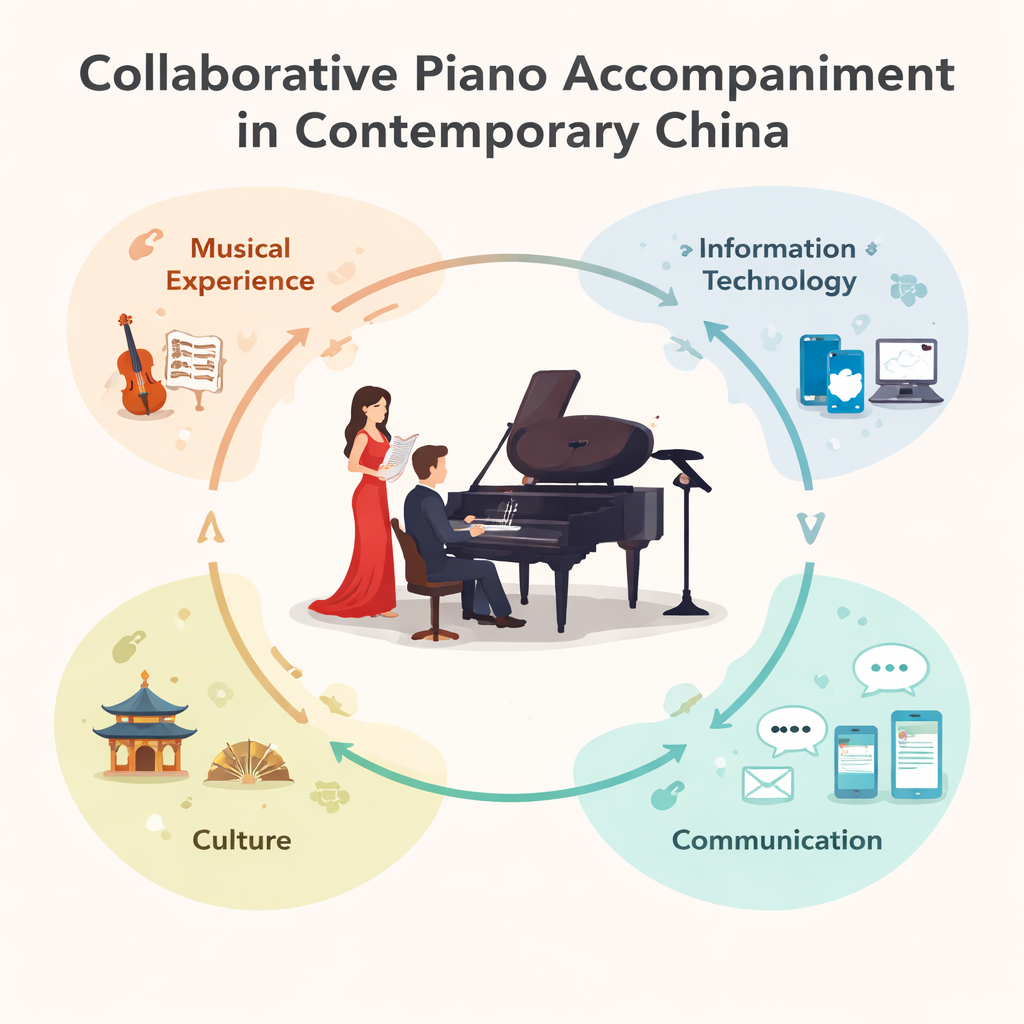
Piano accompaniment is often seen as background support for a star soloist, but this study shows it is much more like a rich conversation between people. By listening closely to musicians in China who work as accompanists, teachers, and students, the research reveals how feelings, information, communication, and culture all shape what audiences finally hear on stage. Anyone who has ever played in a band, sung in a choir, or simply wondered why some performances feel so “together” while others do not can find something recognizable in these stories.
Playing Together, Not Just Playing Correctly
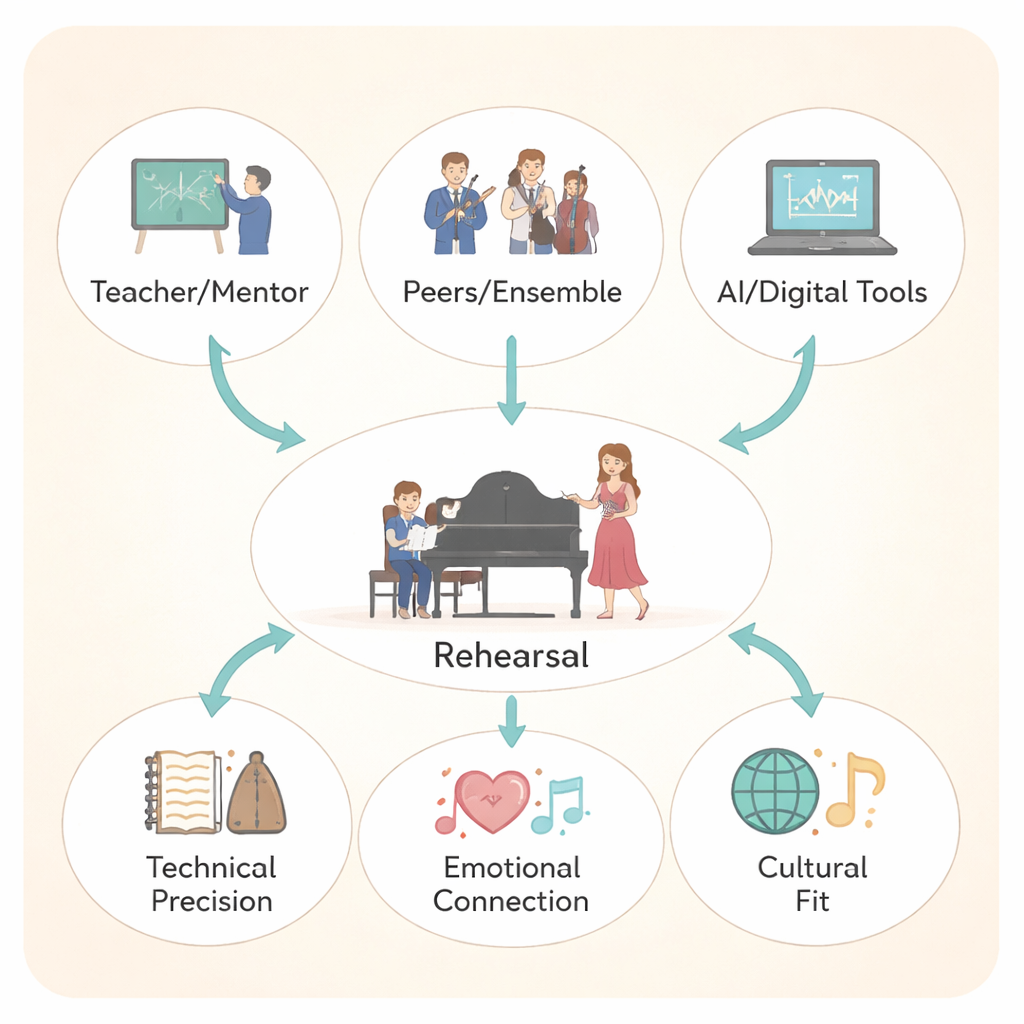
The musicians in this study describe accompaniment as a living partnership rather than a supporting role stuck in the shadows. When a pianist and soloist perform together, they constantly balance technical accuracy with emotional connection. Rehearsals become spaces where players test ideas, resolve disagreements about tempo or expression, and gradually build trust. Over time, many feel the relationship shift from simple support to true co-creation, where the accompanist can gently lead, react, or even rescue a performance. In this view, the success of a concert depends less on one person’s brilliance and more on how well partners understand and adapt to each other.
Choosing Which Voices to Trust
Behind every confident performance lies a web of information: advice from teachers, tips from friends, and now suggestions from artificial intelligence tools and online resources. Participants say that human mentors and peers remain crucial because they offer rich context, emotional nuance, and cultural insight. At the same time, AI programs help check tempo, balance, and accuracy with great speed. Musicians often find themselves weighing these different voices, especially when they give conflicting suggestions. Many call for a blended approach, where technology sharpens technique but human guidance shapes the deeper meaning and feeling of the music.
Silent Signals and Honest Talk
The study highlights that good collaboration relies on communication that goes far beyond spoken instructions. In rehearsal, clear conversations help partners state their artistic goals, negotiate disagreements, and define who leads at key moments. On stage, however, much of the coordination happens through eye contact, gestures, and subtle body language. A tiny nod before an entrance or a shared breath before a climax can keep the performance together. Musicians report that learning to read and send these silent cues is just as important as practicing scales, and that shyness or unclear expectations can quietly undermine even well-prepared performances.
When East Meets West at the Keyboard
Because the research takes place in China, it brings cultural questions to the foreground. Many participants regularly move between Western classical pieces and music rooted in Chinese traditions. They describe the need to honor both systems: the form and structure of the Western score and the feeling, phrasing, and values tied to Chinese heritage. Group harmony, respect for senior musicians, and sensitivity to collective sound often take priority over individual showmanship. Accompanists must therefore be not only skilled players but also cultural translators who understand how history, social norms, and local taste shape what counts as a “good” performance.
Rethinking How We Train and Value Accompanists
Overall, the article concludes that piano accompaniment is a complex craft that mixes musical skill with emotional intelligence, communication know-how, and cultural awareness. Treating accompanists merely as background technicians misses the heart of the work they do. The author argues that music education should offer dedicated training in these areas, combining traditional mentorship with thoughtful use of digital tools and explicit attention to cultural context. For listeners and performers alike, this means seeing accompaniment not as a lesser art, but as a key part of what makes shared music-making powerful, moving, and meaningful.
Citation: Feng, Y. Piano accompaniment: exploring the role of information dynamics, communication practices and cultural influence. Humanit Soc Sci Commun 13, 217 (2026). https://doi.org/10.1057/s41599-026-06537-0
Keywords: piano accompaniment, musical collaboration, music education, human-AI music tools, cross-cultural music