Clear Sky Science · en
Does the green human capital of top management teams affect corporate environmental protection investment decisions?
Why Who Sits in the Boardroom Matters for the Planet
When companies decide whether to spend real money on cleaner factories, pollution controls, or renewable energy, those choices ultimately trace back to people in a conference room. This study asks a deceptively simple question with big consequences: do executives who already have experience with environmental issues actually push their firms to invest more in protecting the environment, rather than just talking about it?
Leaders with Green Know‑How
The authors focus on what they call the “green human capital” of top management teams—executives whose careers or training have involved environmental protection, clean energy, low‑carbon work, or similar topics. Instead of looking only at a single chief executive, they examine the entire senior team that shapes strategy. Using detailed résumés of thousands of executives, they identify which team members have green experience and measure how many such people each company has and what share of the team they represent.
Tracing Real Money Spent on the Environment
To see whether this matters in practice, the researchers study 4662 annual observations of Chinese listed companies between 2015 and 2020, a period when China was ramping up climate and pollution policies. They dig into firms’ financial reports to track actual environmental protection investment—spending on items like waste treatment facilities, energy‑saving upgrades, and pollution‑control equipment. Unlike broad sustainability ratings or surveys, these figures capture concrete financial commitments. They then use statistical models that factor in firm size, debt, profits, ownership, and industry to isolate the role of green‑experienced executives.
More Green Experience, More Green Investment
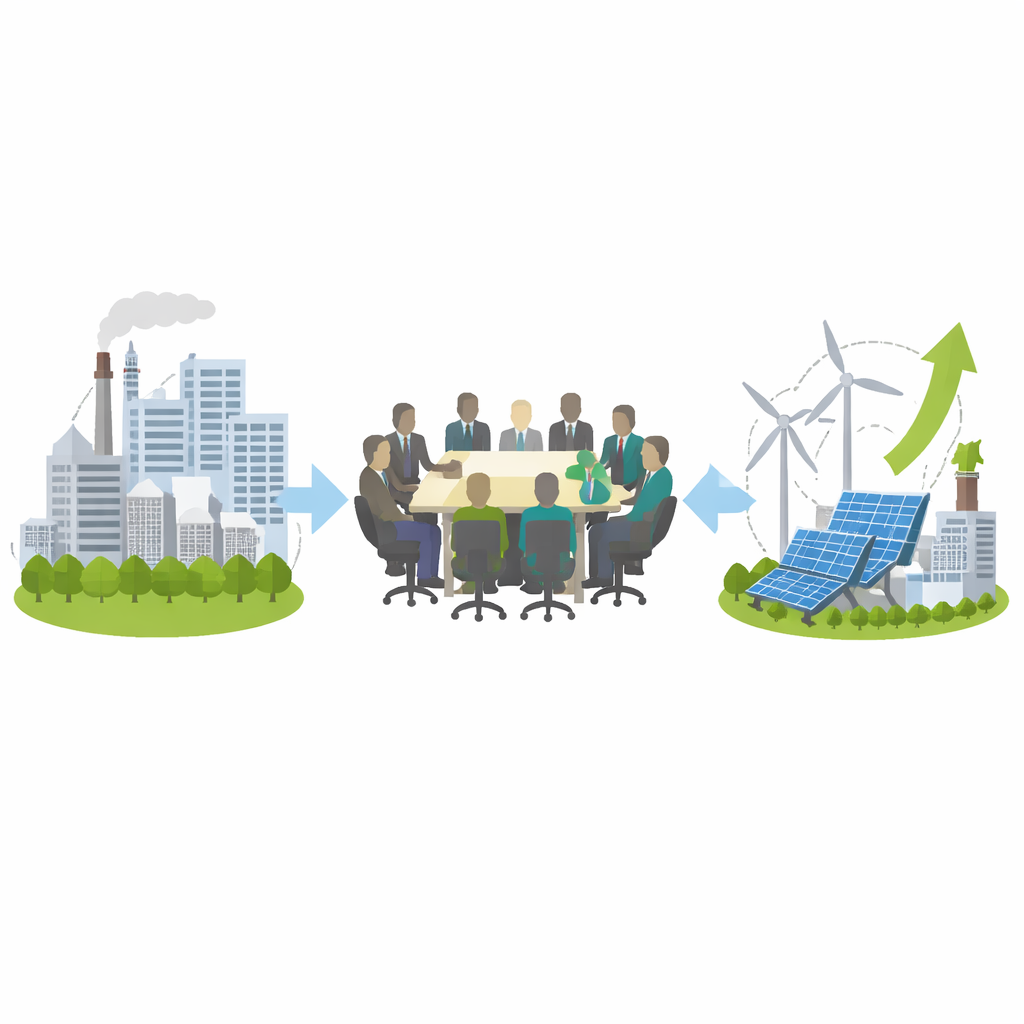
The results are striking. Companies with more executives who have green backgrounds, and with a higher share of such people on the top team, invest significantly more in environmental protection than similar firms without that experience. The relationship holds up under a battery of tests designed to rule out alternative explanations, such as firms simply hiring green‑minded managers after they have already decided to go green. The authors use matching techniques, selection‑bias corrections, policy shocks from China’s green finance pilot zones, and even tests with future investment levels and alternative environmental indicators such as carbon emissions and third‑party environmental scores. Across these checks, the pattern remains: green‑experienced teams put more money into environmental action and are associated with lower emissions.
How Awareness, Subsidies, and Investors Shape Outcomes
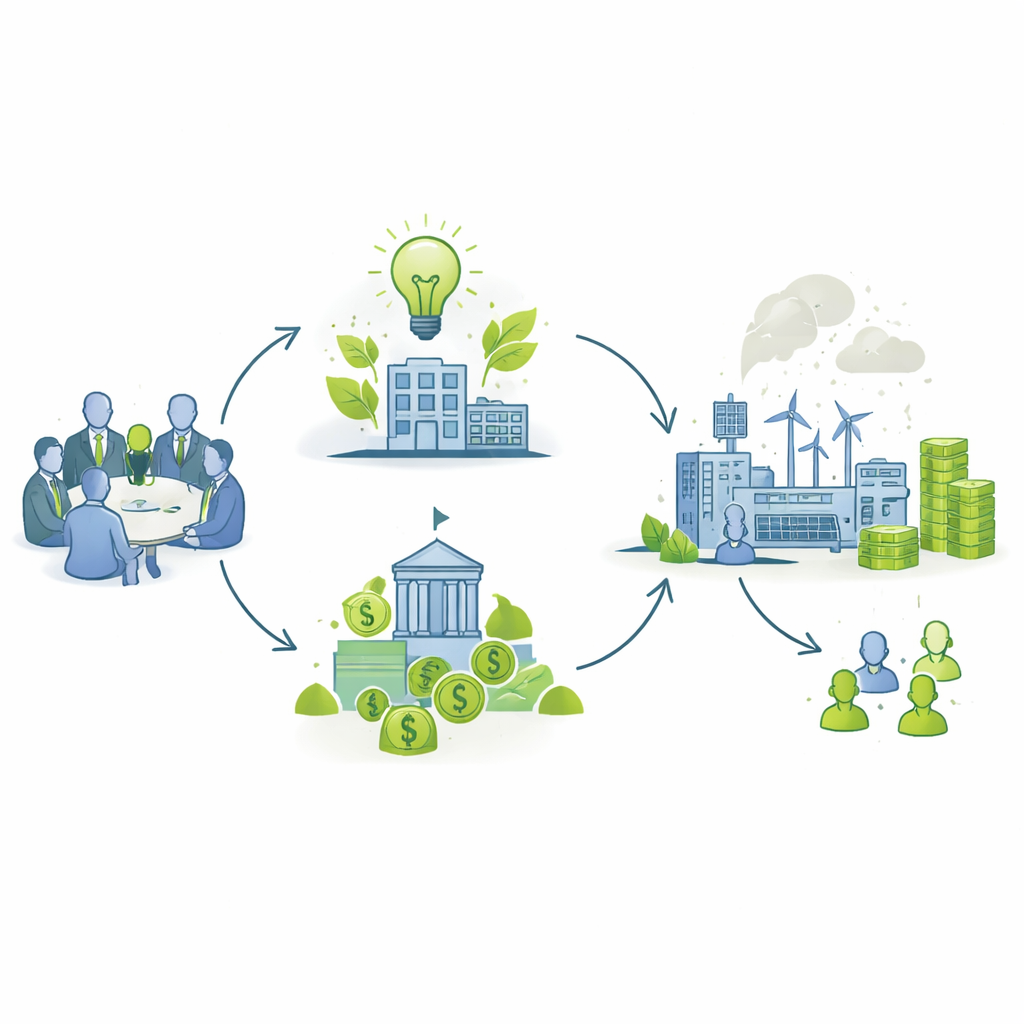
The study also digs into how this influence works. First, executives with environmental experience appear to raise environmental awareness throughout the company, as reflected in greener language in annual reports. Firms that talk more concretely and frequently about environmental topics, in turn, invest more in protective measures. Second, green‑savvy managers are better at attracting and using government green subsidies, which further boosts investment. Third, the presence of “green investors”—shareholders who focus on environmental and social issues—strengthens all of this. When such investors are more numerous, the positive link between a green‑experienced team and environmental spending becomes even stronger, suggesting that outside pressure and insider expertise reinforce each other.
When Context Helps or Hinders Green Leadership
The impact of green‑experienced leaders is not the same everywhere. It is especially strong in firms with more female executives, companies in less‑polluting industries where regulation is less overwhelming, firms that spend more on management and internal systems, and those located in regions with weaker speculative cultures—places where short‑term gambling in financial markets is less dominant. Public concern also matters: in provinces where people search more online for “haze” or “pollution,” companies with green‑experienced teams invest more in environmental protection. Importantly, these teams are also linked to lower risks of “greenwashing,” where firms exaggerate their environmental efforts while still violating environmental rules.
What This Means for Business and Society
For a lay reader, the message is clear: putting people with real environmental experience in senior leadership roles changes what companies do, not just what they say. Such executives help firms recognize environmental risks and opportunities, navigate government support, respond to concerned investors and citizens, and turn these pressures into genuine spending on cleaner technologies and lower emissions. Far from being a mere public‑relations move, building green human capital in the boardroom can be a powerful lever for steering corporate money toward protecting air, water, and climate.
Citation: Yin, J., Huang, Z., Liu, J. et al. Does the green human capital of top management teams affect corporate environmental protection investment decisions?. Humanit Soc Sci Commun 13, 265 (2026). https://doi.org/10.1057/s41599-026-06535-2
Keywords: green human capital, corporate environmental investment, top management teams, green investors, greenwashing