Clear Sky Science · en
From singing in the rain to tears in the rain: socio-demographic trends and pessimism during new Hollywood
Why Movies Turned Darker
From the late 1960s to early 1980s, American movies suddenly felt different: heroes looked troubled, endings grew murkier, and stories seemed steeped in doubt. This era, known as New Hollywood, gave us classics like The Godfather and Taxi Driver. This study asks a simple but powerful question: did wider social and economic troubles—shrinking trust in government, worries about money, and shifting audiences—help push Hollywood toward this mood of pessimism and ambiguity, and did those forces leave lasting marks on film storytelling?
Tracking the Mood of Half a Century of Films
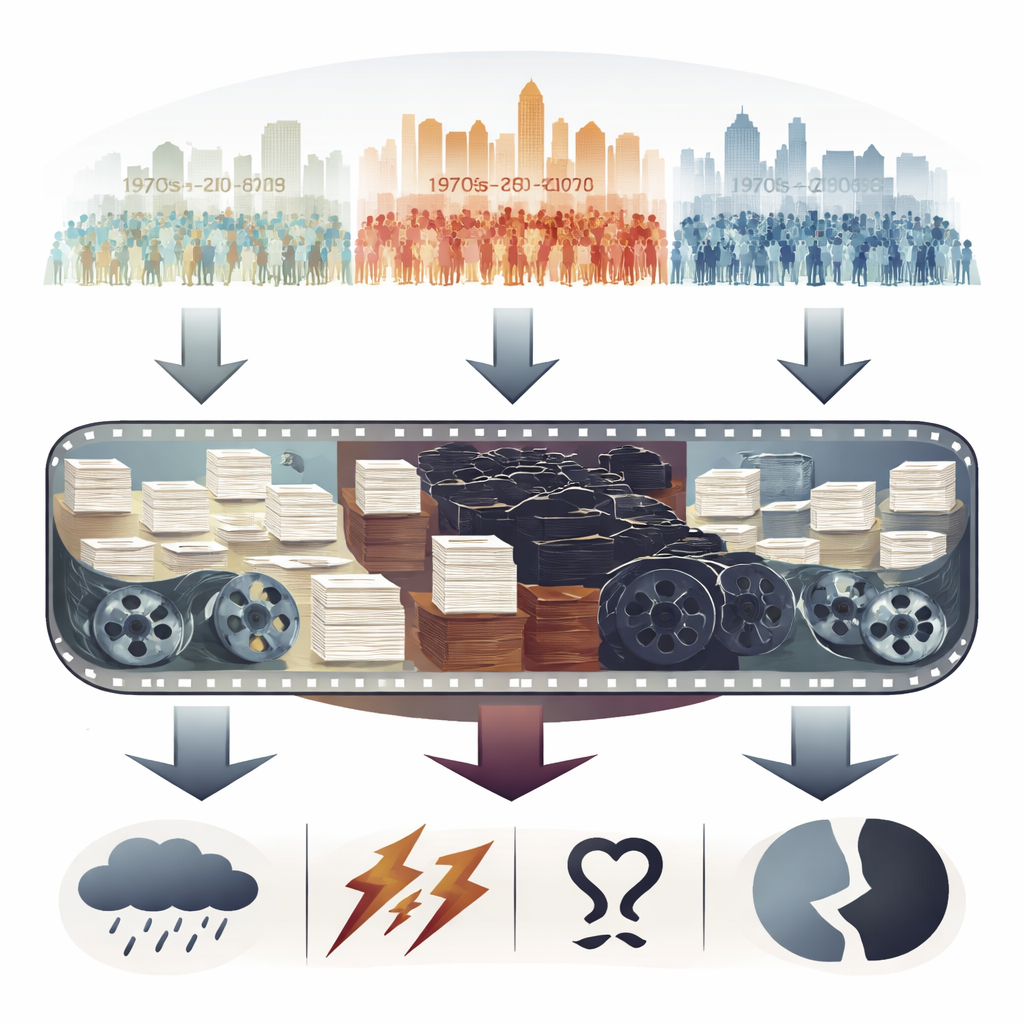
To explore this, the authors analyzed the dialogue of nearly 6000 American movies released between 1950 and 2000. Instead of relying on critics’ impressions, they used computer-based language tools to count words linked to optimism and pessimism, calm and stress, clarity and uncertainty, and positive or negative emotional tone. By comparing these measures across three periods—before New Hollywood, during it, and after it—they could trace how the emotional “weather” of film scripts changed over time. They then compared these shifts with long-term trends in American life, such as income, economic growth, college education, box office revenues, and trust in government.
The Rise and Fall of Gloom and Doubt
The results show that New Hollywood really did stand out. During this period, movie dialogue contained more pessimism, more references to stress, and more linguistic signs of ambiguity—sentences that leaned away from certainty and toward doubt. These traits were noticeably stronger than in movies from the 1950s and early 1960s. After New Hollywood, pessimism and ambiguity gradually eased off, even as movies stayed emotionally intense. Interestingly, the overall balance of positive versus negative emotion words—the basic “tone” of dialogue—did not shift sharply at New Hollywood’s boundaries but crept toward the negative steadily across all five decades.
Money, Trust, and Who Goes to the Movies
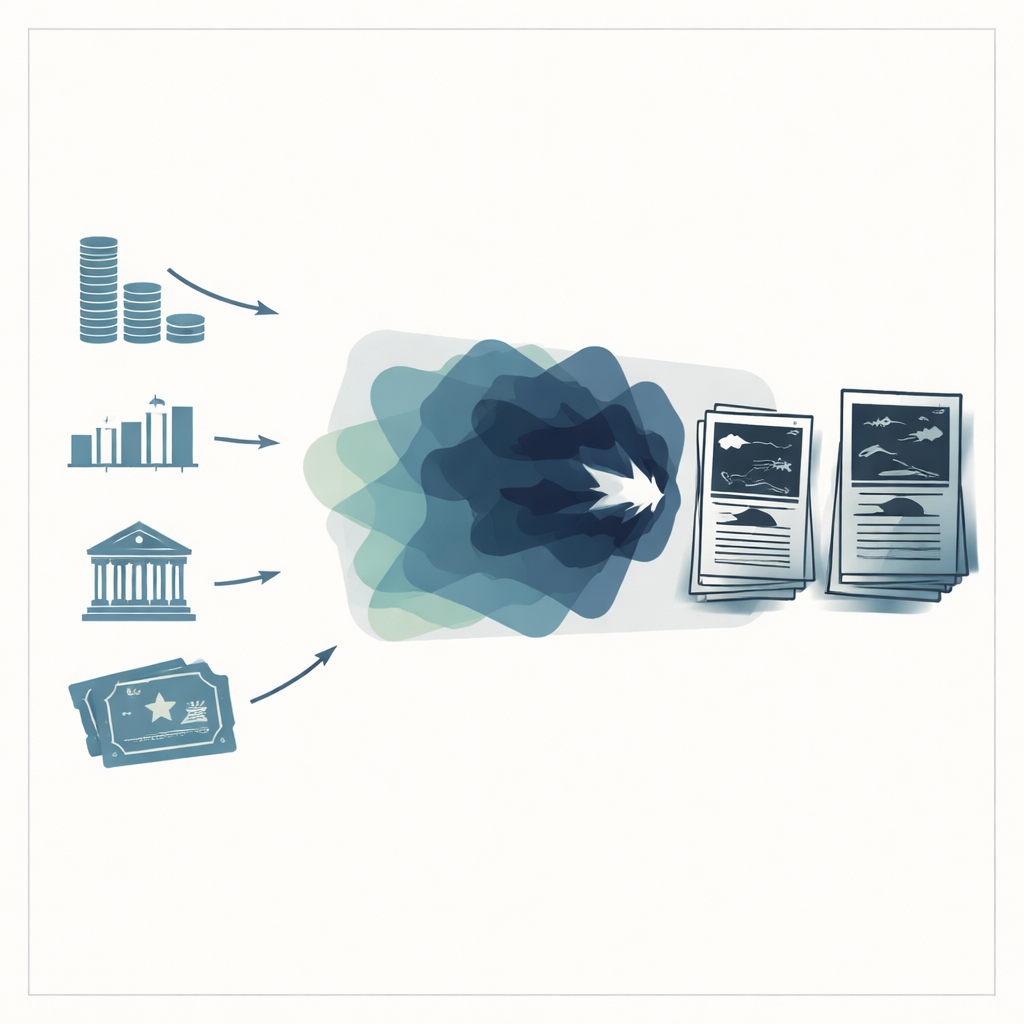
Next, the researchers examined how these psychological patterns lined up with social trends. They found that when trust in government was lower and movie revenues weaker, scripts tended to be more pessimistic and more ambiguous. Higher levels of college education, often thought to encourage a taste for darker or more complex stories, actually told a mixed tale: more education was tied to less pessimism and less ambiguity in scripts, but slightly more outright negativity and stress-related language. Median income itself rose across the whole period, but income growth slowed during New Hollywood. This slowdown related in complex ways to movie dialogue: pessimism, negativity, and stress tended to be higher when income growth sagged, even as absolute income climbed.
Delayed Echoes of Economic Strain
The most striking pattern appeared when the authors looked at time lags. Drops in income growth did not instantly translate into bleaker films. Instead, slowdowns in economic progress tended to be followed—five to nine years later—by more pessimistic movie scripts. In other words, the culture seemed to absorb economic disappointment gradually. Additional analyses suggest feedback loops: higher pessimism in films was often followed by lower trust and weaker box office performance, while changes in trust and revenues also tracked shifts in ambiguity and stress, forming a tangled web of influence between society and screen.
What This Says About Movies and Society
For a lay reader, the takeaway is that New Hollywood’s darker tone was not just the product of a few visionary directors. It reflected broader undercurrents in American life: growing doubts about institutions, unease about the economy’s future, and an audience increasingly open to complex, unsettled stories. At the same time, the study shows that culture does not simply mirror events overnight. Instead, economic and social strains ripple through people’s expectations and tastes over years, eventually surfacing in the stories that resonate. By blending film history with large-scale language analysis, this work offers a new way to see how our shared anxieties and hopes quietly shape the movies we make—and the ones we remember.
Citation: Reiter, D., Lamm, C. & Dias Martins, M.d.J. From singing in the rain to tears in the rain: socio-demographic trends and pessimism during new Hollywood. Humanit Soc Sci Commun 13, 286 (2026). https://doi.org/10.1057/s41599-026-06532-5
Keywords: New Hollywood, film pessimism, socioeconomic trends, cultural zeitgeist, movie narratives