Clear Sky Science · en
Training integration in science, policy and practice: insights from designing and implementing integrative teaching and learning
Why Bringing Worlds Together Matters
Many of today’s environmental and social challenges—like climate change, water scarcity, or sustainable cities—do not fit neatly into a single academic box. They sit at the crossroads of science, politics, and everyday life. This article explores how universities can better prepare students to work across those boundaries. Focusing on a master’s course at ETH Zurich, the authors show how carefully designed teaching can train students to connect ideas, people, and practices from very different worlds, and why that kind of “integration” is essential for solving complex problems.
Learning to Connect Different Ways of Knowing
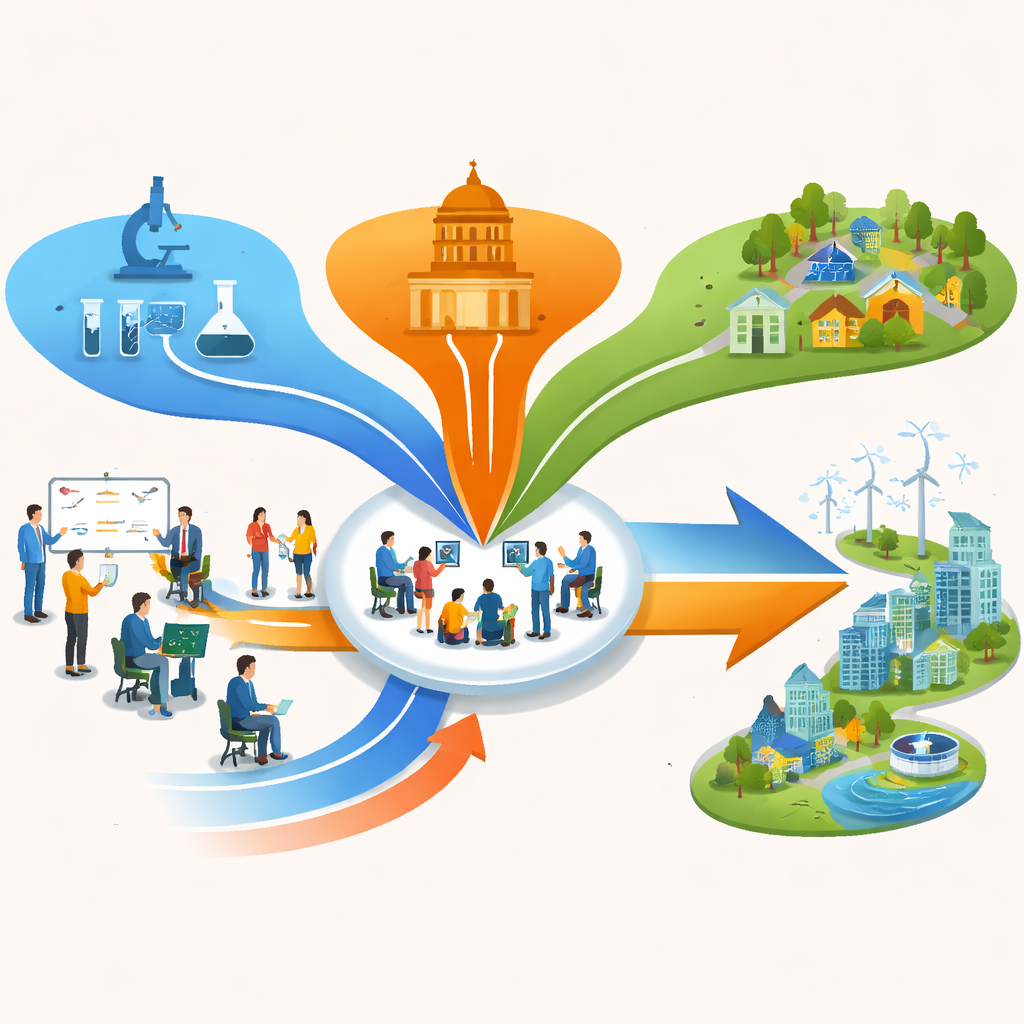
Instead of treating disciplines like separate islands, inter- and transdisciplinary work aims to weave together insights from fields such as engineering, social sciences, and law, as well as from policy makers and practitioners. The article argues that this weaving—called integration—is the heart of such research, but it does not happen by accident. It demands that people understand each other’s concepts and methods, navigate diverging interests, and build trust. The authors draw on years of experience studying and leading large collaborative projects to show that integration is at once a thinking task, a social task, and an emotional task. Students therefore need more than subject knowledge: they must learn how to listen, translate, negotiate, and co-create.
Four Pillars of an Integrative Classroom
From these insights, the authors distill four cornerstones for teaching integration in higher education: studying, leading, teaching, and learning. “Studying” refers to understanding key ideas about integration—why it is needed, what forms it can take, and how it unfolds across a research or policy process. “Leading” means planning and steering collaborative work, including who is involved, which knowledge counts, and how decisions are made. “Teaching” and “learning” are treated as tightly linked: lecturers and students reflect together on what works, adapt the course on the fly, and treat the classroom as a shared experimental space. The article presents these cornerstones not as separate steps, but as a dynamic web of relations that can be strengthened or weakened depending on how a course is designed.
How One Course Turns Ideas into Practice
The heart of the paper is a detailed look at an ETH Zurich master’s course on integration in science, policy, and practice. Across 13 weeks, the course first introduces core building blocks—concepts of integration, typical stages of research and policy processes, strategies for combining different kinds of knowledge, and the changing roles of researchers in collaborative projects. Students then work with real-world case studies of large inter- and transdisciplinary programs. Using a structured “rubric” provided by the lecturers, they analyze how each project handled integration, compare across cases, and gradually build their own picture of what good integration looks like in practice. This is combined with hands-on exercises in which students try out specific tools, such as backcasting and theory-of-change diagrams, to explore how desired future outcomes can guide present-day actions.
Growing Through Experience, Reflection, and Teamwork
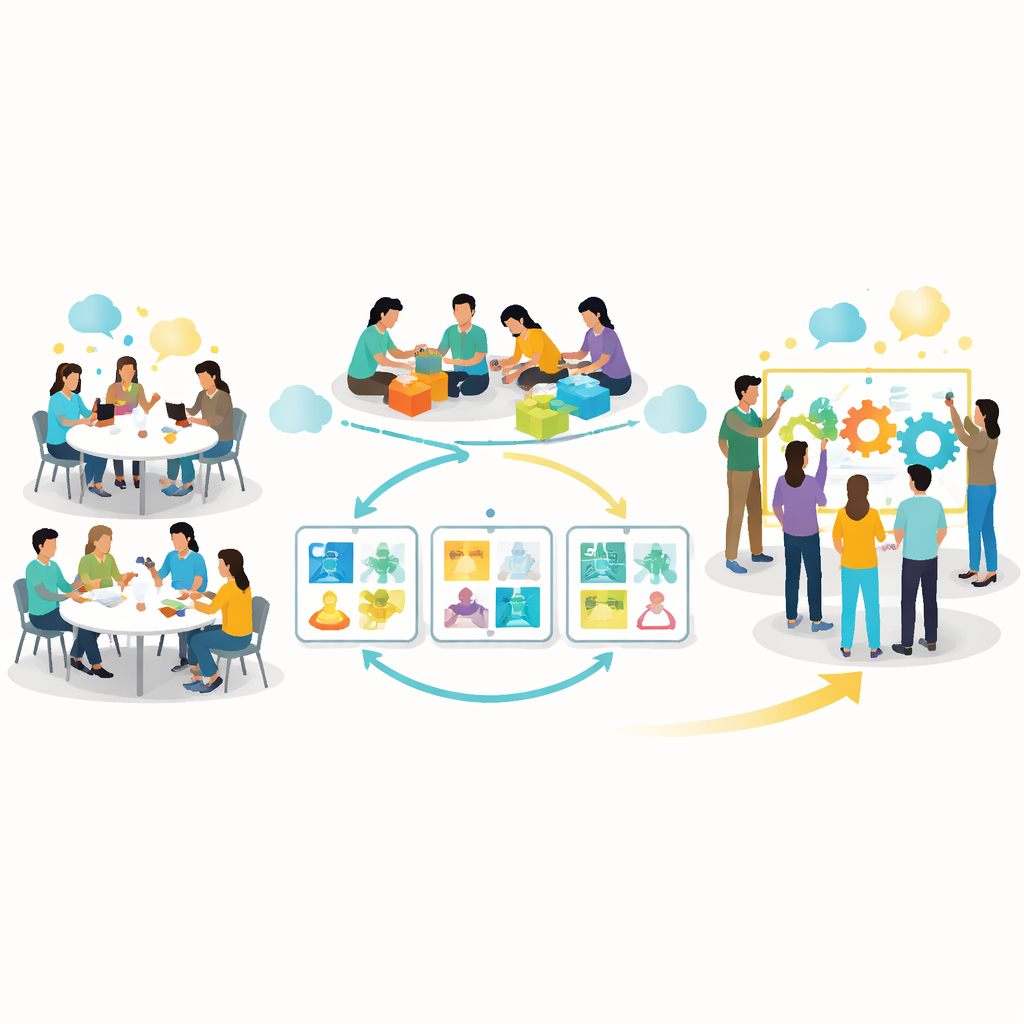
A distinguishing feature of the course is its focus on experiential learning and personal growth. Students write learning journals after each session to capture what happened, why it mattered, and what it means for their own development. They engage in team building exercises, create group charters that surface strengths and weaknesses, and openly discuss group dynamics, including tensions and power imbalances. Final group presentations blend three strands: personal insights, reflections on how their team actually worked together, and a synthesized comparison of the case studies. Students report that the combination of difficult readings, concrete examples, and structured reflection helped them build a common language, experiment with different ways of organizing their work, and better appreciate how integration depends on relationships as much as on methods.
Lessons for Future Problem Solvers
In closing, the authors argue that if universities want to prepare students to tackle complex real-world problems, they must treat integration as a trainable competence rather than a vague ideal. Their experience suggests three key lessons: embed learning in real cases where theory and practice meet; cultivate nuanced understanding by linking studying, leading, teaching, and learning; and constantly align course goals, activities, and student experiences as the field of inter- and transdisciplinary research evolves. While their findings stem from a specific course, the underlying approach can guide program directors and lecturers elsewhere. By intentionally designing classrooms where students can practice integration—intellectually, socially, and personally—higher education can help grow the next generation of people skilled at bridging science, policy, and practice.
Citation: Hoffmann, S., Vienni-Baptista, B. Training integration in science, policy and practice: insights from designing and implementing integrative teaching and learning. Humanit Soc Sci Commun 13, 244 (2026). https://doi.org/10.1057/s41599-026-06523-6
Keywords: interdisciplinary education, transdisciplinary research, integrative teaching, sustainability competencies, science–policy interface