Clear Sky Science · en
Unveiling the socio-economic toll of cybercrime: evidence from South Korea
Why cyberattacks matter for everyday life
Cybercrime might sound like a problem for IT departments and hackers’ forums, but this study shows it can quietly shrink paychecks, weaken job prospects, and slow a country’s growth. Focusing on South Korea, one of the world’s most wired economies, the research reveals how attacks on computers and networks ripple through households, businesses, and government budgets—and how smart public investment in cybersecurity can blunt the damage and strengthen long‑term prosperity.
Looking at the whole economy, not just hacked companies
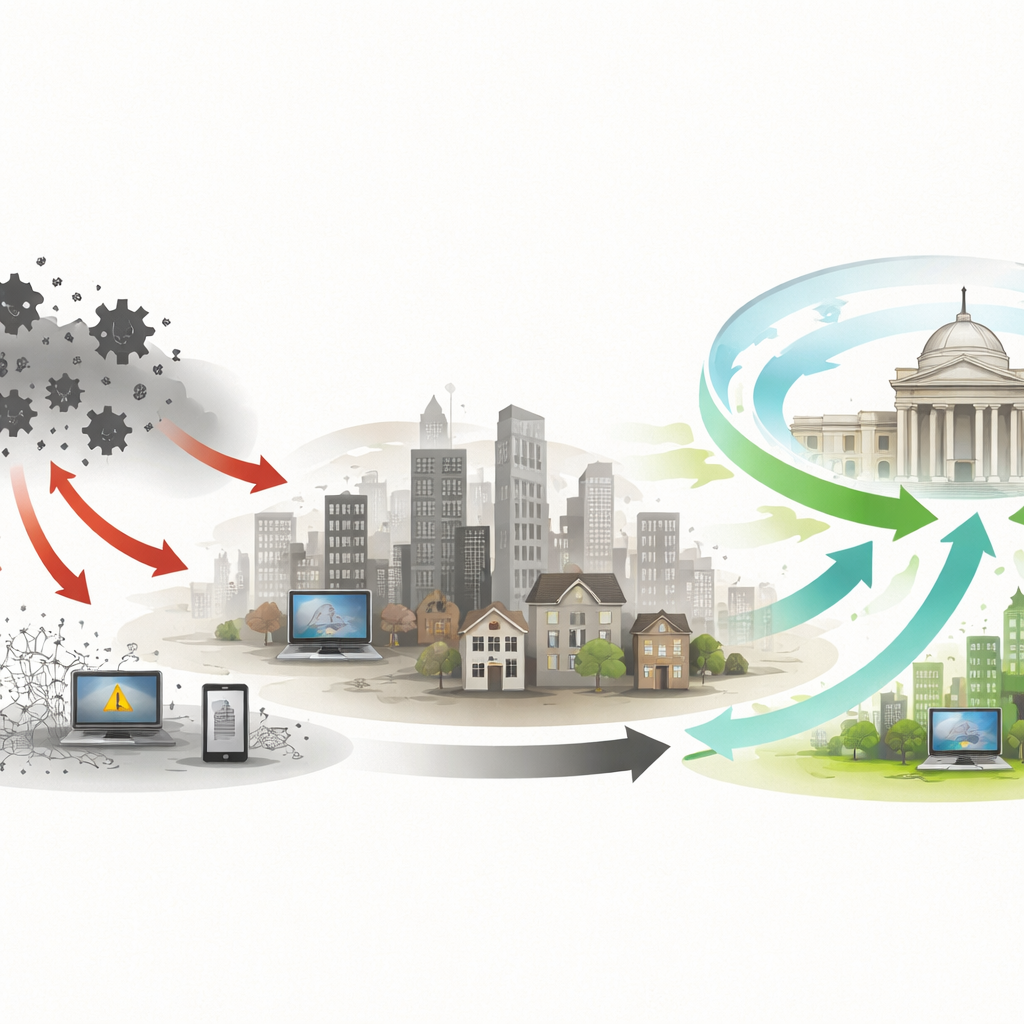
Most discussions of cyberattacks highlight headline‑grabbing data breaches or ransom demands at individual firms. This paper instead treats cybercrime as a shock to the entire economy. The author builds a macroeconomic model that links four main players: households, firms, government, and a dedicated “cybercrime sector” that generates attacks. The model is tailored to South Korea’s highly digital landscape, where everyday activities—from banking and shopping to factory production—depend on online systems. This broad view allows the study to trace how an attack that begins on a server or network can ultimately cut into national output, household spending, wages, and the returns investors earn on their capital.
How cyberattacks hit families and businesses
In the model, cyberattacks arrive as sudden disruptions, like storms hitting a power grid. For households, these shocks reduce well‑being in two ways: they cause direct financial losses and data theft, and they undermine confidence in online services, leading people to cut back spending. For firms, cyberattacks lower productivity by forcing shutdowns, corrupting data, and diverting money and staff time away from useful investment into repairs and emergency defenses. These firms then hire fewer workers, pay lower wages, and earn less on the machines and buildings they own. Using advanced statistical methods on more than two decades of Korean economic data, the study estimates how strong and persistent these knock‑on effects are.
Seeing the shockwaves over time
The research uses impulse response analysis—a way of asking “what happens next?” after a shock—to follow the economy’s path following a surge in cybercrime. The simulated results show that consumption, total output, labor supply, wages, and returns on capital all dip after an attack wave, and the damage does not vanish quickly. Cyber shocks linger: even after the initial incident fades, lower confidence and ongoing repair costs keep productivity and household welfare below their previous paths. By comparing cyber shocks with technology improvements and normal policy changes, the study finds that while new technologies give a strong short‑term boost, cyberattacks carve out losses that can last for years if left unchecked.
Cybersecurity spending as an economic safety net
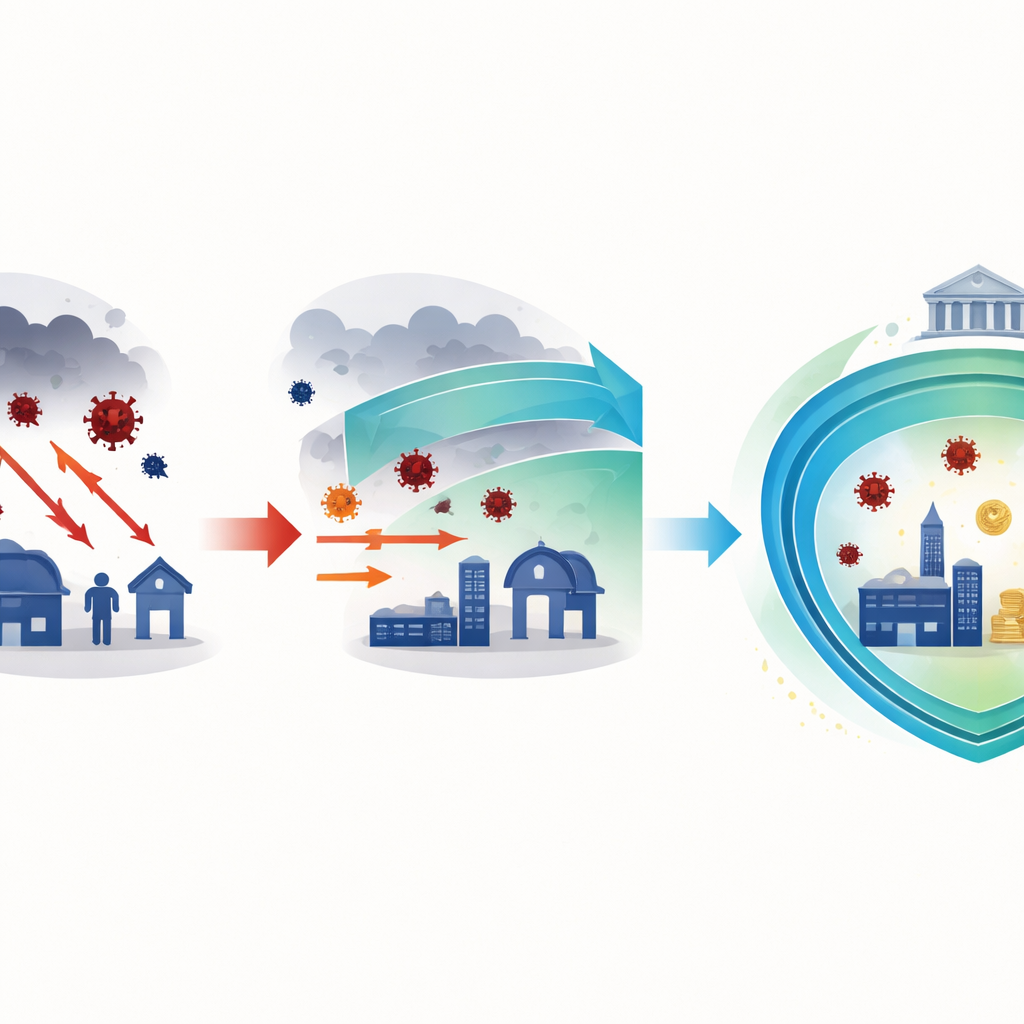
A central contribution of the study is to treat government cybersecurity investment as a powerful tool for economic stabilization, not just a technical expense. When the government devotes resources to better defenses—stronger infrastructure, monitoring, and coordination with private firms—the model shows that the severity and persistence of cyber shocks are reduced. Households see fewer losses and regain their appetite to spend; firms suffer less downtime and can refocus resources on productive activity rather than constant crisis response. Over time, this leads to higher wages, stronger returns on capital, and more stable growth. In the long run, public spending on cybersecurity behaves much like an insurance policy for the whole economy, paying off by cushioning future attacks.
What this means for digital societies
For a lay reader, the study’s message is straightforward: in a digital economy, cybercrime is not just an online nuisance—it is a real drag on living standards and national prosperity. By quantifying how attacks lower spending, jobs, and investment, and by showing that well‑designed public cybersecurity programs can meaningfully limit these losses, the research supports policies such as stronger cyber laws, better information‑sharing between sectors, and sustained funding for digital defenses. In everyday terms, investing in cybersecurity today helps keep incomes steadier and the broader economy more resilient tomorrow.
Citation: He, Y. Unveiling the socio-economic toll of cybercrime: evidence from South Korea. Humanit Soc Sci Commun 13, 242 (2026). https://doi.org/10.1057/s41599-026-06521-8
Keywords: cybercrime, cybersecurity investment, South Korea economy, digital resilience, macroeconomic shocks