Clear Sky Science · en
Empowering researchers to integrate sex and gender analysis in research: a reflexive interdisciplinary pedagogical approach
Why Bias in Research Affects Everyone
Most of us assume that new medicines, safety standards, and digital tools are tested to work well for everyone. Yet much of today’s research quietly takes the male body and male life experience as the default. This article explores how that blind spot can make cars less safe for women, misdiagnose heart attacks, or build apps and artificial intelligence that simply don’t work for large parts of society. It then shows how a new style of training is helping researchers redesign their projects so that sex, gender, and other social differences are built in from the start.
Everyday Examples with Serious Consequences
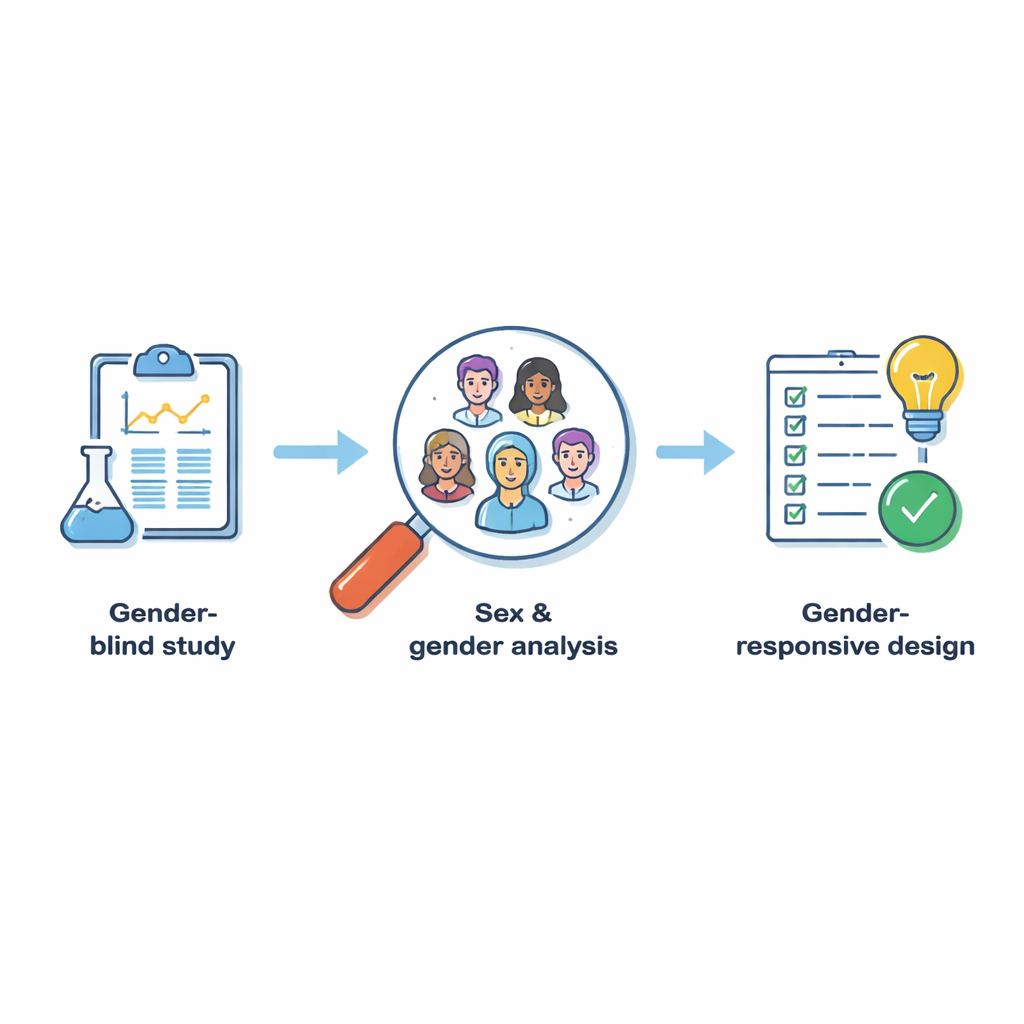
The paper opens with striking real-world cases that reveal how “neutral” science can still be biased. For decades, heart disease studies mainly followed male patients, so classic heart attack symptoms were defined around men. Women, who often show different warning signs like fatigue or back pain, were ignored as outliers, leading to missed or delayed diagnoses. In car safety testing, crash test dummies were long based on an average male body, contributing to women being more likely to be seriously injured in crashes. Similar patterns appear in technology: facial recognition systems trained mostly on images of white men perform far worse for women and people from other ethnic groups. These stories make clear that overlooking sex and gender is not a minor technical oversight; it can be life‑threatening.
New Rules, New Pressures on Researchers
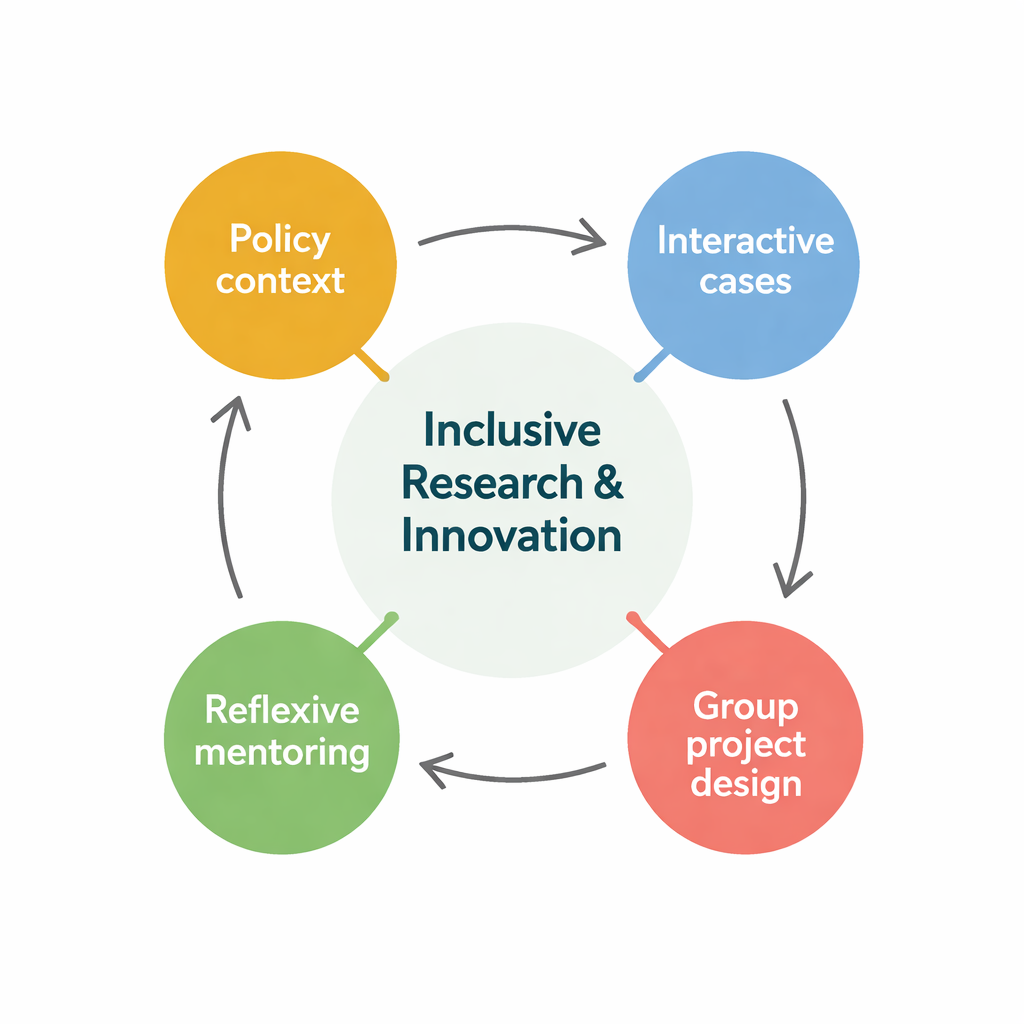
Responding to such evidence, the European Union now requires publicly funded research to take sex and gender into account. Under the Horizon Europe program, universities and labs must have gender equality plans, and grant proposals are judged in part on whether their studies consider differences between women, men, and other groups where relevant. Yet many scientists, especially in engineering and the natural sciences, have never been taught how to do this. They may confuse “gender” with simply balancing male and female participants, or worry that it adds unnecessary complexity. The article argues that to turn policy from a box‑ticking exercise into real change, researchers need practical, hands‑on training that shows how gender‑aware research actually improves quality and impact.
A Workshop Room as a Learning Laboratory
The author describes a series of 3–5 hour workshops held across Poland for scientists and innovators from both STEM and social science fields. Each session mixes a short, accessible lecture on key ideas—such as the difference between biological sex and social gender, and how these intersect with age, ethnicity, and class—with lively group work. Participants examine concrete case studies of biased research: heart attack diagnostics, male‑only crash dummies, farm apps with very few women users, climate‑change plans that ignore women’s roles, or biased AI systems. Guided questions prompt them to ask who is missing, whose needs are not considered, and what data would be needed to fix that. This “problem‑posing” format treats researchers not as passive listeners but as co‑investigators who uncover hidden assumptions together.
From Insight to Action in Research Design
In the next step, small groups design their own mini research projects that deliberately include a sex and gender lens. They choose topics linked to their fields—such as sustainable consumption, medical trials, or senior‑friendly equipment—and must spell out who they will study, how they will balance participants, what sex and gender information they will collect, and how they will analyze results. Many groups naturally propose equal numbers of women and men, sex‑disaggregated data, and questions about daily roles and constraints that may affect outcomes. Some begin to think more broadly, adding age, pregnancy, or social position as factors. These exercises show that once the blind spot is revealed, researchers quickly see how to make studies fairer and more accurate, and how this can lead to better products, policies, and health outcomes.
Changing How Scientists Think About “Good Research”
The article concludes that this interactive, reflective teaching method does more than pass on a checklist; it changes mindsets. By seeing vivid examples of harm caused by gender‑blind studies and then practising how to redesign projects, participants shift from viewing gender as a bureaucratic demand to recognising it as part of rigorous science. They leave more confident about meeting funders’ expectations and more motivated to run studies that serve a wider range of people. Over time, the author argues, such training can help build a research culture where asking “for whom will this work—and who might be left out?” becomes as routine as checking sample size or statistics. In other words, integrating sex, gender, and other social differences becomes simply another hallmark of doing good science.
Citation: Ryndzionek, M. Empowering researchers to integrate sex and gender analysis in research: a reflexive interdisciplinary pedagogical approach. Humanit Soc Sci Commun 13, 224 (2026). https://doi.org/10.1057/s41599-026-06520-9
Keywords: gender bias in research, inclusive innovation, sex and gender analysis, researcher training, Horizon Europe