Clear Sky Science · en
Associations between occupational homogamy and fame: A biographical analysis of 253 French-speaking singers
Love, Work, and the Making of a Music Star
When we think about why singers become famous, we usually picture raw talent, catchy songs, and lucky breaks. But in the world of French popular music, the authors of this study suggest that love lives also matter. By looking closely at the biographies of 253 French-speaking singers, they ask a simple but provocative question: does dating someone in the same line of work help you become better known—and does it matter if that partner is already a star?
Couples Behind the Curtain
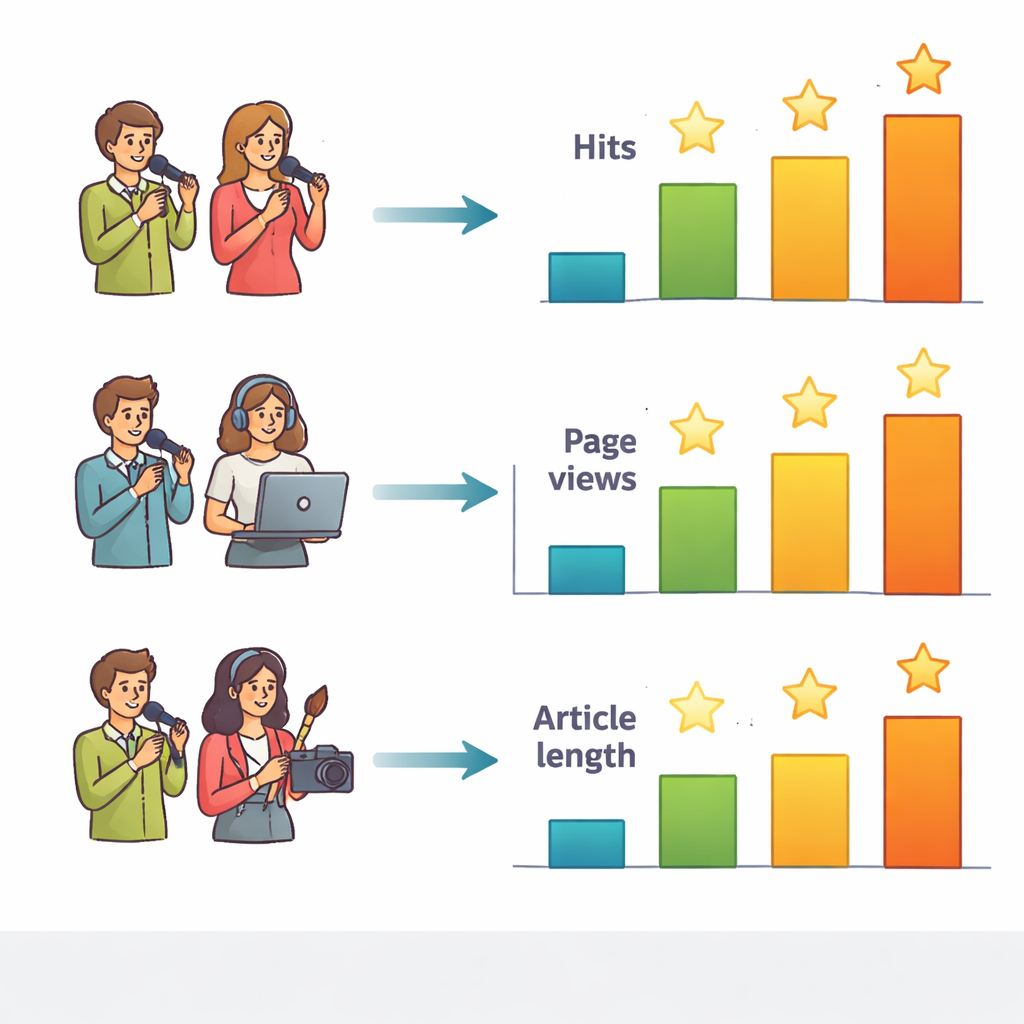
The researchers focused on "occupational homogamy," a term that simply means couples who share similar kinds of work. In this case, they looked at singers’ romantic partners and asked whether they were also singers, worked elsewhere in the music industry, or were active in other artistic fields like acting, modeling, or visual arts. The team assembled a large dataset from public online sources, including Wikipedia, press articles, and a detailed French music chart archive called Infodisc. For each singer, they recorded the number and timing of hit songs, how often their French Wikipedia page was viewed, and how long that article was—three easy-to-track clues about a person’s fame.

How Common Are Work-Based Romances?
The first striking result is just how widespread work-based romances are among these performers. About two-thirds of the singers had at least one romantic partner who worked in a related artistic field, and women were more likely than men to have such relationships. Many women partnered with people in the same industry but with different roles—such as producers, composers, or managers—while men more often paired with partners from other branches of the arts. Only about a third of the singers had no documented partner in a similar occupation at all. These patterns held even when the researchers repeated their analyses using stricter criteria for who counted as “famous,” suggesting that the trend is robust, not a quirk of the sample.
Do These Relationships Really Help Careers?
The study then examined how these relationships relate to fame. Singers who had at least one occupationally similar partner tended, on average, to have more hit songs, longer Wikipedia articles, and more page views than those who did not. The differences were modest but consistent across the three indicators, and they generally appeared stronger for women than for men. Importantly, the link did not vanish when the authors controlled for how early a singer’s first hit appeared or for how many partners they had overall. This suggests that collaborating and living with someone in the same professional world may open doors—from shared contacts and creative exchange to joint projects and media exposure—that solo strivers miss.
Is Dating a Star Better Than Dating a Colleague?
Because celebrity couples often dominate the headlines, the authors also asked whether having a famous partner gives an extra boost beyond simply sharing a line of work. They found that nearly 40 percent of singers had dated at least one celebrity, and women were again more likely to do so. However, when the team compared singers with famous, similar-occupation partners to those with equally similar but non-famous partners, they saw no clear advantage. Both groups tended to be more visible than singers who had never dated either a famous or a same-occupation partner, but the added star power of the partner did not reliably translate into higher charts, longer pages, or more clicks. In other words, being embedded in the same working world seems more important than basking in borrowed spotlight.
Which Comes First: Love or the Hit Single?
The timing of relationships also matters. About half of the singers had at least one romance before their first major hit, and many of these early relationships were with people in similar jobs. At first glance, those who formed such ties early on seemed to enjoy higher visibility later. But once the researchers accounted for factors like age at first success and total number of partners, the early advantage mostly faded. This suggests that while early homogamous relationships may accompany a rising career, they are only one of several ingredients in the complex recipe for fame.
What This Means for Understanding Fame
For non-specialists, the key message is that musical stardom is not only about talent or hard work; it also grows out of social worlds and intimate ties. In the French music scene, many well-known singers appear to move upward alongside romantic partners who share their professional universe, particularly women who pair with collaborators inside the industry. Yet the study also shows that no single factor guarantees success: occupationally similar relationships help, but they do not replace the need for hits, public interest, and long-term career building. Fame, the authors conclude, is a product of both what artists do on stage and whom they share their lives with behind the scenes.
Citation: Ribotta, B., Hilpert, P. & Lemaitre, B. Associations between occupational homogamy and fame: A biographical analysis of 253 French-speaking singers. Humanit Soc Sci Commun 13, 216 (2026). https://doi.org/10.1057/s41599-026-06519-2
Keywords: celebrity couples, music industry, romantic relationships, gender and fame, occupational homogamy