Clear Sky Science · en
Synergies and barriers: unveiling the path to sustainable construction in the Chengdu-Chongqing urban agglomeration
Why building better cities matters
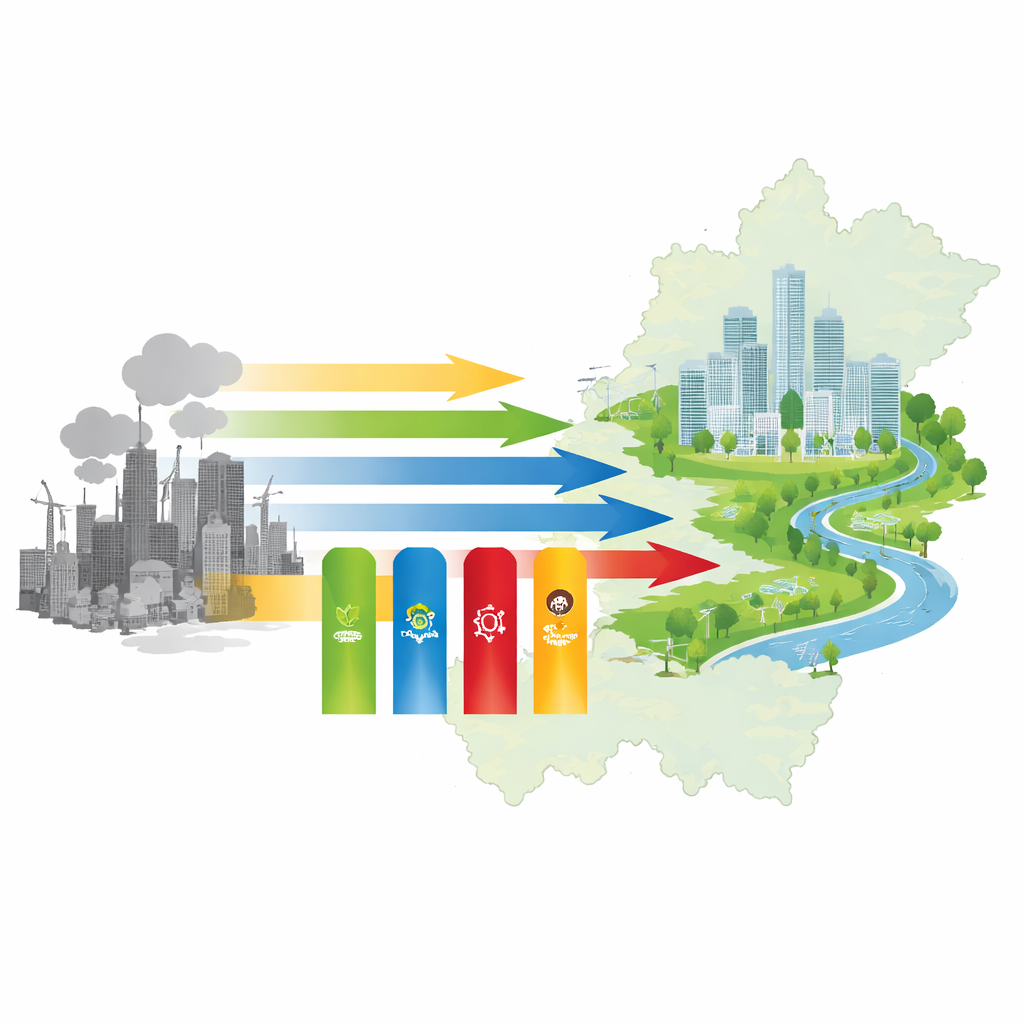
Across the world, cities are racing upward in concrete and steel. In China’s booming Chengdu–Chongqing region, this surge has brought jobs, housing, and new skylines—but also heavy energy use, carbon emissions, and uneven growth between rich hubs and smaller cities. This study asks a simple question with far-reaching consequences: can a fast-growing construction industry learn to grow cleaner, fairer, and smarter at the same time, and what stands in the way?
A window into a fast-growing region
The Chengdu–Chongqing urban agglomeration in southwestern China covers 16 cities, more than 80 million people, and has seen construction output more than double in less than a decade. The area is a key testing ground for China’s plan for “high-quality development,” which means not just building more, but building in ways that protect the environment, spread benefits widely, and coordinate growth between cities. The authors use data from 2010 to 2019—before the disruptions of COVID-19—to trace how this construction boom has unfolded and how well it lines up with sustainability goals.
Five lenses on better building
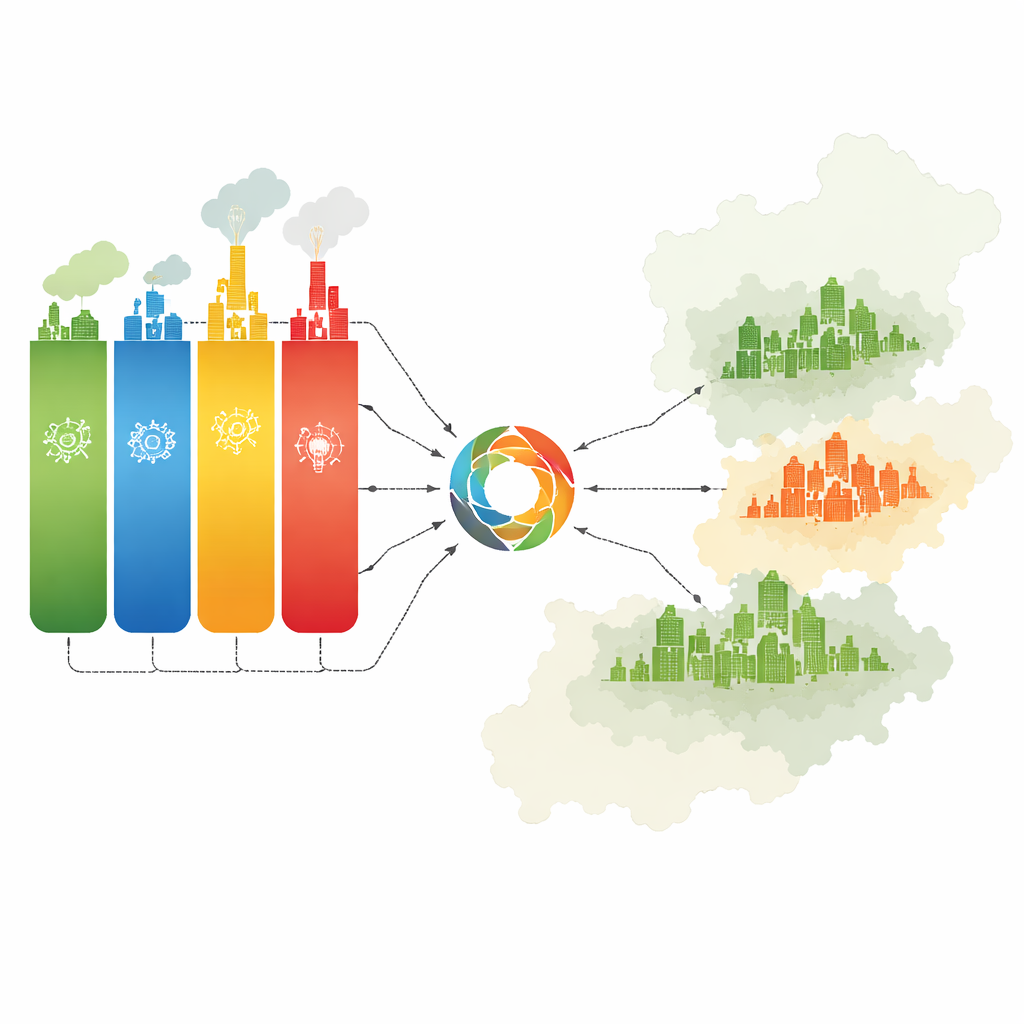
To make sense of such a complex system, the researchers break “high-quality development” into five easy-to-grasp ideas. “Green” captures pollution, carbon emissions, and urban greenery. “Opening” looks at how the industry connects to wider markets through state-owned and foreign-invested firms. “Sharing” tracks how tax revenues and jobs from construction are spread across the population. “Innovation” reflects labor productivity and modern equipment. “Coordination” gauges how balanced the industry is in scale, profits, and building space per person. Each of these aspects is measured through detailed indicators and then combined into overall scores for each city, allowing the team to compare places and track change over time.
Slow progress and uneven ground
The analysis shows that, while conditions are improving, most cities still lag far behind what would count as truly balanced and sustainable construction. Overall scores inch upward, but many cities move only from “extremely imbalanced” to “moderately imbalanced.” Chengdu and Chongqing stand out as strong cores with the highest scores, drawing in talent, capital, and technology. Smaller cities in the central and southwestern parts of the region, by contrast, remain stuck at the bottom with weak links between economic growth and sustainable practices. When the authors map these patterns, they find clusters of strong performance around Chengdu and clusters of weak performance in the southwest—evidence that neighboring cities tend to resemble each other, for better or worse.
Hidden hurdles behind the numbers
Looking more closely at what holds cities back, the study finds that lack of coordination is the biggest obstacle: industry scale, profits, and building space per person often grow out of sync, leaving some places overbuilt and others behind. The next major barriers are how fairly the benefits are shared and how quickly innovation spreads. Environmental factors, especially carbon emissions and limited green coverage in built-up areas, emerge as critical sticking points by the end of the study period; in 2019, high emissions are the top obstacle in almost every city. Openness to outside capital and markets, however, turns out to be less of a barrier than expected, suggesting that simply attracting more firms is not enough without better planning and technology. Together, these findings paint a picture of a region where the tools for cleaner, smarter construction exist but are unevenly deployed.
Turning findings into better cities
For non-specialists, the takeaway is clear: rapid building alone does not guarantee livable, low-carbon cities. The Chengdu–Chongqing region is making headway, but most of its construction activity still falls short of true high-quality development. The authors argue that policy makers should use coordinated plans that link big hubs with smaller cities, invest in greener infrastructure and modern construction methods, and design incentives that encourage companies to share gains more broadly and cut emissions. By showing where progress is real and where the bottlenecks lie, this study offers a roadmap that can help not only this Chinese region but also other fast-urbanizing areas worldwide to shift from sheer growth to building cities that are resilient, fair, and environmentally responsible.
Citation: Wan, J., Wang, Y., Su, Y. et al. Synergies and barriers: unveiling the path to sustainable construction in the Chengdu-Chongqing urban agglomeration. Humanit Soc Sci Commun 13, 229 (2026). https://doi.org/10.1057/s41599-026-06514-7
Keywords: sustainable construction, urban development, Chengdu-Chongqing, carbon emissions, regional coordination