Clear Sky Science · en
What does legitimacy mean within sustainable development? A scoping review
Why the idea of “right to rule” matters for our future
When governments, companies, or experts make decisions in the name of “sustainable development,” why should anyone accept those decisions as fair and appropriate? This paper tackles that question by examining the slippery notion of legitimacy—our sense that an authority has the right to act on our behalf. By scanning hundreds of studies, the author shows that scholars talk about legitimacy in many different ways, often without realizing how fragmented the debate has become. Understanding these patterns matters for citizens, policymakers, and businesses alike, because ambitious goals such as the UN Sustainable Development Goals (SDGs) will only succeed if people believe that the institutions pursuing them are acting in a justified way.
Different paths to being seen as rightful
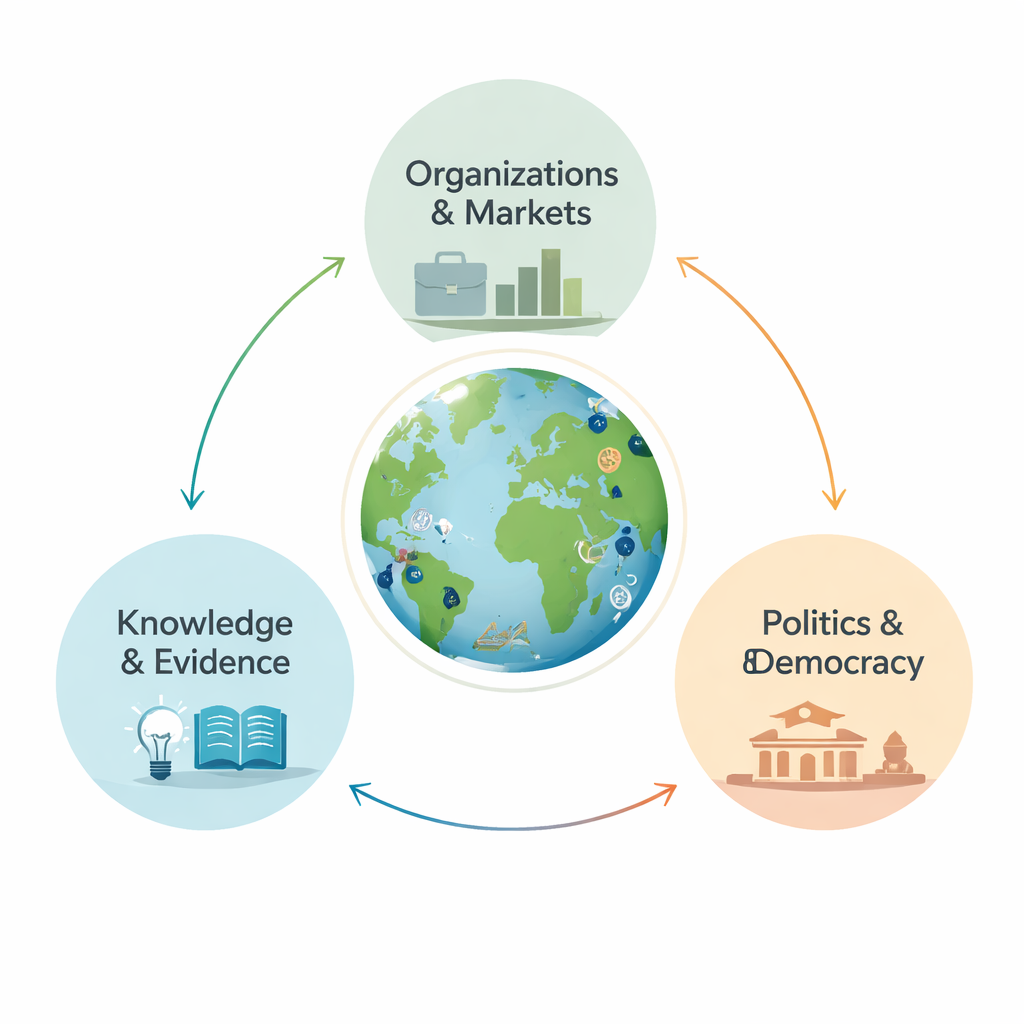
The paper begins by unpacking how social scientists have defined legitimacy over the past few decades. Some see it as a broad social judgment: people feel that an actor’s behavior fits shared norms and values. Others stress obedience to rules or the belief that certain institutions ought to be followed. To make sense of this crowded landscape, the author conducts a scoping review—a panoramic survey rather than a narrow, detailed test—of nearly a thousand academic articles that mention both “sustainable development” and “legitimacy.” After careful screening, 272 studies remain for analysis. This body of work reveals that legitimacy is not a single, clean concept, but a collection of overlapping ideas that scholars use in different ways depending on their discipline and research questions.
How scholars mapped the conversation
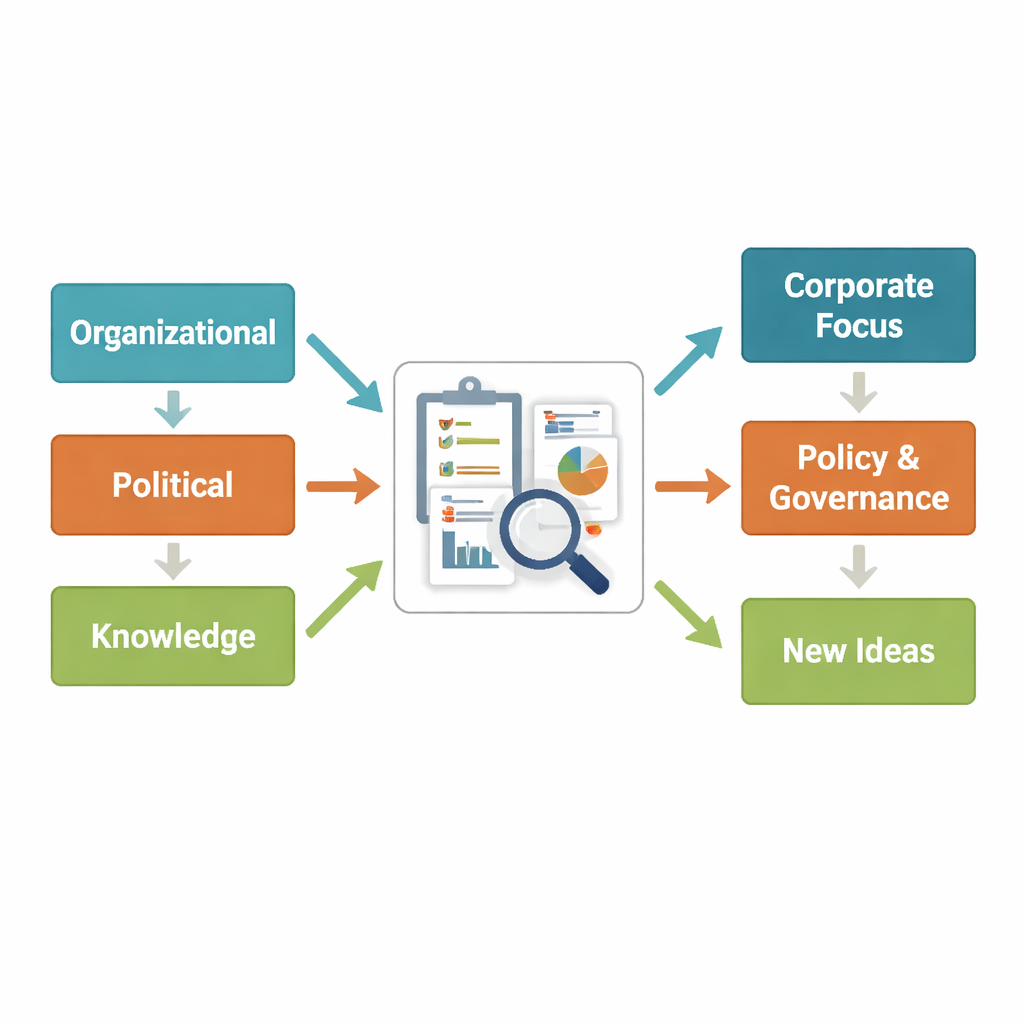
The review sorted the 272 studies into six main ways of thinking about legitimacy. Three are anchored in established traditions. One is organizational legitimacy, focused on whether firms, agencies, or other organizations are seen as acceptable by their stakeholders, especially in markets. Another is political legitimacy, which asks whether rules, governments, and decision-making processes are justified in democratic and ethical terms. A third draws on a framework that links “credibility, relevance, and legitimacy” when turning knowledge into action for sustainable development. The remaining categories capture hybrids that mix these traditions, as well as a small “other” group with more unusual ideas, such as “thick legitimacy” or “innovation legitimacy.”
Who studies legitimacy, and from which angle
By looking at publication years, fields, and author locations, the review identifies clear patterns. Research connecting legitimacy and sustainable development has grown steadily since the late 1990s, with a sharp rise after the launch of the 2030 Agenda and the SDGs. Most of this work comes from the social sciences, and the largest share—well over half—belongs to economics and management. Not surprisingly, that field overwhelmingly uses organizational notions of legitimacy, often building on a classic framework that distinguishes pragmatic, moral, and cognitive forms of acceptance. Political science and public administration contribute a smaller but important body of work that emphasizes democratic input, fair procedures, and effective outcomes. Geographically, authors based in China, Europe, and North America dominate the conversation, and certain understandings of legitimacy appear more often in particular countries.
Fresh ideas, but limited cross-talk
While many studies rely on a handful of well-known definitions, the review also finds creative adaptations tailored to sustainable development. Some scholars refine what it means for a company to be legitimate when it claims to respect environmental protection, social equity, and economic performance, distinguishing between the legitimacy of a product, a firm, or an underlying cause. Others coin notions such as “situated legitimacy” or “linked legitimacy” to stress that acceptance is always tied to specific contexts, projects, or communities. Still others propose new ways to judge whether mining projects, public administrators, or data partnerships for the SDGs have social, environmental, cultural, or procedural backing. Yet these innovations mostly remain within their home traditions; only a few studies truly blend organizational, political, and knowledge-centered views, suggesting that interdisciplinary dialogue is still limited.
What this means for people and policies
For a general reader, the core message is straightforward: there is no single answer to what makes sustainable development “legitimate.” Instead, legitimacy can mean being profitable yet socially accepted, being democratically authorized and procedurally fair, or being based on credible and relevant knowledge that respects different values. This diversity is not necessarily a weakness; it can be a strength if we are explicit about which meaning we use and why. The paper concludes that to avoid “legitimacy” becoming an empty buzzword, researchers, policymakers, and citizens should recognize its many faces and use them carefully. Doing so can help design climate policies, green investments, and development programs that are not only effective on paper, but also perceived as rightful and worth supporting in the eyes of the people they affect.
Citation: De Donà, M. What does legitimacy mean within sustainable development? A scoping review. Humanit Soc Sci Commun 13, 219 (2026). https://doi.org/10.1057/s41599-026-06513-8
Keywords: legitimacy, sustainable development, governance, corporate responsibility, public trust