Clear Sky Science · en
Facilitators and barriers towards developing and implementing transdisciplinary higher education: insights from pioneers in the Netherlands
Why Rethinking Higher Education Matters
Many of today’s biggest challenges—like climate change, rising inequality and health crises—do not fit neatly into one school subject or profession. This article explores how universities in the Netherlands are experimenting with a new way of teaching and learning that cuts across traditional boundaries. Called transdisciplinary education, it brings students, teachers, researchers and people from outside the university together as equals to tackle real‑world problems. Understanding what helps and what gets in the way of this approach matters for anyone who cares about how education can better prepare people to improve society.
Learning Together Across Borders
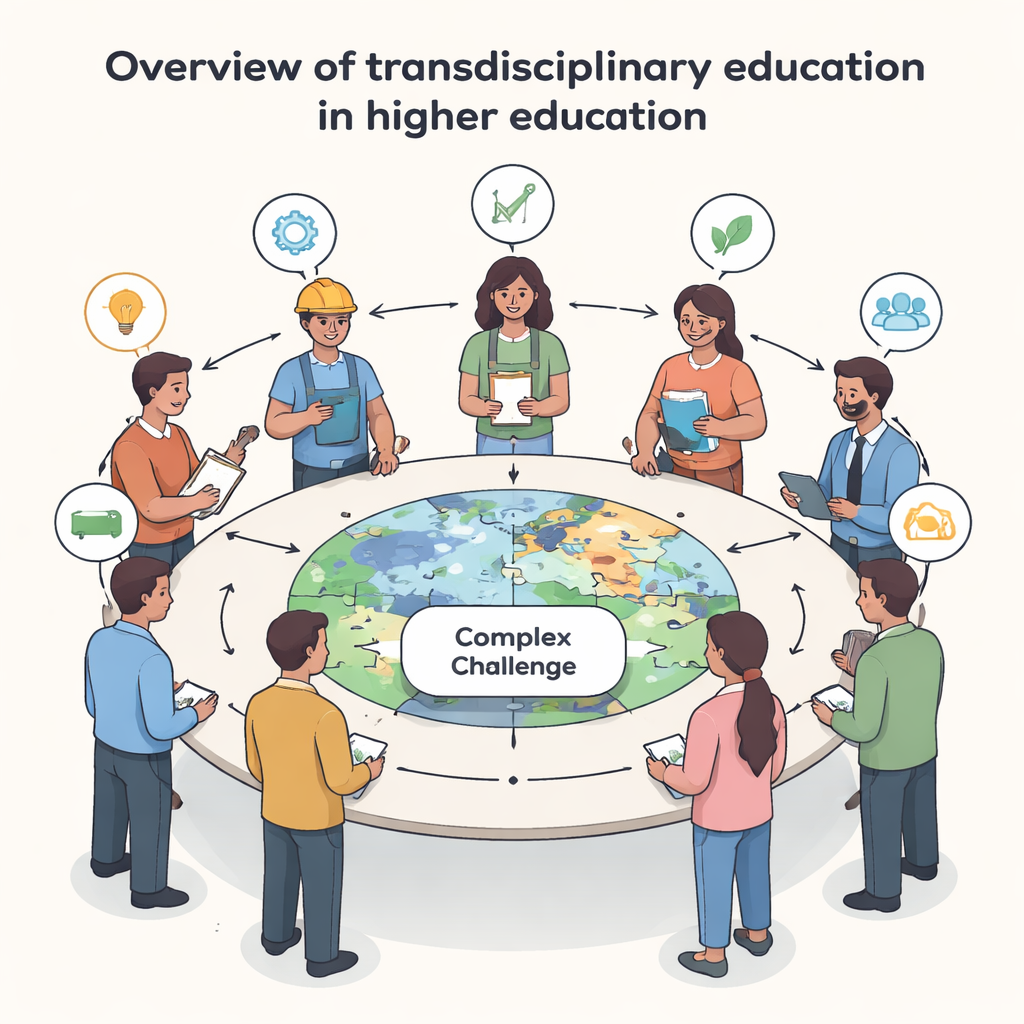
In transdisciplinary education, people from different backgrounds—engineering, social work, law, design, local government, community groups and more—work side by side on a shared social issue. Instead of just listening to lectures, students join mixed teams that investigate questions defined with community partners, such as how to make a neighborhood safer or a food system more sustainable. The authors interviewed 13 pioneers involved in 10 such projects across Dutch universities and universities of applied sciences. These projects are still relatively young and often small in scale, but they offer a window into how higher education might evolve to serve society more directly.
Making a Difference Beyond the Classroom
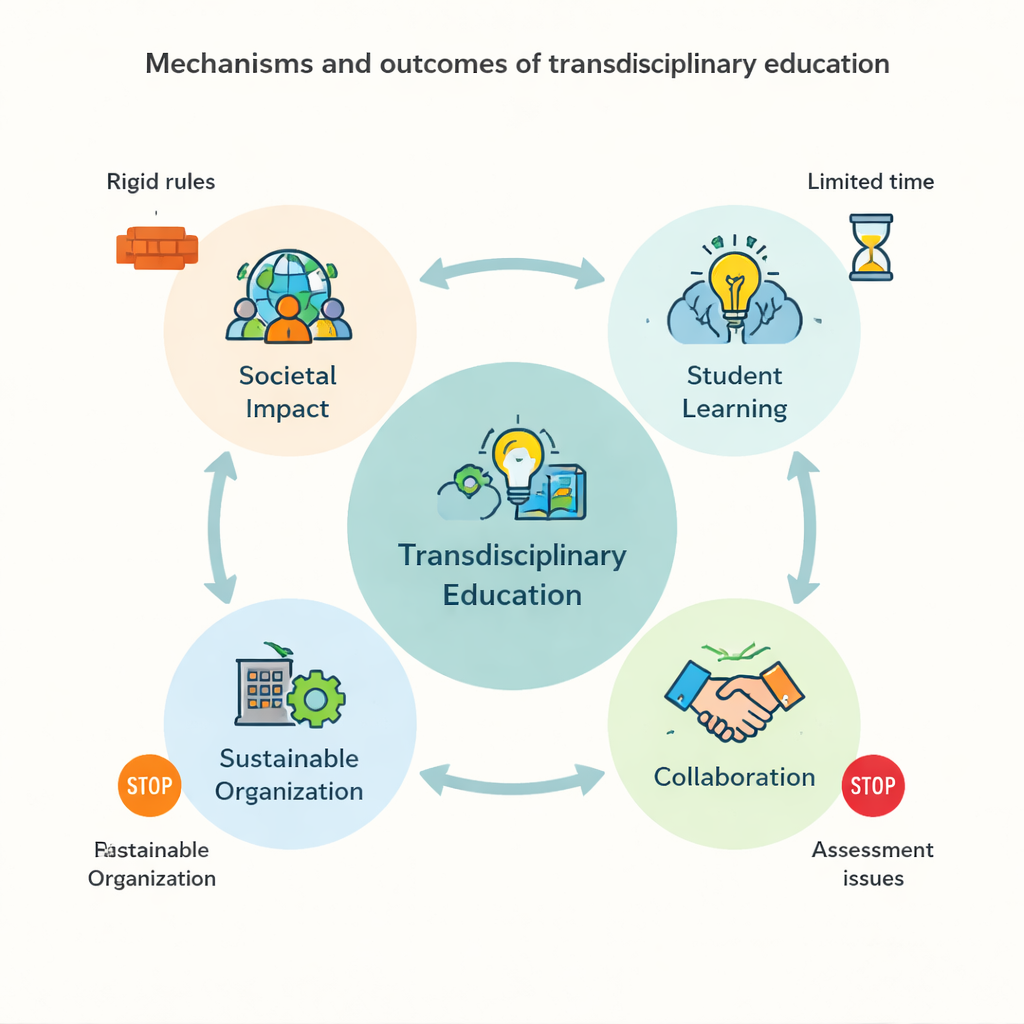
The first big goal of these initiatives is to create real impact outside the university. Sometimes impact is direct: student teams deliver reports, prototypes or new ideas that local organizations, companies or public agencies can use. Just as important, however, is a slower, more subtle form of change. By learning to see problems from many angles and to work respectfully with non‑academics, students and staff themselves change how they think and act. Pioneers describe this as an “oil slick” effect: participants carry their new ways of working into future jobs and projects, gradually spreading a more collaborative and socially engaged mindset. Long‑term partnerships with community groups help ensure that knowledge and solutions do not disappear when a course ends.
Growing as a Person and a Professional
A second core aim is deep learning. Students are pushed beyond familiar routines: they must deal with uncertainty, negotiate conflicting viewpoints and take responsibility for their own learning. Many develop so‑called 21st‑century skills—such as collaboration, reflection, perseverance and dealing with setbacks—while also gaining practical experience with real clients and real consequences. This can be both exciting and stressful. Traditional grading systems often sit uneasily with these open‑ended projects, because they focus narrowly on individual results rather than shared learning. Teachers find themselves trying to be both equal partners in the project and judges of student performance, which can undermine the sense of equality that transdisciplinary work depends on.
Working Together Fairly and Safely
The third aim centers on collaboration itself. Pioneers hope students will learn that their own viewpoint is only one among many, and that progress on tough problems requires listening carefully and building trust. They highlight the importance of investing time in relationships: mapping out who the key partners are, agreeing on expectations and developing a common language that makes sense to everyone, not just academics. A psychologically safe atmosphere—where people can ask questions, admit uncertainty and share personal experiences without fear—is crucial. When outside partners are only loosely involved, or when strong hierarchies and power imbalances are left unaddressed, collaboration tends to slip back into a simple “client and contractor” model instead of genuine joint problem‑solving.
Changing the System from Within
The final goal is to make this kind of education sustainable inside institutions that are not built for it. Most universities are organized in separate disciplinary “silos” with their own budgets, rules and timetables, which makes it hard to run flexible, cross‑cutting programs. Many pioneers rely on short‑term innovation grants and personal enthusiasm, squeezing this work into already full schedules. They often start small—as electives, minors or extracurricular programs—to create room for experimentation. Over time, they seek broader support from managers and colleagues to secure funding, staff time and recognition. Yet rigid regulations, fixed learning outcomes and standardized assessment practices remain heavy obstacles, leading some to speak of “institutional concrete” that must be carefully chipped away.
What This Means for the Future
For a lay reader, the article’s main message is straightforward: if we want universities to help solve complex real‑world problems, we must let them operate differently. The Dutch pioneers show that bringing diverse students and community partners together around real questions can spark powerful learning and social impact. But they also reveal how hard it is to fit this into systems designed for large lectures, clear‑cut exams and neat subject boundaries. The authors conclude that lasting change will require not just individual passion, but shifts in rules, funding, assessment and culture. Transdisciplinary education is still experimental, but it offers a promising path toward universities that are better equipped to serve society in turbulent times.
Citation: Kurris, J., van Tuijl, A., Waldram, N. et al. Facilitators and barriers towards developing and implementing transdisciplinary higher education: insights from pioneers in the Netherlands. Humanit Soc Sci Commun 13, 218 (2026). https://doi.org/10.1057/s41599-026-06510-x
Keywords: transdisciplinary education, higher education innovation, societal impact, collaborative learning, interdisciplinary teaching