Clear Sky Science · en
Social-ecological network analysis of national park attractiveness: a case study of Baishanzu Mountain, China
Why this mountain park matters to people nearby
Baishanzu National Park in eastern China is a lush mountain landscape rich in rare plants, animals, and forest. But for the people living in the small towns and villages around it, the park is also a potential engine for jobs, tourism, and cultural pride. This study asks a simple but powerful question: how can a park protect nature while also helping nearby communities prosper, especially in a developing region where poverty and isolation are real concerns?
Nature and neighbors under one map
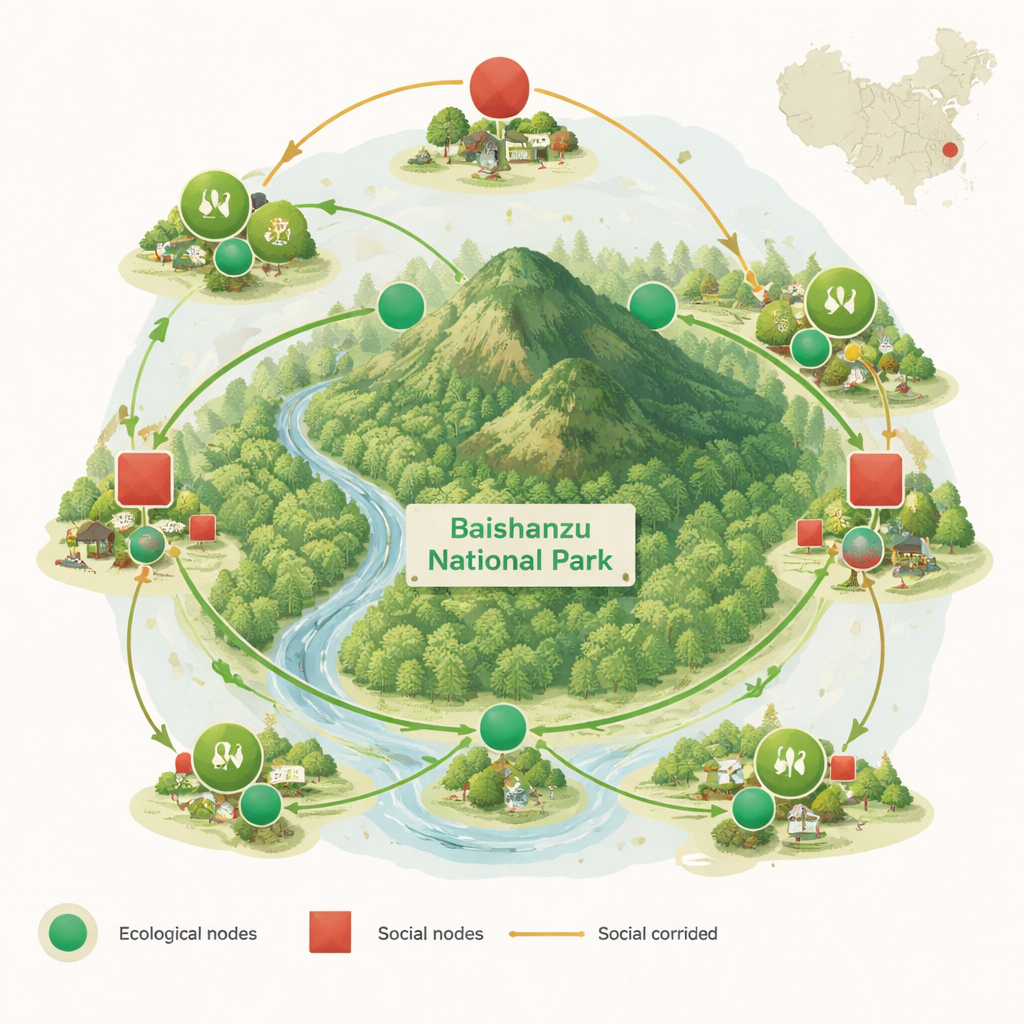
To explore this, the researchers built what they call a social-ecological network for Baishanzu and three surrounding counties. Instead of looking only at wildlife habitat inside the park, they mapped both "ecological nodes" (large forest areas that support species and ecosystem functions) and "social nodes" (population centers with services and infrastructure). They then traced the easiest paths for animals, water, and other natural flows to move through the landscape, and compared them with the easiest paths for people, goods, and information to move between communities and the park. This allowed them to see where nature and society are closely linked, and where they are still disconnected.
Easy paths for wildlife, hard paths for people
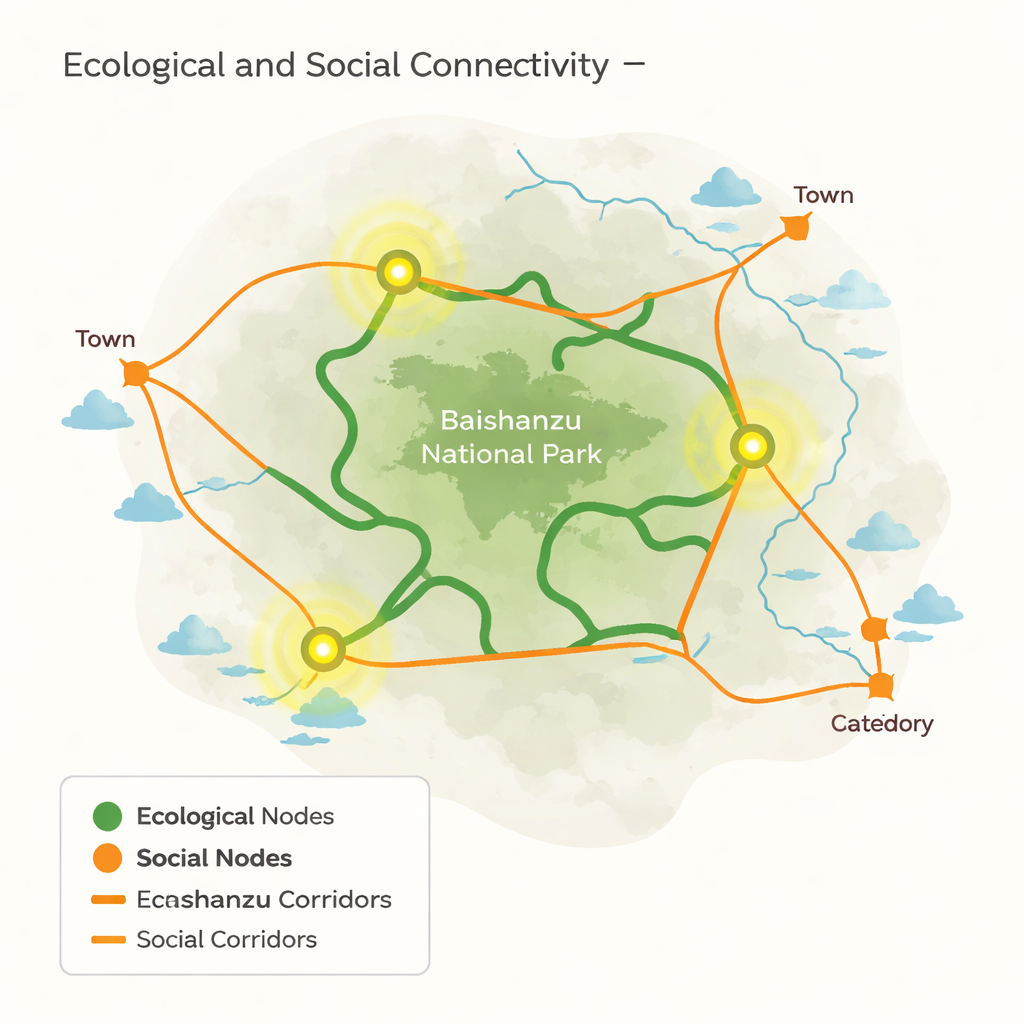
The results show a striking contrast. Ecologically, Baishanzu and its surroundings are highly connected: forests are extensive, rivers are intact, and most of the area offers low “resistance” to the movement of plants and animals. The team identified ten major ecological nodes and a dense web of green corridors totaling more than 700 kilometers, suggesting that species can move relatively freely across the region. Socially, however, movement is much harder. The same mountainous terrain, limited roads, and sparse settlements create high “social resistance” that makes it difficult for residents and visitors to access the park or move between communities. Only three major social nodes and longer, more fragmented social corridors were found, highlighting how isolated many people remain despite living near a nationally important park.
Finding the best gateways between park and people
Because not every location around the park has the same potential, the researchers looked for specific places where strong natural resources coincide with strong human demand. They evaluated each ecological node outside the park by how many nature corridors it connects, how much ecological area it can supply to nearby communities, and how evenly its connections are spread. From this, they identified three key gateway areas: one near the eastern main entrance and two near southeastern and northern side entrances. These spots have good forest cover, reasonable access roads, and nearby towns, making them ideal for turning the park’s ecological wealth into cultural experiences, recreation, and local income.
Turning green assets into local benefits
Field visits confirmed that these three gateways already blend rich nature with distinctive local culture, such as traditional She minority customs, mountain farming, and historic trails. The study suggests that carefully improving roads, visitor facilities, public services, and small-scale tourism businesses at these points could help nearby residents earn more from guiding, homestays, local foods, and cultural events, while keeping the park’s core zones strictly protected. Policies like community-run concessions, payments to villagers for maintaining ecosystem services, and shared decision-making bodies could help ensure that residents benefit fairly and support conservation.
What this means for parks in developing regions
For a lay reader, the main takeaway is that a national park does not have to be a fenced-off island of wilderness. When managers deliberately map and strengthen the “bridges” between nature and society, parks like Baishanzu can both safeguard biodiversity and improve daily life in nearby communities. By focusing investment on a few well-chosen gateway areas, this study shows a practical path for developing countries to turn protected forests into long-term social and economic value without sacrificing the very ecosystems they are meant to protect.
Citation: Cai, Y., Wu, Y. Social-ecological network analysis of national park attractiveness: a case study of Baishanzu Mountain, China. Humanit Soc Sci Commun 13, 205 (2026). https://doi.org/10.1057/s41599-026-06505-8
Keywords: national parks, social-ecological networks, biodiversity conservation, community development, eco-tourism