Clear Sky Science · en
Exploring the relationship between caring ability and moral awareness among nurses with a gender perspective: implications for psychologists and social workers in healthcare ethics and social practice
Why this matters for patients and families
When we enter a hospital, we hope that the nurses caring for us are not only skilled but also guided by a strong sense of right and wrong. This article looks at how these two sides of nursing—emotional care and moral judgment—work together among nurses in Iraq’s public hospitals, and how gender and tough working conditions shape that relationship.
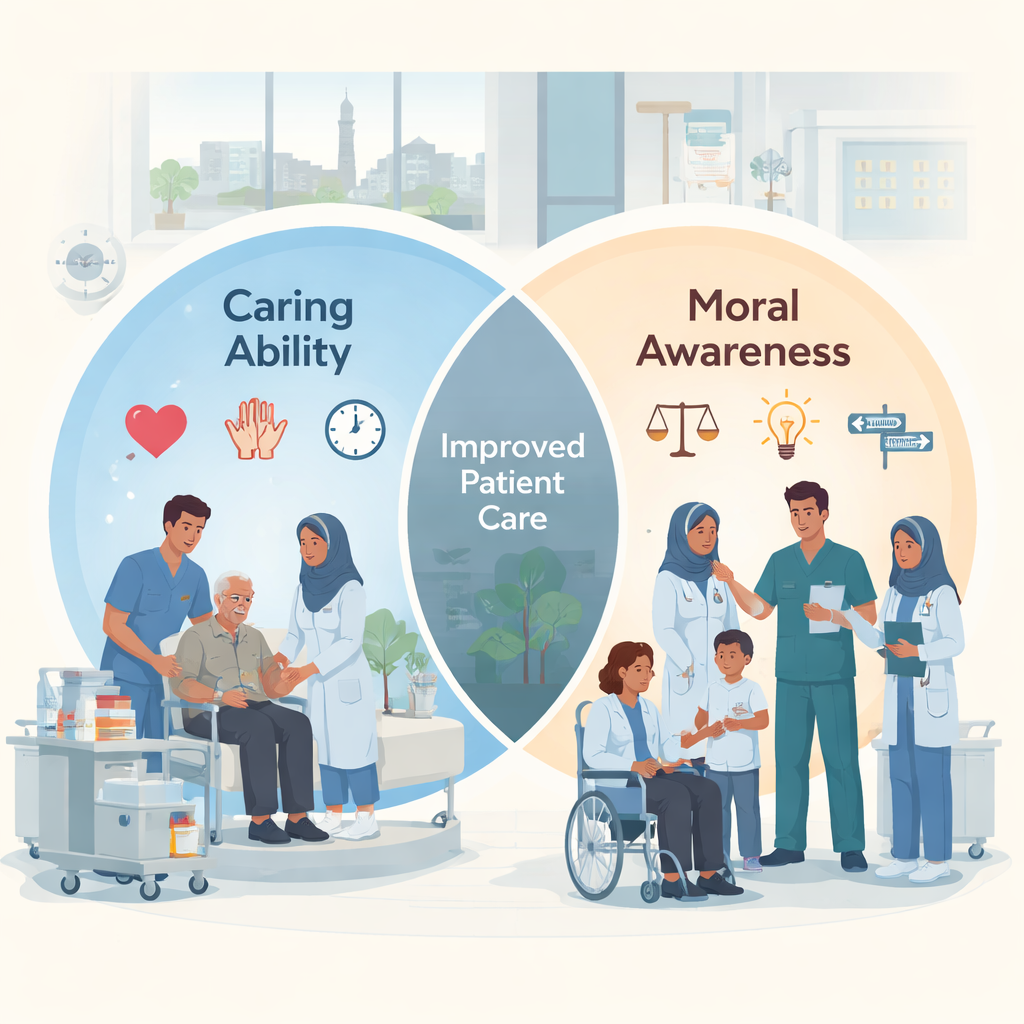
Caring as more than medical tasks
The authors start from a simple idea: healthcare is about much more than medicines and machines. Good care means seeing the whole person—their body, mind, and spirit—and understanding that many health problems are tied to social and economic pressures. In this view, a nurse’s “caring ability” includes kindness, patience, courage, and the skill to create a safe, comforting environment. Drawing on leading ideas in nursing and psychology, the article treats care not as just a set of tasks, but as a deeply human connection that requires emotional sensitivity and ethical reflection.
Knowing right from wrong on the ward
The second focus is “moral awareness”: the capacity to notice when a situation has an ethical dimension and to see how one’s decisions affect patients, families, and colleagues. In crowded Iraqi public hospitals—where supplies can be scarce, patient loads are heavy, and crises such as pandemics are recent memories—everyday choices often carry moral weight. Nurses may have to decide who gets attention first, how to respond to conflicting family demands, or how to cope with rules they feel are unfair. Being morally aware helps them recognize these moments and think through what is most respectful and just.
How the study was carried out
To explore these issues, the researchers surveyed 190 nurses (101 women and 89 men) from Baghdad’s two largest public hospitals. They used two established questionnaires adapted for Iraq: one measured caring ability in terms of knowing the patient, acting with courage, and showing patience; the other measured moral awareness, including sensitivity to ethical problems and the motivation and strength to act on one’s values. The study asked three main questions: how high nurses scored on each quality, whether men and women differed, and whether caring ability and moral awareness rose and fell together.
What the researchers discovered
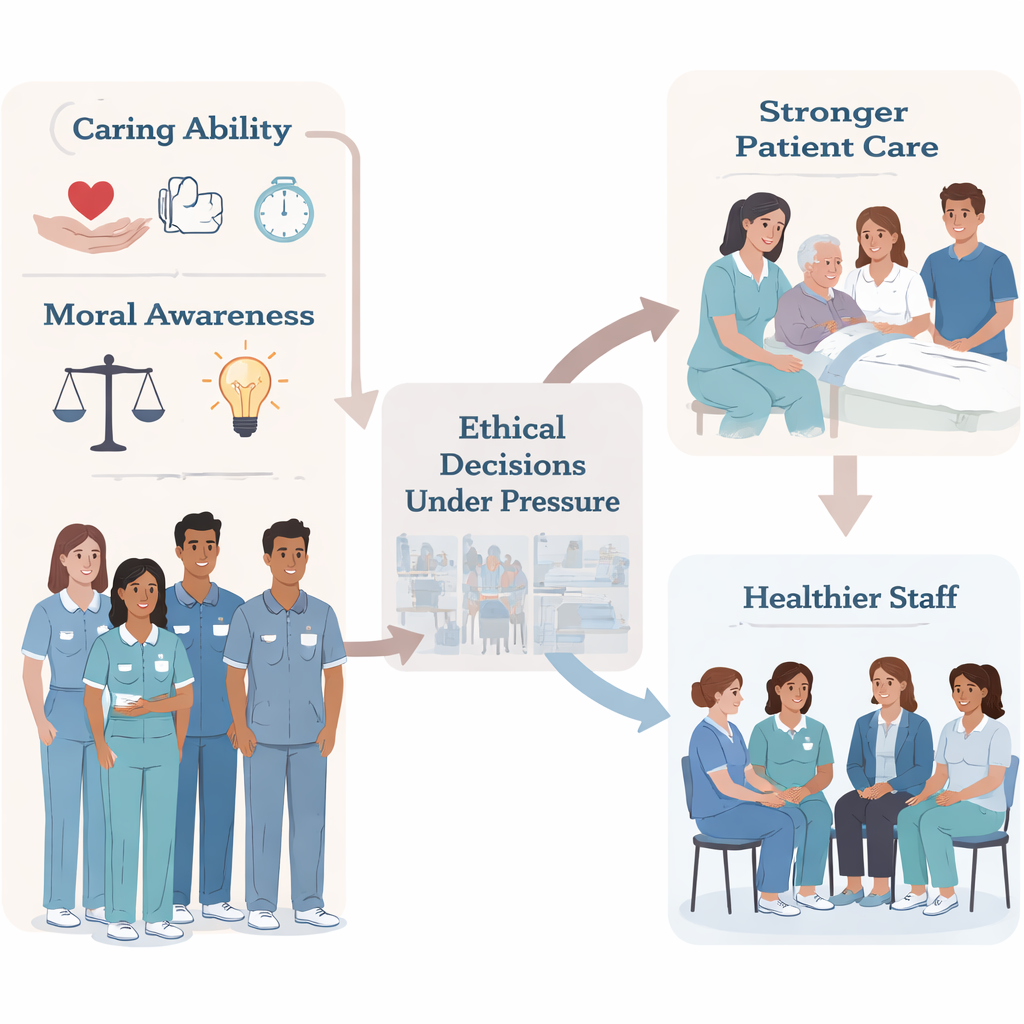
Overall, nurses reported high levels of both caring ability and moral awareness, meaning that most felt strongly committed to compassionate, ethical practice despite difficult conditions. Women scored higher than men on caring ability, which may reflect cultural expectations that women should be more nurturing, as well as how they are socialized within nursing. Interestingly, men and women reported similar levels of moral awareness. When the researchers looked at how the two traits were linked, they found a clear pattern: nurses who scored higher on moral awareness also tended to score higher on caring ability. This link was moderate to strong in the whole group and was especially strong among male nurses.
Implications for nurses, psychologists, and social workers
The authors argue that this connection between caring and moral awareness has practical consequences. They suggest that training for nurses should not only teach clinical skills but also include ethics workshops, case discussions, and reflection groups that help staff talk through moral dilemmas. Psychologists can support nurses by providing counseling, stress management, and emotional intelligence training, while social workers can advocate for better working conditions and resources. Joint programs that bring these professions together may help nurses maintain both empathy and ethical clarity, even in under-resourced, crisis-affected settings.
What it means for everyday care
For a lay reader, the core message is straightforward: nurses who are more aware of the moral side of their work tend to be better at caring for patients in a humane and patient-centered way. In Iraq’s strained public hospitals, strengthening both caring ability and moral awareness could lead to kinder bedside care, fairer decisions when resources are limited, and healthier, more resilient nursing staff. The study also highlights that men and women may experience and express care somewhat differently, so support and training should be sensitive to gender as well as to the harsh realities of the healthcare system.
Citation: Shakir Al-Fatlawi, A., Snoubar, Y. & Adel Yosef, N. Exploring the relationship between caring ability and moral awareness among nurses with a gender perspective: implications for psychologists and social workers in healthcare ethics and social practice. Humanit Soc Sci Commun 13, 201 (2026). https://doi.org/10.1057/s41599-026-06502-x
Keywords: nursing ethics, caring ability, moral awareness, Iraqi healthcare, gender differences