Clear Sky Science · en
Instant gratification and long-term sustainability: a gender-inclusive approach to social infrastructure in Gilgit-Baltistan road projects
Why Roads and Services Matter in Mountain Communities
In the high mountains of northern Pakistan, a new road or clinic can change daily life overnight. This article looks at how such visible, short-term improvements influence whether local people support big development projects. Focusing on the Diamer district of Gilgit-Baltistan—a remote, conservative area shaped by tribal traditions—the study asks a simple question with far-reaching implications: when roads arrive, what kinds of benefits must people feel right away for them to trust and endorse these projects, and how does this differ for men and women?
Life on the Edge of the Map
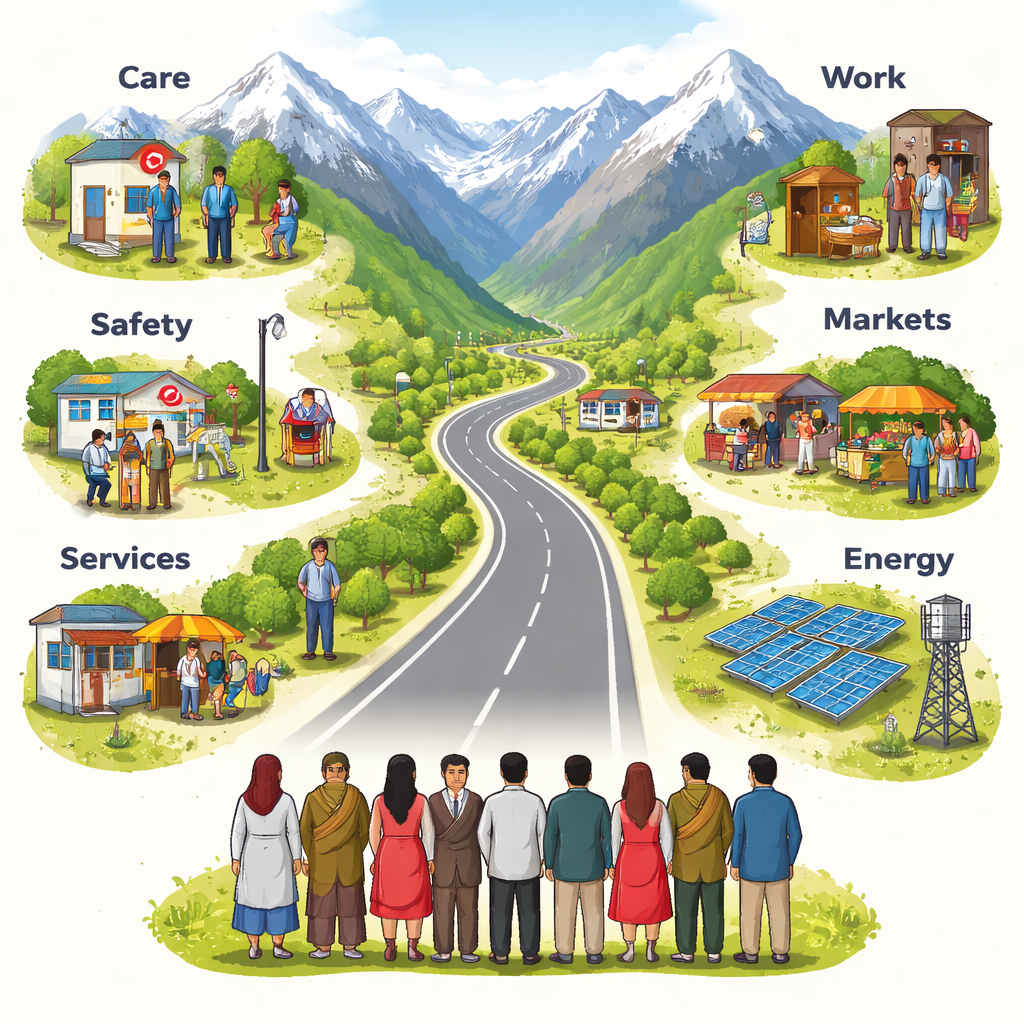
Diamer sits in the Hindu Kush Himalayan region, where steep valleys, landslides, and heavy snow regularly cut villages off from the outside world. Many communities face deep poverty, limited schooling, and fragile local institutions. Large initiatives such as the China–Pakistan Economic Corridor have improved some highways, but not everyone has shared in the gains, feeding skepticism about government promises. For residents who lose grazing land or see fragile ecosystems disturbed, support for new roads depends less on distant economic forecasts and more on whether everyday life becomes safer, easier, and more dignified in the near term.
From Roads to Everyday Support
Rather than looking only at concrete and asphalt, the authors focus on "social infrastructure"—the web of services, facilities, and jobs that surround physical projects. This includes health units, schools, water supply, waste collection, local markets, and small businesses that spring up along improved roads. The study argues that these elements matter because they directly affect quality of life: clean water, reliable transport, basic healthcare, and opportunities to earn a living. When people see such changes quickly, they feel that projects are fair and worthwhile, which builds trust and social connection instead of resentment.
How Feelings Shape Support
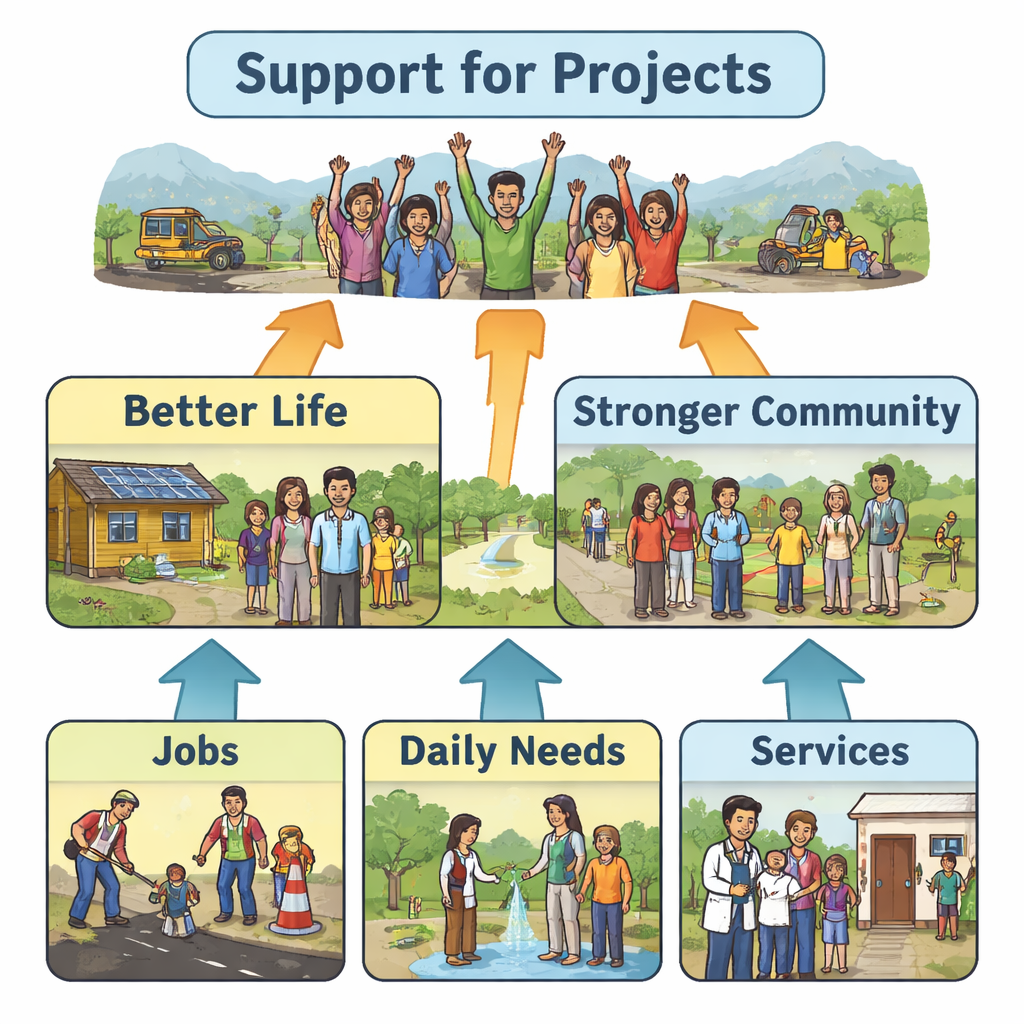
To explain these reactions, the research draws on two ideas from psychology and sociology. Instant Gratification Theory suggests that people under chronic stress or scarcity give more weight to immediate rewards than to distant promises. In Diamer, where many families have endured decades of neglect, a new job on a construction crew or a working clinic today can matter more than talk of future trade. Social Exchange Theory adds that people judge projects by whether the "give and take" feels balanced: do communities receive enough in return for disrupted land and daily upheaval, and are benefits shared fairly? When development brings visible services, safer streets, and new employment, residents are more likely to see the exchange as just and to rally behind the project.
Listening to Men and Women
The authors surveyed 253 residents across 11 villages near upgraded sections of the Karakoram Highway, using local facilitators to reach both men and women. They found that investments in community services, support for daily activities, and job creation all boosted people’s sense of well-being. In turn, higher perceived quality of life strengthened "social synergy"—the feeling of belonging, cooperation, and shared purpose—which then increased support for the road projects. Men tended to show stronger links between these short-term gains, social cohesion, and backing for development. Women, whose movement and public voice are more tightly restricted by local norms, benefited from better services but did not always translate these gains into the same level of enthusiasm, highlighting deeper cultural barriers that roads alone cannot fix.
What This Means for Future Projects
For planners and policymakers, the study’s message is clear: in marginalized mountain regions, long-term economic arguments are not enough. To win and keep public support, projects must quickly deliver visible improvements—jobs, safe and convenient travel, access to health and education, and secure public spaces—while also being transparent and fair in how benefits are shared. At the same time, design and decision-making must be sensitive to gender, ensuring that women’s needs and voices are included, not just assumed. When short-term relief and dignity are aligned with long-term sustainability, infrastructure can do more than connect distant markets; it can help knit together resilient, confident communities that feel seen, respected, and invested in their own future.
Citation: Javed, T., Zhao, X. Instant gratification and long-term sustainability: a gender-inclusive approach to social infrastructure in Gilgit-Baltistan road projects. Humanit Soc Sci Commun 13, 200 (2026). https://doi.org/10.1057/s41599-026-06501-y
Keywords: social infrastructure, Gilgit-Baltistan, road development, gender and development, community support