Clear Sky Science · en
Using interdisciplinary dialogue to understand the influence of identities on undergraduate research experiences
Why Who You Are Matters in College Research
College research often sounds like something that happens only in labs or libraries, far removed from everyday life. But this study shows that undergraduate research is deeply personal: students’ backgrounds, beliefs, and life experiences shape what they study, how they do their work, and how they see themselves as future professionals. Understanding this connection between identity and research can help colleges create more welcoming, equitable learning environments—and help students recognize that who they are is not a distraction from research, but a vital part of it.
Talking Across Differences
The authors brought together 54 undergraduates from many majors—engineering, biology, social sciences, arts, and humanities—who were doing summer research at one university. In workshops, students sat in small groups and used a structured set of prompts to talk with one another about big questions: Why do you do research? Who gets access to opportunities? How do your personal history, race, gender, or finances shape your path? These guided conversations, called "Toolbox dialogues," were designed to build skills like self-reflection, listening to other perspectives, and connecting ideas across disciplines. 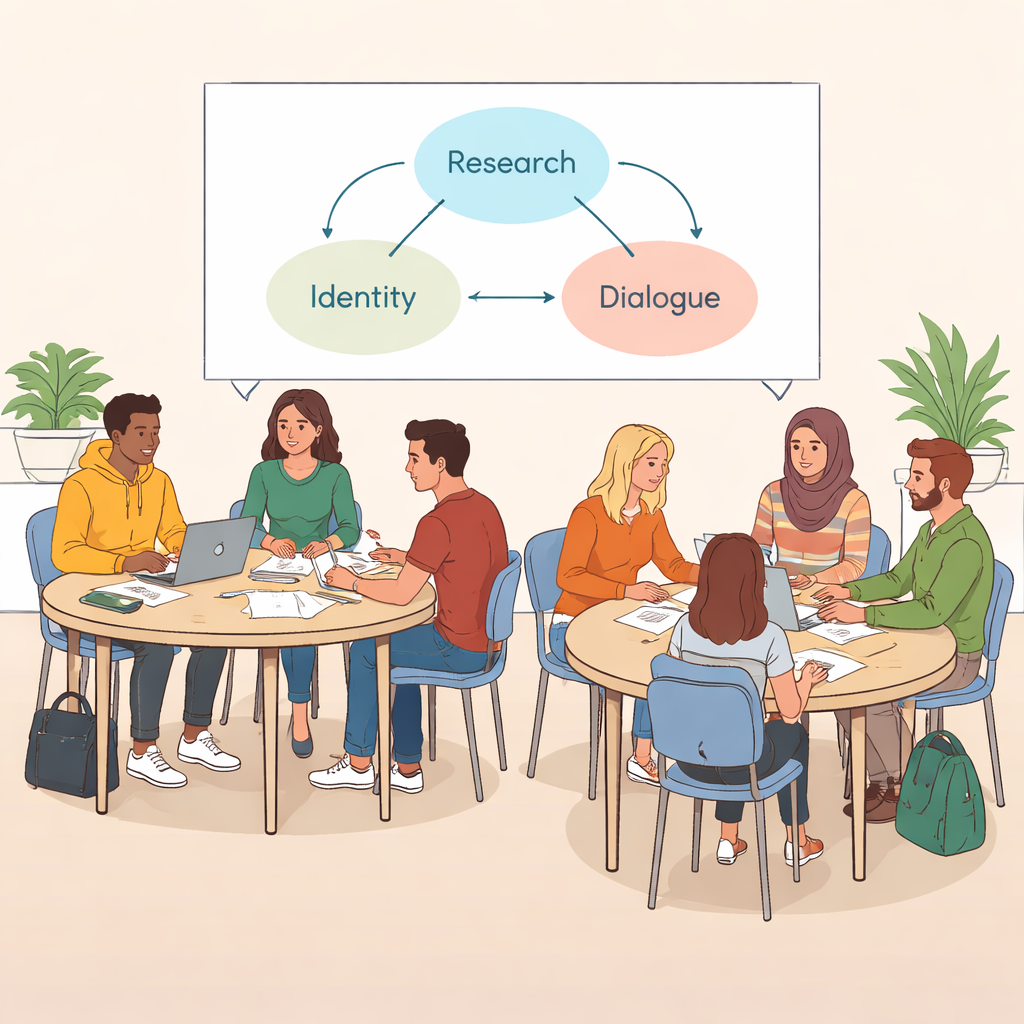
Personal Motives Behind Research Choices
Students repeatedly described their research as tied to who they are and what they care about. Some were driven by internal reasons: curiosity, a love of learning, or the desire to build skills and credentials for future careers. Others stressed external goals, such as helping communities, addressing social problems, or advancing knowledge in their field. Many students held both types of motives at once, and sometimes felt tension between them—for example, feeling uneasy that a project might mostly benefit their résumé rather than society. The study shows that research choices are rarely neutral: they are shaped by students’ identities, values, and hopes for their futures.
Unequal Doors Into Research
When students discussed how they found their research positions, they emphasized that access often depends on who you know and what resources you bring to college. Personal connections with professors, mentors, or support programs frequently opened doors that were otherwise invisible, especially because research opportunities were not well advertised. Students pointed out how grades, high school preparation, and money all affect who can participate. Those facing financial pressure sometimes had to juggle paid work with unpaid or low-paid research, limiting how deeply they could engage. Many also noticed that science and engineering students seemed to have more opportunities than those in the humanities or social sciences. These conversations highlighted how hidden rules and unequal resources can quietly shape who becomes a researcher.
Belonging, Bias, and the Research Process
Students also explored how they are seen—or not seen—as legitimate researchers. Some felt pride in bringing their unique “personal touch” to their projects, such as designing studies that respond to the needs of marginalized groups. At the same time, many described feeling scrutinized or doubted, particularly as undergraduates or as members of underrepresented groups. They shared moments of discrimination, code-switching, and even changing majors to find more welcoming spaces. 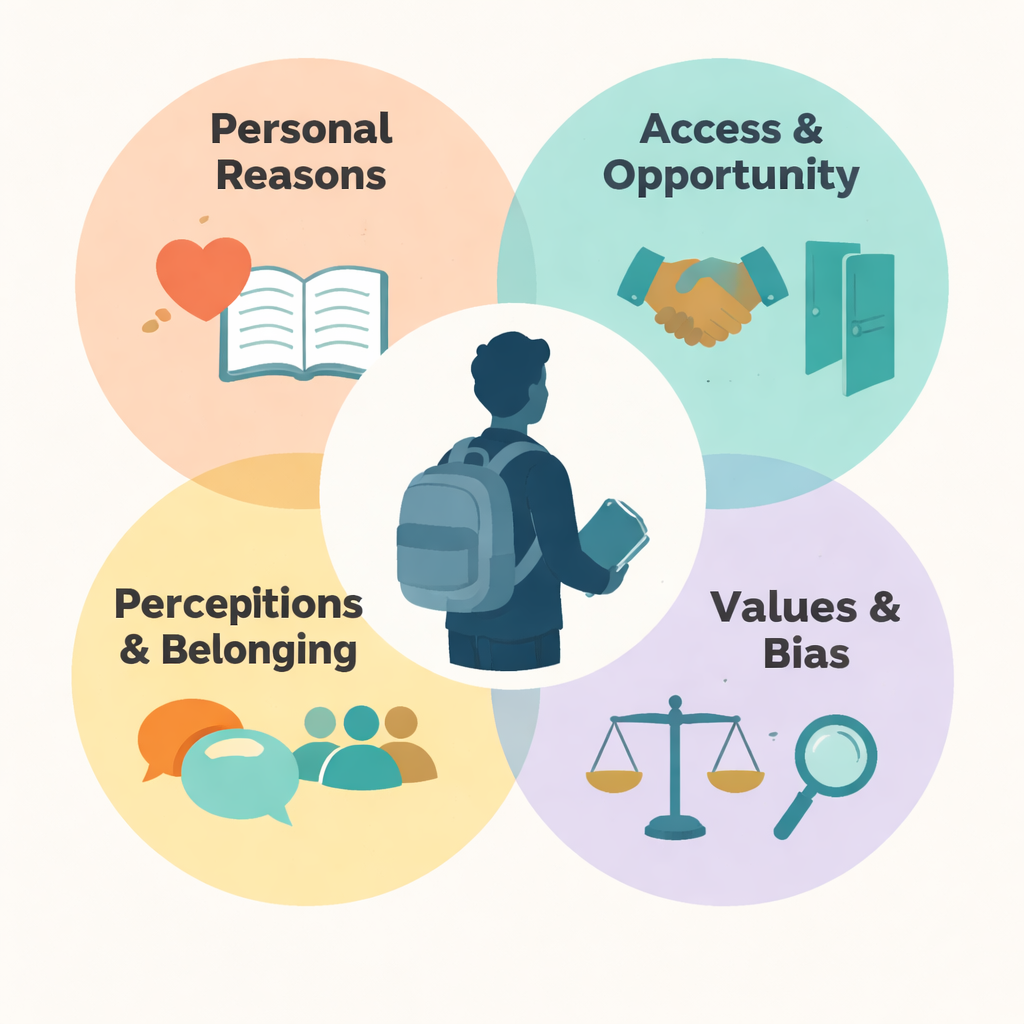
What This Means for Students and Colleges
By listening closely to these dialogues, the authors conclude that undergraduates are not just passive trainees; they are actively using their identities to seek, shape, and evaluate research experiences. Structured peer conversations gave students rare time and space to reflect on themselves, learn from other disciplines, and connect personal concerns—such as equity, justice, and belonging—to their scholarly work. For a layperson, the message is straightforward: research is done by real people, and it works better when their full selves are welcomed into the room. For colleges, this study suggests that adding intentional dialogue about identity and discipline can help prepare students for the complex, collaborative problems they will face beyond graduation.
Citation: Shaw, K.R., García-Vila, J., Hua, J. et al. Using interdisciplinary dialogue to understand the influence of identities on undergraduate research experiences. Humanit Soc Sci Commun 13, 197 (2026). https://doi.org/10.1057/s41599-026-06499-3
Keywords: undergraduate research, student identity, interdisciplinary education, peer dialogue, access and equity