Clear Sky Science · en
Organizational crisis management: addressing professional misconduct in modern workplaces
Why this workplace issue matters to everyone
Headlines about powerful people fired over sexual harassment can seem like distant scandals, but this article shows they are symptoms of a much bigger problem that touches ordinary workers, customers, and communities. By tracking high‑profile cases from around the world and treating sexual harassment as a full‑blown organizational crisis, the authors explain why misconduct keeps surfacing despite decades of laws and training—and what practical, proactive steps could finally make workplaces safer and fairer for all.
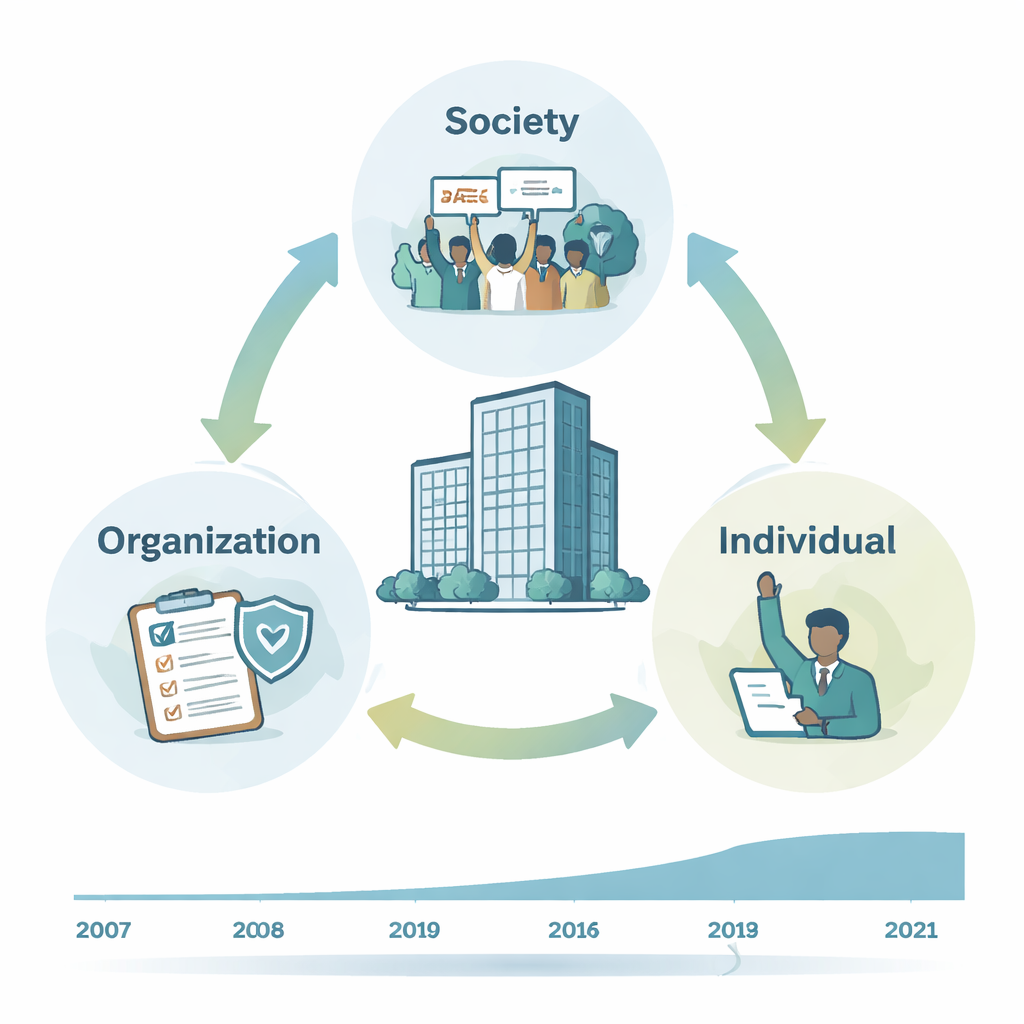
How abuse of power turns into a workplace crisis
The paper argues that sexual harassment is not just about individual bad behavior; it is about how power is used inside organizations. When people in senior roles believe their status protects them, they may use their authority to demand sexual favors or create a hostile atmosphere. This behavior functions as a form of social control, reinforcing old‑fashioned gender roles and keeping some workers—often but not only women—in a weaker position. The authors stress that anyone, regardless of gender, can be a victim or perpetrator, but social stigma and fear mean many cases, especially those involving men as victims, never come to light.
What the numbers and famous cases reveal
To see how serious the problem has become, the researchers analyzed annual crisis reports from the Institute for Crisis Management between 2007 and 2021, focusing on the category of sexual harassment crises that drew major media attention. For years, such crises made up only a tiny share—around 1–2%—of all organizational crises. That changed dramatically after 2017. By 2018 and 2019, sexual harassment crises surged to 9.4% and then 16.4% of all crises, an unprecedented rise. Behind these numbers were widely reported scandals in technology companies, universities, airlines, restaurants, federal agencies, and sports bodies, where senior figures and entire cultures were accused of looking the other way or even rewarding abusers.
The role of social movements and digital exposure
The spike in reported crises did not necessarily mean harassment itself suddenly became more common. Instead, global movements like #MeToo and #TimesUp, amplified by social media, gave survivors new ways to speak out when internal systems failed them. Employees who once stayed silent began naming names publicly, pushing organizations into the spotlight and forcing resignations, lawsuits, and multimillion‑dollar settlements. These digital campaigns created a new kind of external pressure: organizations could no longer rely on quiet legal settlements or narrow, rule‑based compliance programs. A purely “legal‑centric” strategy—having policies on paper and minimal training—was exposed as inadequate for preventing harm or rebuilding trust.
Why traditional fixes fall short—and what to do instead
The article reviews decades of recommended measures—written policies, hotlines, one‑off training sessions—and concludes that, on their own, they have not worked. Many employees are unsure whether a policy even exists, and most who experience harassment never report it, fearing retaliation or believing nothing will change. The authors argue that organizations must treat sexual harassment the way they treat fires, cyberattacks, or product recalls: as a predictable crisis that demands advance planning. That means building crisis‑ready teams, protecting anonymity, appointing clear contact people, taking every complaint seriously, and making sure managers know their concerns will be backed by top leadership. It also means acting before adulthood, by educating teenagers about consent, power misuse, and respectful behavior so the next generation enters the workplace with zero tolerance for harassment.
A path toward safer, more trustworthy workplaces
In plain terms, the authors’ message is that sexual harassment in the workplace is not an unavoidable fact of life; it is a preventable crisis made worse when leaders delay or hide the truth. By seeing harassment as a major organizational threat—one that can destroy careers, reputations, and public trust—employers, schools, and governments can apply the same proactive crisis‑management tools they use for other serious risks. Simple, low‑cost steps like visible complaint channels, strong protection from retaliation, and genuine consequences for offenders, combined with broader education and social awareness, can gradually turn today’s scandals into tomorrow’s history lessons instead of everyday news.
Citation: Nizamidou, C., Sposato, M. Organizational crisis management: addressing professional misconduct in modern workplaces. Humanit Soc Sci Commun 13, 204 (2026). https://doi.org/10.1057/s41599-026-06495-7
Keywords: workplace sexual harassment, crisis management, organizational culture, #MeToo movement, business ethics