Clear Sky Science · en
Activating modern industrial heritage conservation. The revitalization of Toppila Silo in the perspective of Alvar Aalto’s architecture
Bringing New Life to Old Factories
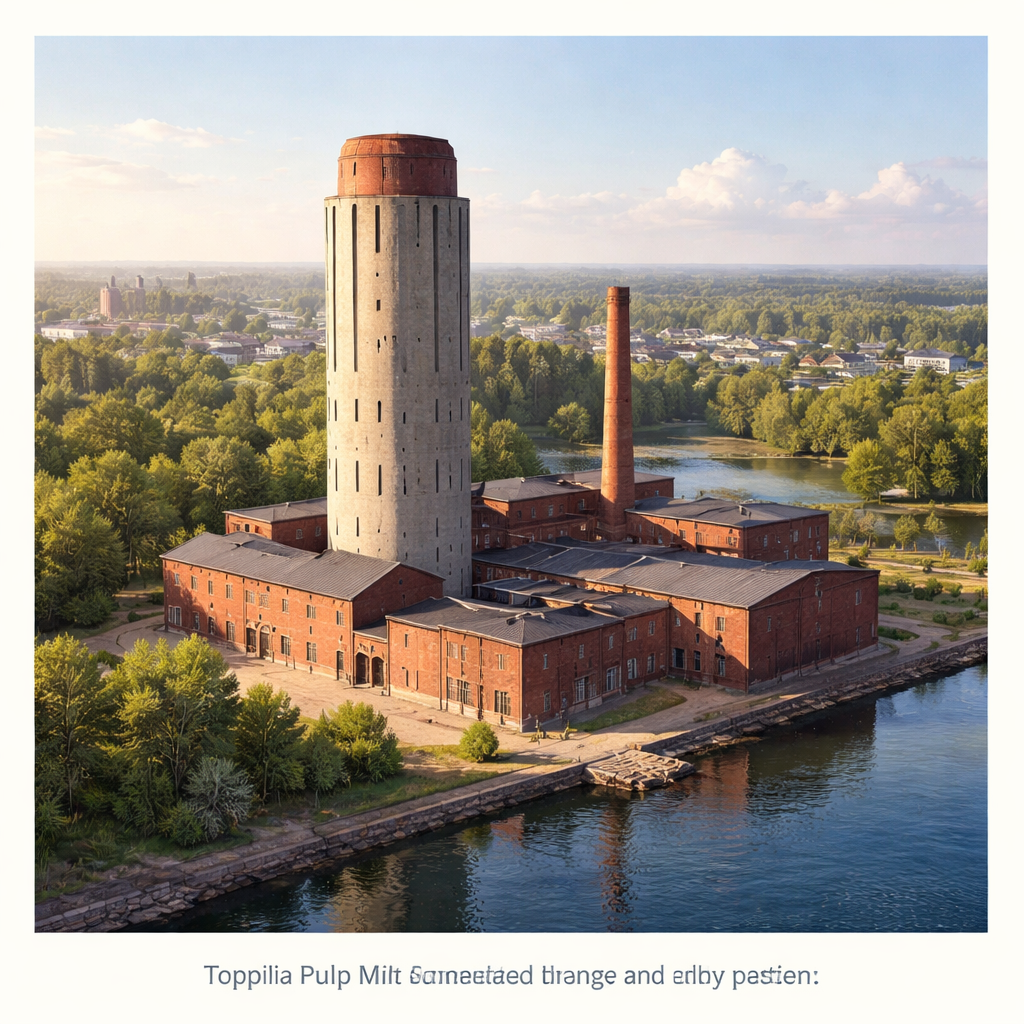
Across the world, disused factories and mills are being torn down, turned into apartments, or reinvented as cultural hotspots. This article looks closely at one such site: the Toppila Pulp Mill in Oulu, northern Finland, and especially its striking concrete wood-chip silo designed by famed architect Alvar Aalto. By following the silo from its construction in the 1930s to its current rebirth as a research and cultural center, the authors show how old industrial buildings can help communities remember their past while supporting new kinds of life and work.
Why Old Industrial Buildings Matter
The paper first places Toppila within the wider story of industrial heritage: old mines, mills, factories, and warehouses that record how societies industrialized. Since the mid‑twentieth century, scholars and organizations like UNESCO have argued that these places are more than obsolete machinery. They capture how people worked, how cities grew, and how new technologies changed everyday life. Modern industrial sites from the early 1900s are especially important. Built with reinforced concrete, steel, and glass, they followed a clear, functional logic and often tested bold new architectural ideas. International charters now stress that conserving such buildings means respecting their original materials and structures, intervening as little as possible, and finding new uses that keep them active and understood.
Aalto’s Northern Mill and Its Landmark Silo
Within this context, the authors focus on the Toppila Pulp Mill, one of Aalto’s earliest industrial projects and a key link in a British company’s paper supply chain. Using mainly brick and selected reinforced‑concrete structures, the mill turned local timber into pulp for export. At its heart stood the wood‑chip silo, a 28‑meter‑high concrete shell perched on timber piles, with a thin ribbed roof and suspended metal hoppers inside. The tapered form and carefully calculated ribs allowed wood chips to flow smoothly under gravity while keeping the walls astonishingly thin. On the outside, the silo’s simple, sculptural shape and rhythmic concrete ribs made it a powerful landmark on the flat Finnish shoreline, signaling Aalto’s shift toward a modern, functional style that still responded to the surrounding landscape.
From “Ugliest Building” to Cultural Asset
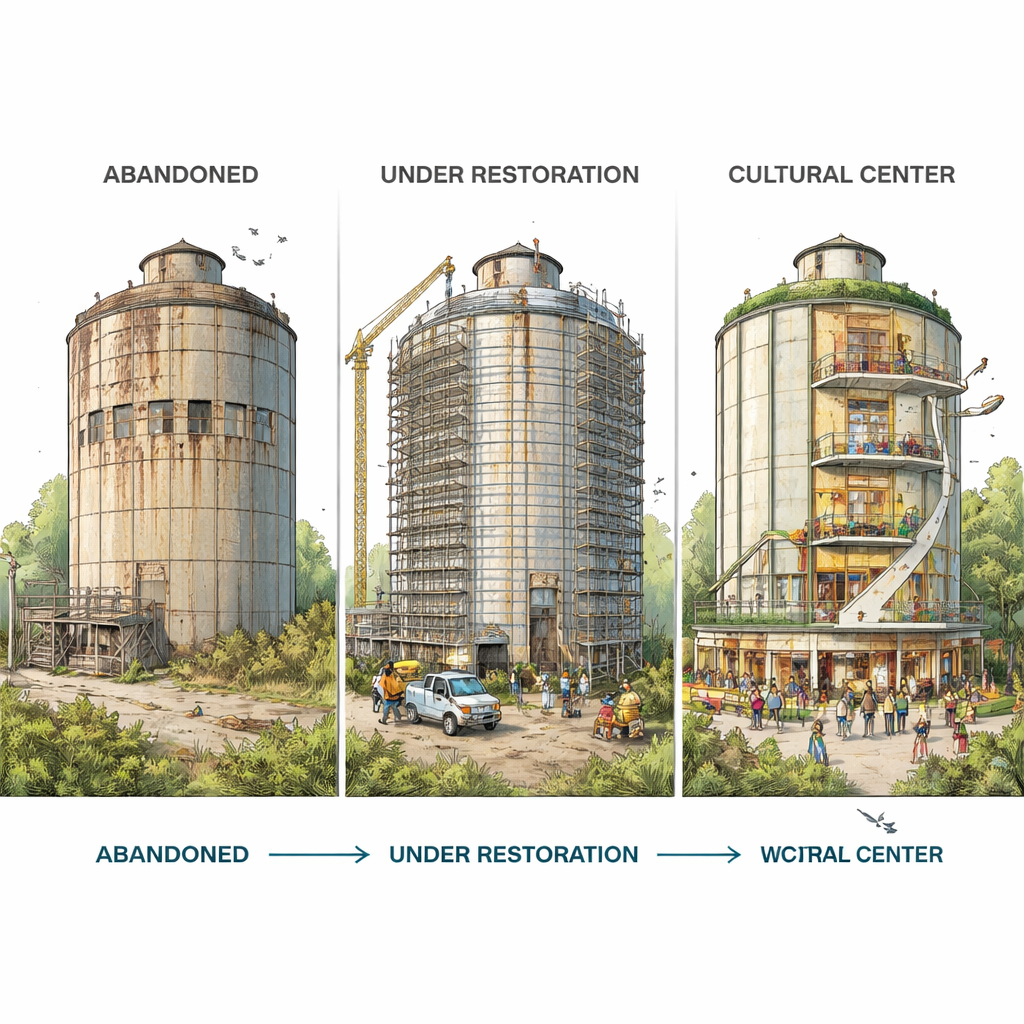
When the mill closed in 1985, most buildings were either demolished or converted to new uses such as housing, gyms, and restaurants. The silo, however, stood empty and decaying for decades. In a public poll it was even voted the “ugliest building in Oulu,” revealing a gap between expert admiration and local discomfort with stark modern concrete. Various reuse ideas came and went—from a chapel to modest repairs—without solving the question of how the silo could serve today’s community. Gradually, cultural groups began staging events inside and around it, building a sense that the silo could become more than a relic: it could host music, art, and public gatherings while telling the story of the region’s timber industry and design heritage.
Designing a Second Life for the Silo
Recently, a conservation‑minded foundation and an architecture practice have taken on the task of transforming the silo into a research center devoted to architecture and heritage reuse. Their plan keeps as much as possible of Aalto’s original concrete and timber, adds only reversible changes, and recycles demolished nearby concrete as new building blocks. A carefully designed visitor route will follow the old industrial process: entering at ground level where wood once arrived, rising via lifts that echo chip conveyors to the top of the silo, then descending through the former funnels that fed pulp production. This path allows visitors to feel the original flow of material while engaging with exhibitions, labs, and viewing platforms. Public involvement, open days, and partnerships with local institutions are central to the project, tying the building’s future closely to community life.
What This Means for Communities Today
To a non‑specialist, the Toppila silo’s story shows that saving modern industrial buildings is not just about freezing them in time. The authors argue that real conservation keeps these places structurally sound and historically honest while giving them new, socially useful roles. In Toppila’s case, turning a long‑abandoned mill structure into a cultural and research hub demonstrates that authenticity and everyday utility can reinforce each other. When an old factory becomes a site for learning, creativity, and shared memory, it no longer feels like an eyesore or a ghost from the past. Instead, it becomes a familiar part of the neighborhood again—one that helps people understand how industry, architecture, and community have shaped the world they live in.
Citation: Sun, L., Guardigli, L. Activating modern industrial heritage conservation. The revitalization of Toppila Silo in the perspective of Alvar Aalto’s architecture. Humanit Soc Sci Commun 13, 196 (2026). https://doi.org/10.1057/s41599-026-06493-9
Keywords: industrial heritage, Alvar Aalto, adaptive reuse, Toppila Silo, modern architecture