Clear Sky Science · en
Unmasking sentiment disguise in cross-cultural literary translation: analyzing Oscar Wilde’s The Happy Prince and its heartbroken audience
Why a "Happy" Story Can Make Readers Cry
Oscar Wilde’s The Happy Prince and Other Tales is sold as a “happy” children’s book, yet many Chinese readers say it leaves them in tears. This article explores why readers in different cultures react so differently to the same stories, and how translation can quietly change the emotional tone of a book without changing the plot. By using modern tools that measure emotion in text, the study uncovers how certain feelings get softened, sharpened, or even disguised as a story crosses languages.
Same Book, Different Feelings
The researcher compares hundreds of online reader reviews from Goodreads (an English-language site) and Douban (a major Chinese review platform), along with Wilde’s original English text and a widely used Chinese translation. On the surface, all these readers are reacting to the same tales of princes, swallows, and giants. Yet their comments tell different emotional stories. English-speaking readers often describe enjoying the bittersweet twists and even praise the sad endings as meaningful. Many Chinese readers, by contrast, say the book “breaks their hearts,” even while they admire it. These clashing reactions suggest that somewhere between the original and the translation, the emotional flavor of the tales has shifted.
Measuring the Mood of Words
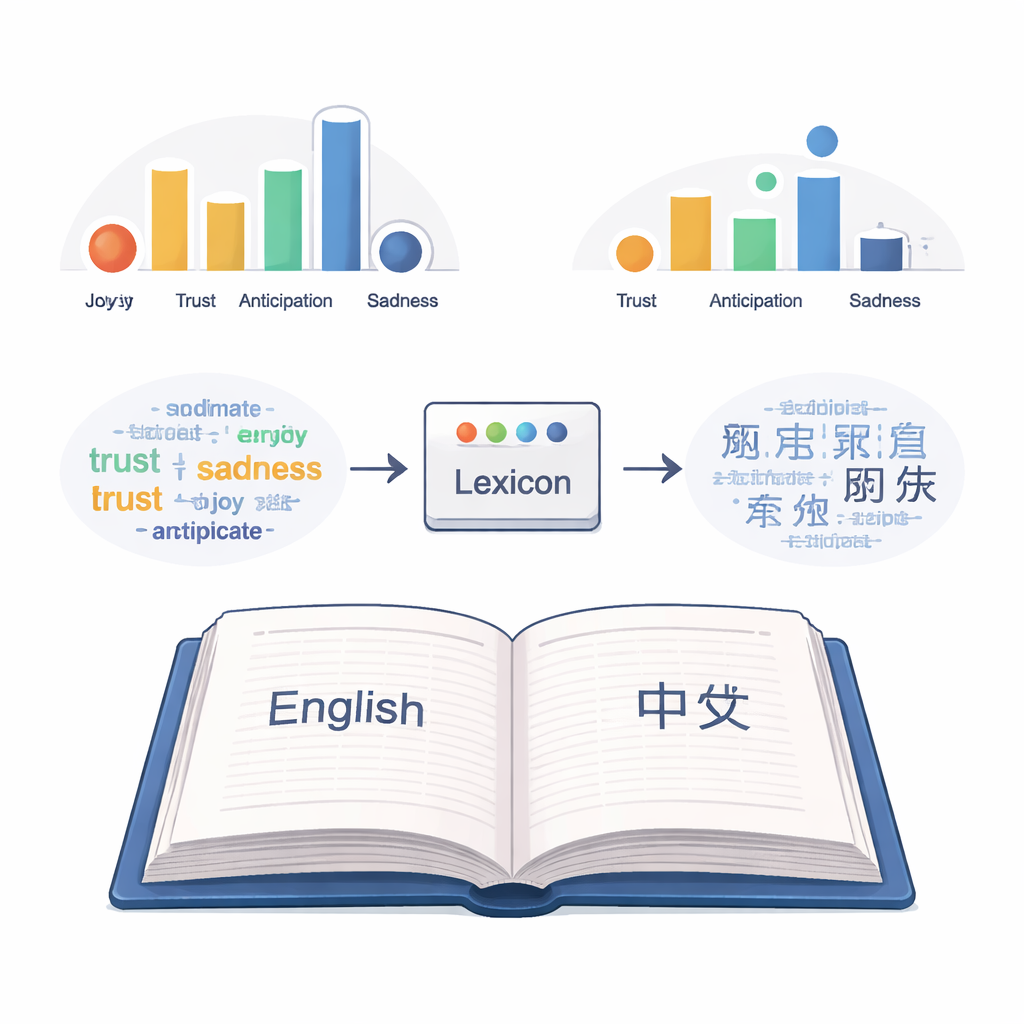
To probe these differences, the study uses a large emotion dictionary, the NRC Emotion Lexicon, which assigns feelings such as JOY, SADNESS, FEAR, and TRUST to thousands of words. Instead of relying on gut impressions, the researcher counts how often emotionally charged words appear in the texts and reviews, and how strongly they tilt positive or negative. The results are surprising. Reader reviews in both languages, taken together, are more positive overall than Wilde’s stories themselves. People write about being moved, impressed, and grateful as much as they write about crying. But the Chinese translation of the stories stands out: it has the lowest share of positive words and shows a marked drop in words linked to joy and trust compared with the original English. This suggests that some of Wilde’s warmth and playfulness is being drained away in translation.
How Tiny Choices Hide or Shift Emotions
A close look at specific sentences shows how small wording choices can disguise feeling. In one example, a neutral school figure in the original becomes a “stereotyped” headmaster in Chinese, adding a hint of scorn that was not there before. In another, a character’s cautious remark about what “might” happen is turned into a statement about bad luck, pushing the tone toward misfortune. Religious phrases such as “thee,” “thou,” and “hath,” which in English carry a gentle, sacred flavor, are rendered into plain, everyday Chinese. In a culture where religious language is more sensitive, especially in children’s books, these choices are understandable. Yet they also strip away some of the reverent, trusting atmosphere around key scenes, helping to explain why words tied to TRUST appear less often in the Chinese text and reviews.
Readers, Society, and Blaming the Translation
Chinese reviewers do more than retell the plots; they connect Wilde’s tales to real historical figures and modern life, using the stories to reflect on sacrifice, injustice, and their own society. This broader, more serious framing can amplify feelings of sadness and tragedy. At the same time, many reviewers express frustration with the translations themselves, calling them clumsy, overly genteel, or emotionally “watered down.” Even when they praise the translator’s effort, they hint that something pure in the original has been lost, likening the process to taking a wild rose and sealing it under glass. This mix of deep identification with the stories and suspicion of the translated wording feeds into the image of a “heartbroken” audience whose grief is real, yet partly shaped by how the tales were rewritten for them.
What This Means for Readers Across Cultures
The study concludes that “sentiment disguise” happens not only in jokes or irony, but also quietly in literary translation. As Wilde’s children’s stories move from English into Chinese, small shifts in word choice, tone, and cultural adaptation subtly reshape their emotional balance—reducing joy and trust, keeping sadness steady, and encouraging readers to see the tales as more tragic than bittersweet. For everyday readers, the message is simple: when we read a translated book, we are feeling not just the author’s emotions, but also the translator’s decisions and the local culture’s comfort zones. Being aware of this hidden layer can deepen our understanding of why the same “happy” prince can leave different audiences, in different languages, wiping away very different kinds of tears.
Citation: Liu, Y. Unmasking sentiment disguise in cross-cultural literary translation: analyzing Oscar Wilde’s The Happy Prince and its heartbroken audience. Humanit Soc Sci Commun 13, 193 (2026). https://doi.org/10.1057/s41599-026-06491-x
Keywords: literary translation, sentiment analysis, Oscar Wilde, cross-cultural reading, children’s literature