Clear Sky Science · en
Bidirectional relationship between digital inclusion and healthy ageing among Chinese older adults: a four-wave cross-lagged study
Why this matters for everyday life
Across the world, more people are living into old age, while phones, apps and online services are reshaping daily life. This study asks a simple but important question: when older adults are better included in the digital world, does it help them stay healthier and more independent—and, in turn, does good health make it easier for them to go online? Focusing on middle‑aged and older people in China, the authors trace this two‑way relationship over several years to see how screens and well‑being may grow stronger together.
Growing older in a digital world
The researchers begin by setting the stage: China is one of the most rapidly aging societies, with nearly 300 million people aged 60 and above. At the same time, digital tools—from mobile payments to online health platforms—are becoming woven into everyday tasks, including booking medical visits and accessing health information. Yet many older adults are left on the wrong side of a "digital divide" because of low confidence, lack of skills, or poorly designed technology. Missing out online can deepen loneliness, limit access to services, and worsen health problems, turning digital gaps into health gaps.
What the study followed over time
To move beyond snapshots and see how changes unfold, the team used data from the China Health and Retirement Longitudinal Study, which tracked thousands of adults aged 45 and over across the country. They focused on 2891 participants who answered questions in four survey waves between 2011 and 2018. "Digital inclusion" was captured by whether and how often people used the Internet. "Healthy ageing" was measured with a broad score covering memory, mood, pain, mobility, ability to manage daily tasks and more. The authors also took into account factors such as age, gender, income, smoking, drinking, and long‑term illnesses. Using a statistical approach called a cross‑lagged panel model, they examined how earlier levels of internet use predicted later health, and how earlier health predicted later internet use, while considering both directions at once.
A two‑way boost between screens and strength
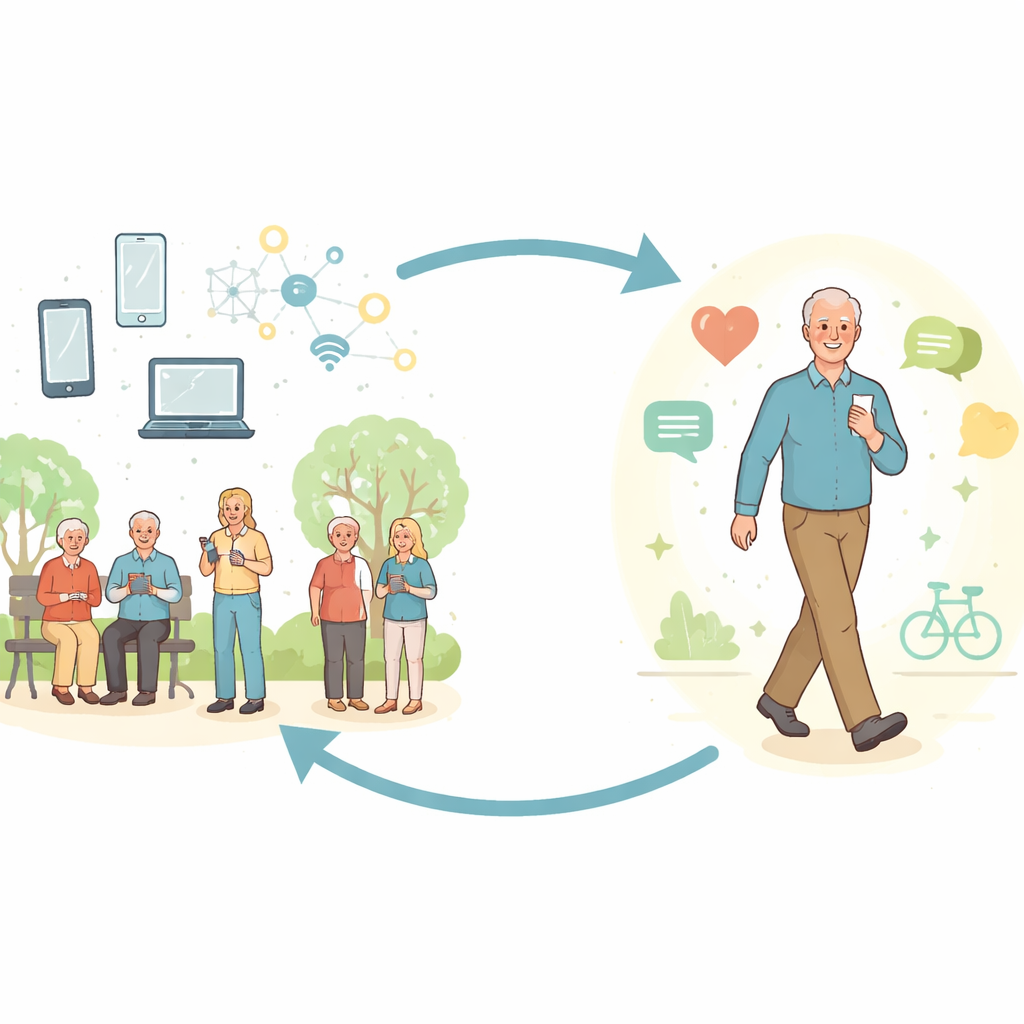
The results paint a clear picture of mutual reinforcement. Older adults who were more digitally included at one time point tended to show better healthy‑ageing scores in later years, even after accounting for their previous health and many background traits. In other words, getting online was followed by small but consistent gains in how well people could think, move, and manage daily life. Just as striking, the reverse pattern also held: those who started out with better health were more likely to be internet users down the line. This suggests that staying physically and mentally fit gives people the energy, confidence and skills to adopt digital tools, which then open further chances to learn, connect and care for themselves. The authors describe this as a "virtuous circle" linking digital life and later‑life well‑being.
Who benefits and how policy can help
The study also probed whether this two‑way relationship looked different across groups. It was broadly similar for men and women, married and unmarried people, city and rural residents, and those with and without personal income. Where it did differ was education: older adults with less schooling appeared to gain especially from digital inclusion, hinting that well‑designed technology could help soften some social inequalities rather than widen them. The team tested many alternative explanations—such as specific chronic diseases or different ways of defining online access—and the core finding held up. They argue that governments and communities should see digital access not as a luxury for older people, but as a key part of health policy.
What this means for ageing well
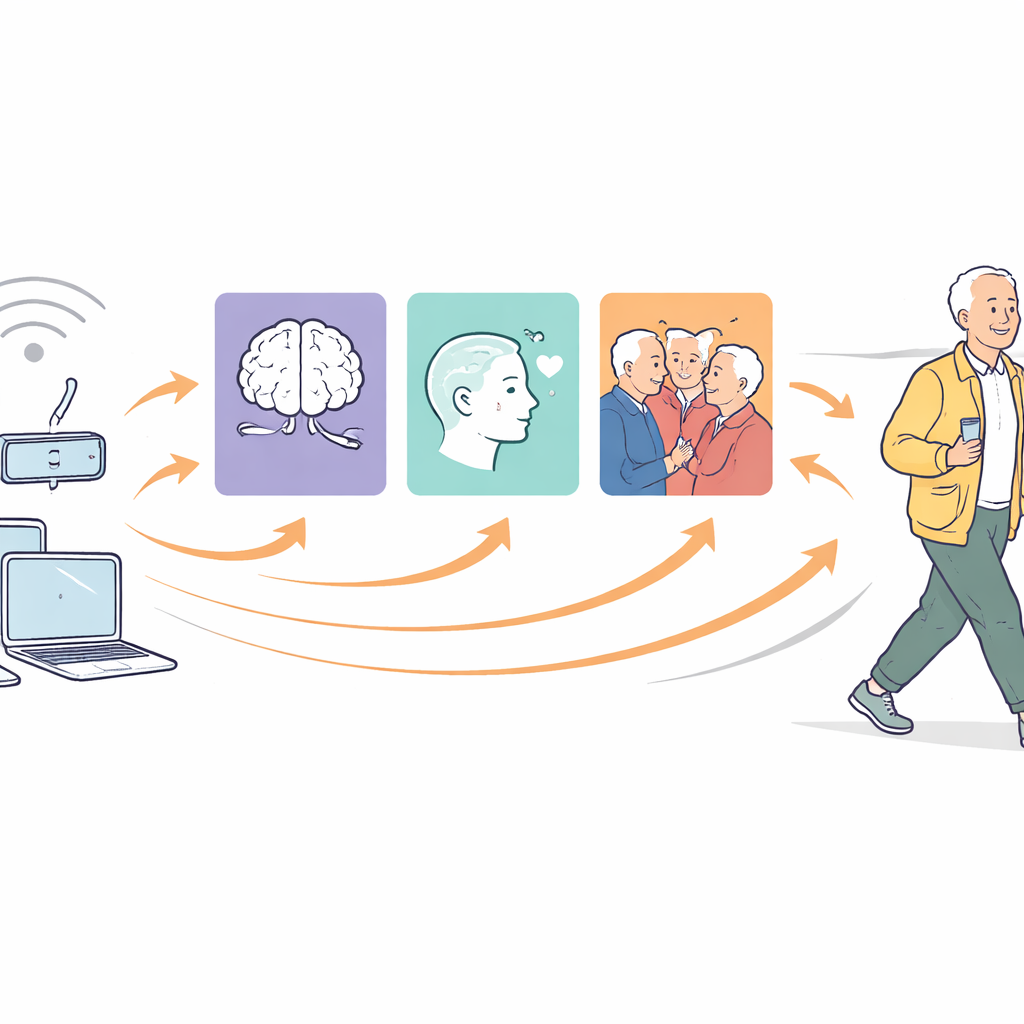
For a lay reader, the main takeaway is straightforward: helping older adults get comfortable and confident with digital tools can gently support their health, while supporting their health makes it easier for them to use those tools. Over years, even modest effects can add up, shaping whether people remain active, connected and independent in later life. The authors call for a "digital inclusive healthy ageing" system that combines user‑friendly technology, training, and people‑centred policies. In practice, that could mean simpler app designs, community classes, and health services built with older users in mind. When digital inclusion and healthy ageing feed each other, societies stand a better chance of ensuring that the benefits of the digital era are shared across generations.
Citation: Yang, T., Wang, T., Deng, W. et al. Bidirectional relationship between digital inclusion and healthy ageing among Chinese older adults: a four-wave cross-lagged study. Humanit Soc Sci Commun 13, 311 (2026). https://doi.org/10.1057/s41599-025-06486-0
Keywords: digital inclusion, healthy ageing, older adults, China, digital divide