Clear Sky Science · en
Pathway to peace: utilizing path analysis to resolve social conflicts in palm oil communities
Why palm oil conflicts matter to everyday life
Palm oil is found in everything from soaps to snacks, helping drive economic growth in countries like Indonesia. Yet behind these everyday products lie tense disputes between local communities and plantation companies over polluted rivers, damaged forests, and lost land. This study explores how those conflicts arise and, crucially, how they can be resolved more fairly and peacefully by combining people’s voices on the ground with a careful statistical look at what really drives tensions and what helps calm them.
Big business, big benefits, and big tensions
Palm oil has become a cornerstone of Indonesia’s economy, creating millions of jobs and contributing notably to national income. Much of this growth comes from expanding plantations into tropical landscapes, especially peatlands and forests. While this brings cash and employment, it also triggers serious environmental changes: deforestation, polluted water, soil damage, and smoke from burning. For nearby villages that depend on clean rivers, fertile land, and forest resources, these changes are not abstract. They disrupt livelihoods and traditions and often become a spark for social conflict with the companies that run the plantations.
How people and the environment are linked
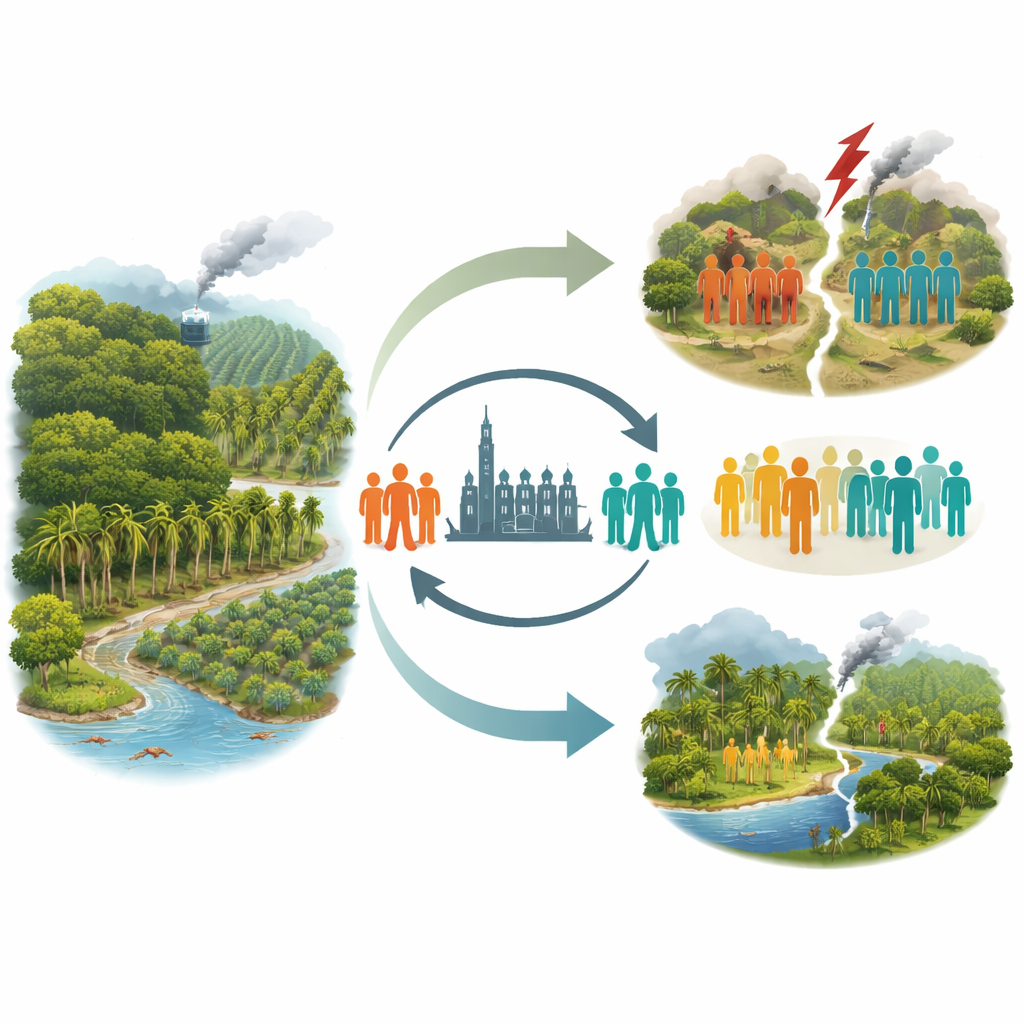
The researchers focused on one Indonesian district where conflicts around palm oil plantations have simmered for years, often tied to environmental harm rather than just formal land titles. They asked a central question: how do environmental damage, people’s involvement in local decisions, and the strength of their skills and organization combine to shape conflict and its resolution? To answer this, they surveyed 101 residents who had lived there for at least five years, had felt the impact of environmental damage, and had experienced conflict with a palm oil company. They also interviewed local leaders, company managers, and government officials. This mix of survey data and in-depth conversations allowed them to connect personal experiences with broader patterns.
Using numbers to trace the paths to peace
Instead of looking at one factor at a time, the team used a statistical technique called path analysis to trace how different influences connect, both directly and indirectly. They examined six elements: environmental damage, community participation, environmental management by companies, community capability (such as knowledge, skills, and organization), the level of social conflict, and how effectively conflicts are resolved. They found that environmental damage pushes conflict upward and at the same time increases pressure to resolve it. In contrast, when communities participate more actively in decisions and discussions, everyday tensions decrease and peace-building efforts work better. Community capability plays a quiet but powerful role: where people are better informed, better organized, and more confident, they participate more—and that higher participation, in turn, helps reduce conflict and support resolution.
What people on the ground see and do
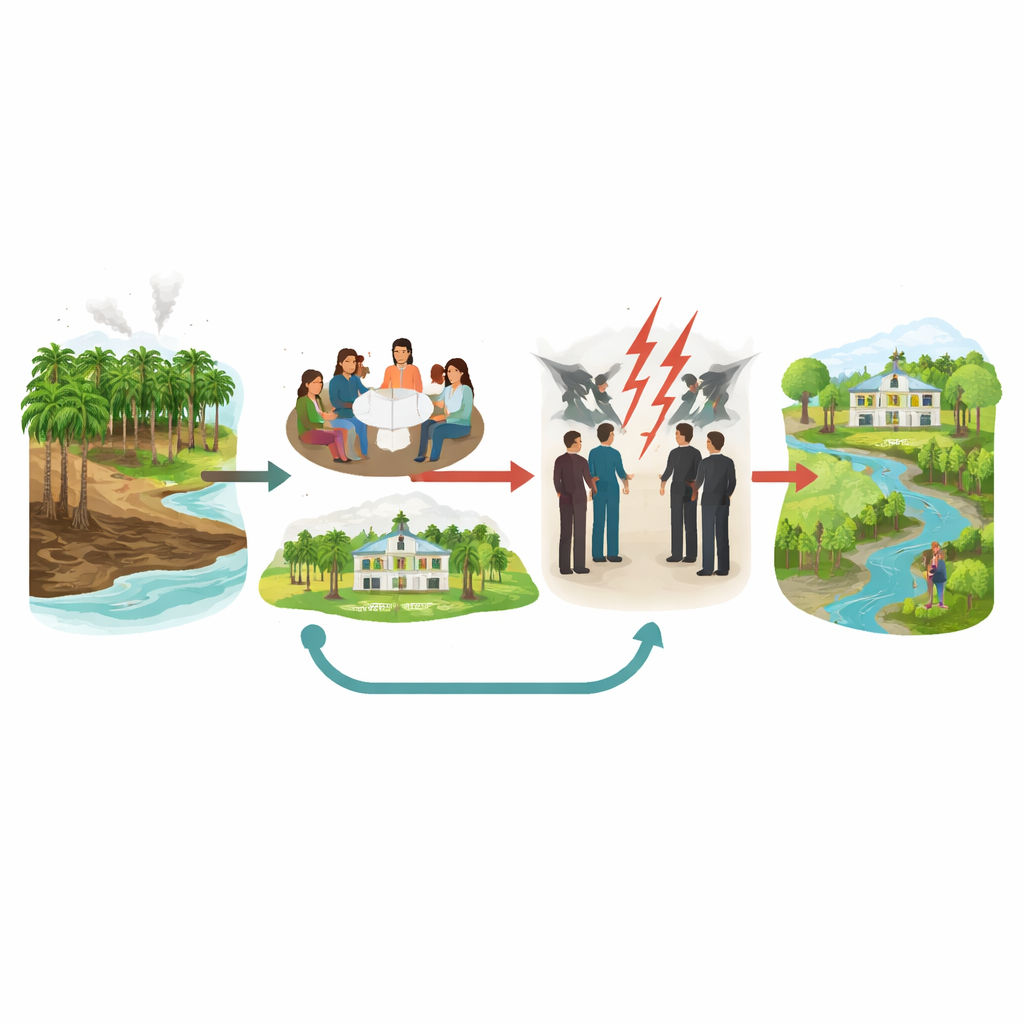
Voices from the field confirmed the numbers. Community members and leaders described polluted rivers, smoke, and loss of wildlife alongside new jobs and company-funded activities. Government officials explained how they mediate disputes over land and environmental impacts, usually through meetings between villagers and company representatives. Company managers acknowledged negative side effects and pointed to waste treatment, organic fertilizers, and regular forums as attempts to improve. Regular meetings and joint problem-solving sessions emerged as key spaces where community participation could actually happen. When these conversations were inclusive and ongoing, conflicts were less likely to spiral; when they were absent or one-sided, frustration and distrust grew.
Turning findings into fairer futures
For non-specialists, the main message is straightforward: damaged environments and silenced communities make conflict more likely and harder to solve, while informed, organized, and involved communities are essential partners in building peace. The study suggests that supporting local capacity—through training, access to information, and stronger community organizations—can amplify participation and, through that route, improve conflict resolution. It also points to practical steps such as village-level environmental monitoring groups, regular dialogue between companies and residents, and stronger roles for neutral mediators like local governments. By treating communities not as obstacles but as co-managers of land and water, palm oil regions have a better chance to protect nature, share benefits more fairly, and move from recurring disputes toward more lasting social harmony.
Citation: Vitiara, M.D., Herdiansyah, H. & Frimawaty, E. Pathway to peace: utilizing path analysis to resolve social conflicts in palm oil communities. Humanit Soc Sci Commun 13, 230 (2026). https://doi.org/10.1057/s41599-025-06453-9
Keywords: palm oil conflicts, community participation, environmental damage, conflict resolution, Indonesia