Clear Sky Science · en
Discerning the seasonal variations in respiratory virus exposure across networked populations through participatory surveillance
Why everyday places matter for winter bugs
Each winter, coughs, colds and flu seem to sweep through cities like clockwork. Yet most of us only guess where we actually catch these infections—on the train, at work, from our kids, or at a party. This study from Hong Kong turns that guesswork into data, using thousands of digital surveys to map which everyday places become hotspots for respiratory viruses across the year, and how people’s social networks help those viruses spread.
Following people, not just germs
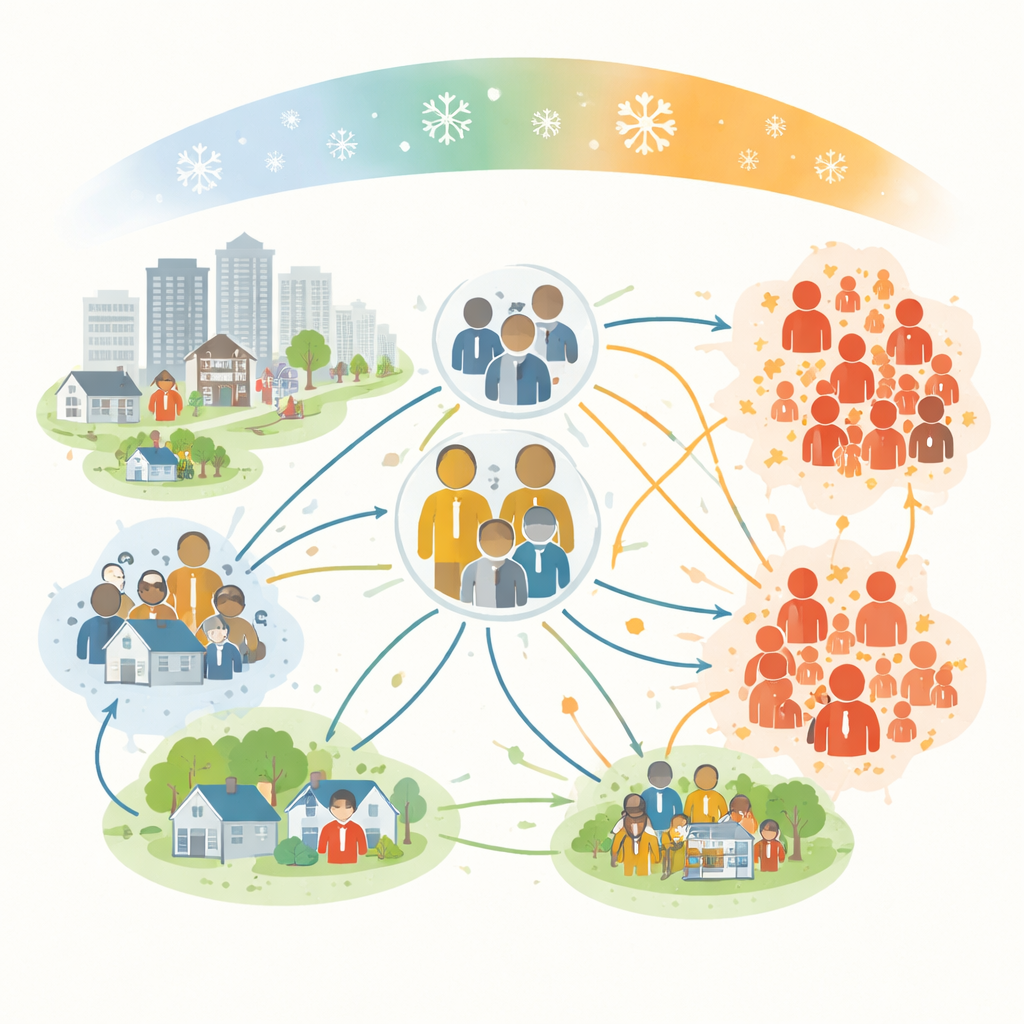
Instead of relying only on hospital records, the researchers set up a territory-wide “participatory surveillance” project. More than 2,600 adults were recruited from households sampled across Hong Kong and then prompted each month, for two years, to report whether they had fever plus cough or sore throat—symptoms known as influenza-like illness—as well as where they had been: work, restaurants, places of worship, gyms, hotels, parties, and more. These reports were lined up against laboratory data on influenza and COVID-19 to distinguish high-activity “respiratory virus seasons” from quieter months. By watching how symptoms rose and fell with the official virus trends, the team could treat these self-reported illnesses as a reasonable stand-in for actual infections.
The working day as a hidden hub
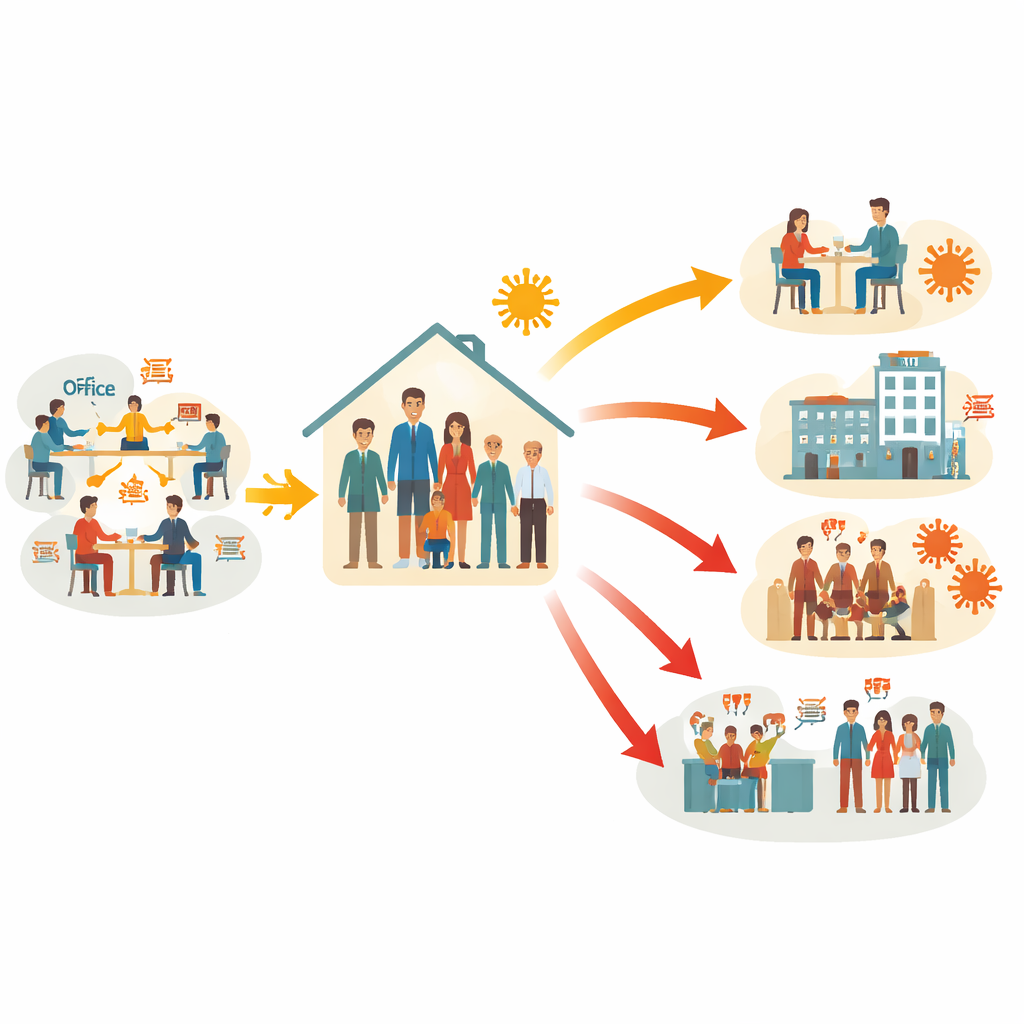
A clear pattern emerged: people who worked outside the home were more likely to report illness, in both busy virus seasons and calmer periods. Offices, in particular, stood out as higher-risk workspaces during peak months, probably because they bring many adults together indoors for long stretches, sharing air and surfaces. When the researchers built a network model linking different activities, workplace attendance sat at the center of the web. Workers were also more likely to ride public transport daily and to frequent many other venues—cafés and restaurants, entertainment spots, beauty parlors, and private party places. This high connectivity means infections picked up at work can easily be ferried into a wide array of social circles, helping local outbreaks spill over into the broader community.
When children and home life amplify spread
Homes turned out to be more than just a place to recover—they were also important amplifiers of infection. Households that included children were much more likely to see several members fall ill in the same month, especially during virus seasons. Larger households had higher chances of such co-occurring illness too. Even though the children’s own symptoms were not tracked directly, the two-fold increase in shared illness in homes with kids strongly suggests that they act as efficient carriers, bringing viruses into the household and passing them on. Adults living with children were also more likely to be working outside the home and visiting others’ homes, hinting that “working parents” may act as bridges, carrying infections from offices to families and then onwards into other households.
Leisure, travel and off-season risks
During off-peak months, when background immunity may be similar across the population, risk shifted toward people with more active social and travel routines. Those who reported travelling abroad, attending formal classes, visiting multiple leisure venues such as entertainment centers and beauty parlors, or going to parties were more likely to report illness. Some settings—hotel stays and places of worship—were linked with elevated risk year-round, likely due to shared indoor spaces, varied visitors, and limited masking. Cafés and restaurants appeared as busy mixing grounds that connect many other venues in the network. In this “shoulder season,” how often and where people mingle seemed to matter more than which virus was currently dominant.
What this means for protecting communities
For non-specialists, the takeaway is straightforward: not all crowded places are equal, and not all times of year pose the same kind of risk. This study suggests that offices and other workplaces function as central hubs that keep viruses circulating, while homes with children and certain social venues act as amplifiers or bridges at different points in the year. Rather than blanket restrictions, the authors argue for seasonally tuned precautions that focus on key settings—improving ventilation and hygiene at work and in hotels and restaurants, offering timely vaccination to workers and adults living with children, and paying extra attention to high-contact leisure and worship spaces during both peaks and lulls. By watching how people move and mix, and by using simple digital surveys, cities can better anticipate where the next wave of winter bugs will hit—and act before it does.
Citation: Chan, C.P., Wong, N.S., Kwan, T.H. et al. Discerning the seasonal variations in respiratory virus exposure across networked populations through participatory surveillance. npj Digit. Public Health 1, 6 (2026). https://doi.org/10.1038/s44482-025-00010-6
Keywords: respiratory viruses, seasonality, workplace exposure, household transmission, participatory surveillance