Clear Sky Science · en
Developer engagement in open-source software’s green transition
Why greener code for crypto matters
Most people hear “blockchain” and think of volatile coins and online speculation, but behind every cryptocurrency sits a huge amount of code and computing power. That code consumes real-world energy and shapes who benefits—or bears the cost—of our digital future. This study looks not at traders or regulators, but at the software developers who build Ethereum, one of the world’s most important blockchains, to see how often and how seriously they talk about sustainability.
Listening in on the builders
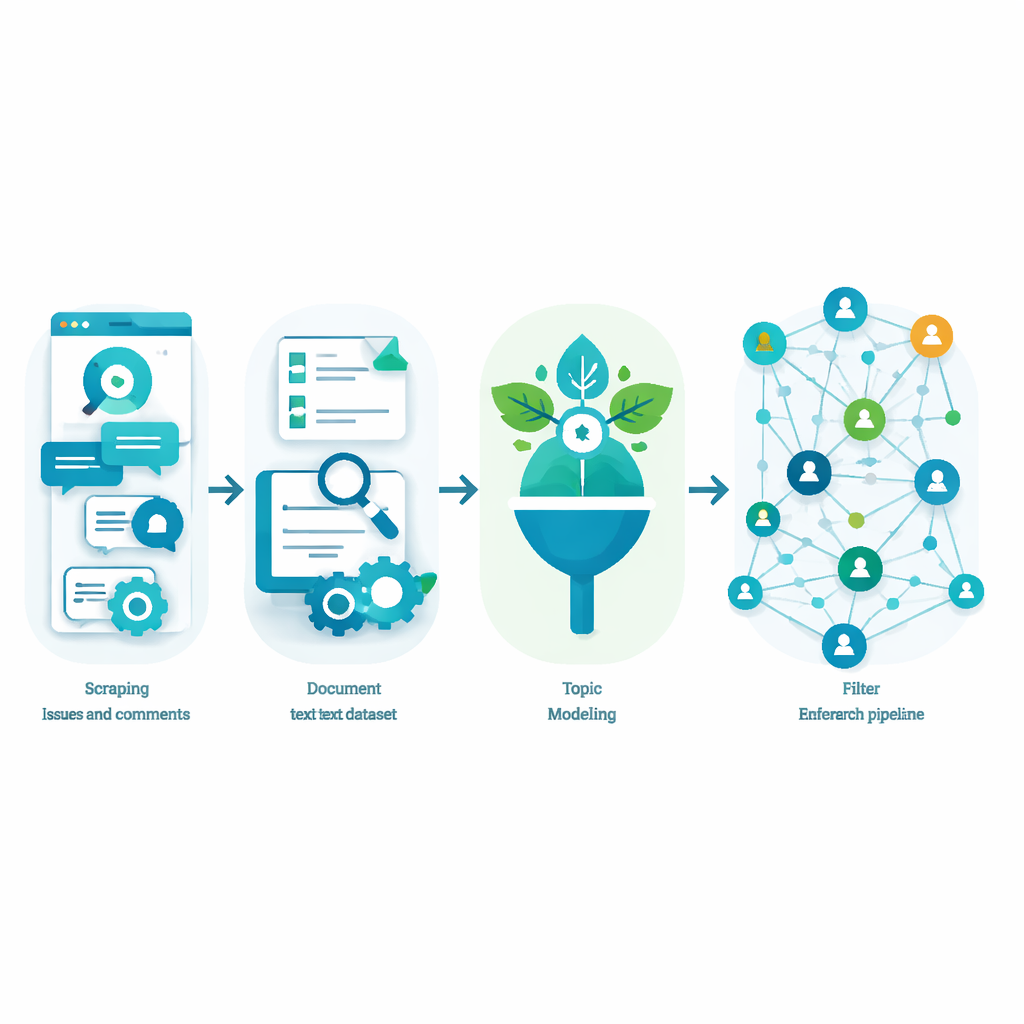
Instead of surveys or lab experiments, the authors turn to GitHub, the main online hub where Ethereum’s Go-Ethereum client is developed. Over almost ten years, they collect close to 16,000 reported issues and 50,000 comments written by thousands of developers. Each issue is a piece of work—anything from a bug report to a design debate—and the attached comments show how the community negotiates solutions. By treating this archive as a kind of public conversation, the researchers can track when concerns about energy use, costs, reliability, or social impact rise to the surface and how they spread through the community.
Finding themes in thousands of conversations
To make sense of so much text, the team uses modern language technologies that look for hidden patterns in wording. A topic modeling system groups together issues and comments that discuss similar ideas, such as transaction fees, network performance, or account security. Large language models—relatives of today’s chatbots—then help give each cluster a short human-readable label. The researchers compare these topics against a sustainability framework that looks beyond just the environment, also weighing economic, social, individual, and technical aspects. For example, a discussion about reducing “gas” costs on Ethereum touches on money, efficiency, and likely energy use as well.
When sustainability comes to the forefront
The analysis shows that nearly one third of all examined issues relate in some way to sustainability. Most of the discussion is technical at first glance—how to compress data more efficiently, speed up peer-to-peer communication, or handle security keys safely. Yet many of these choices carry clear implications for energy consumption, hardware use, and long-term maintainability. Interest in sustainability is not steady over time: it spikes especially around Ethereum’s historic shift in 2022 from energy-hungry “proof-of-work” mining to the far more efficient “proof-of-stake” method. In 2021 and 2023, the share of sustainability-related threads is particularly high, reflecting both preparation for and reflection on this transition, even as day-of-change work in 2022 is dominated by immediate technical fixes.

Who shapes the green transition
Beyond the words themselves, the study maps how developers interact. By building networks that connect people who comment on the same issues, the authors identify central figures who act as hubs, carrying ideas between otherwise separate groups. A small number of highly active contributors appear in many sustainability-related discussions, while most participants only comment once or twice. Developers also tend to cluster around certain themes—some repeatedly focus on fees and performance, others on security or network behavior. This pattern suggests that making blockchain software greener is not just about one-off design decisions, but about supporting the right mix of specialists and connectors who can carry sustainability thinking across different parts of the system.
A roadmap for cleaner digital infrastructure
In plain terms, the paper concludes that sustainability is becoming a routine part of how Ethereum’s core software is built, even when developers talk in technical language rather than using environmental slogans. Many debates over speed, cost, and reliability double as debates over energy use and resource waste. By showing how to track these themes over time and by identifying who drives them, the authors offer a reusable toolkit that other open-source projects—from artificial intelligence to cloud services—can adopt. The message for non-specialists is clear: if we want digital technologies that support climate and social goals, paying attention to what developers discuss, reward, and prioritise is just as important as watching market prices or new regulations.
Citation: Vaccargiu, M., Aufiero, S., Bartolucci, S. et al. Developer engagement in open-source software’s green transition. Commun. Sustain. 1, 41 (2026). https://doi.org/10.1038/s44458-026-00050-w
Keywords: Ethereum sustainability, green software development, blockchain energy use, developer communities, open-source governance