Clear Sky Science · en
Technology-driven reduction of fish post-harvest loss could enhance food security and economic resilience
Why saving more fish matters
Every year, oceans, rivers, and fish farms provide far more edible fish than people actually get to eat. Much of this precious food spoils, is damaged, or is processed in ways that never put it on dinner plates. This study asks a simple but powerful question: instead of catching more fish from already stressed waters, what if we simply wasted far less of what we already harvest? Using global data, computer modelling, and real-world case studies, the authors show that smarter technology and better handling could unlock huge “hidden harvests” of nutritious fish—boosting food security, incomes, and the environment without catching a single extra fish.
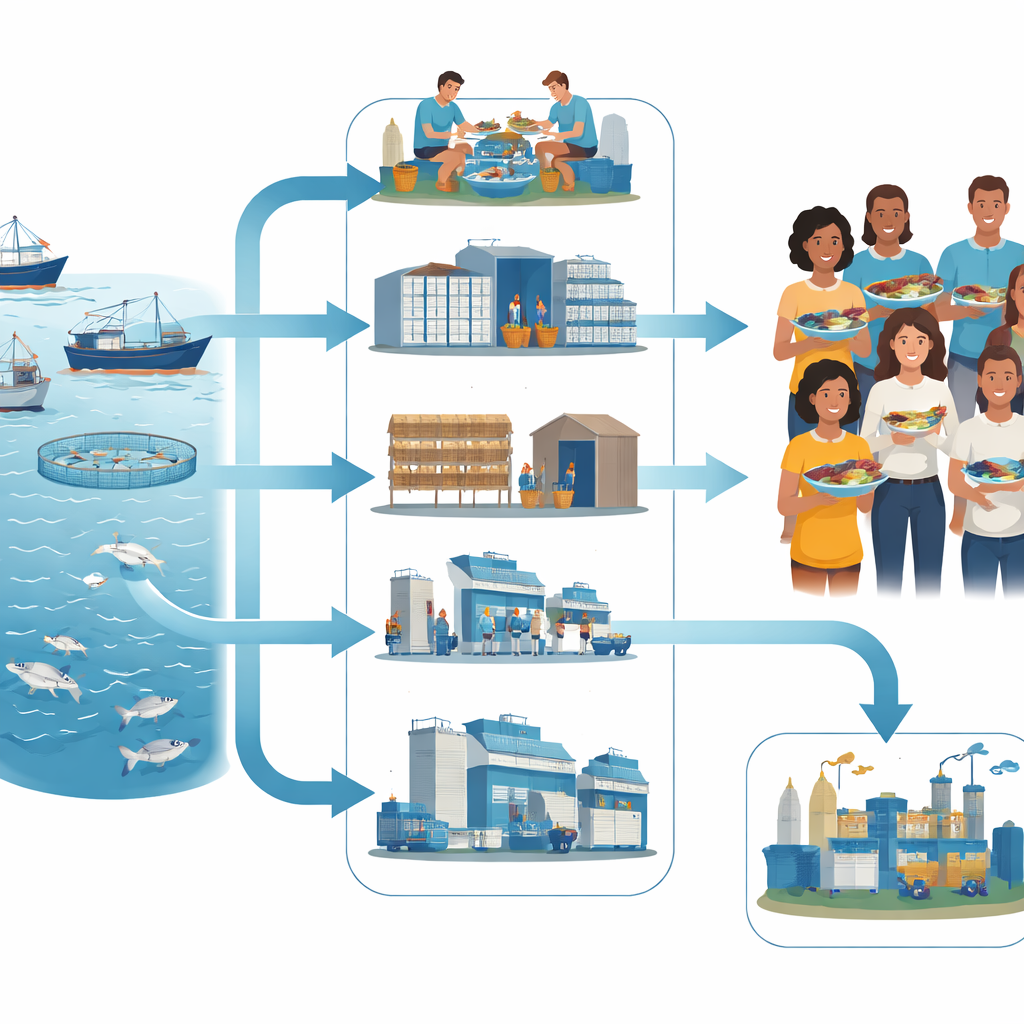
From net to plate: where the fish disappear
Today, only about 54% of harvested fish ends up being eaten directly by people. The rest is lost along the way or diverted into other uses. Some fish is turned into animal feed or pet food. Some spoils because boats and markets lack ice, refrigeration, or timely transport. Other parts—heads, bones, skin, and organs—are thrown away instead of being turned into food. Losses are especially high in low-income tropical regions, where basic infrastructure is scarce and small-scale fishers often rely on sun-drying or simple smoking that leaves fish vulnerable to pests and rot. In some places in sub-Saharan Africa, up to 40% of landed fish may never reach a plate.
Simple tools, big changes
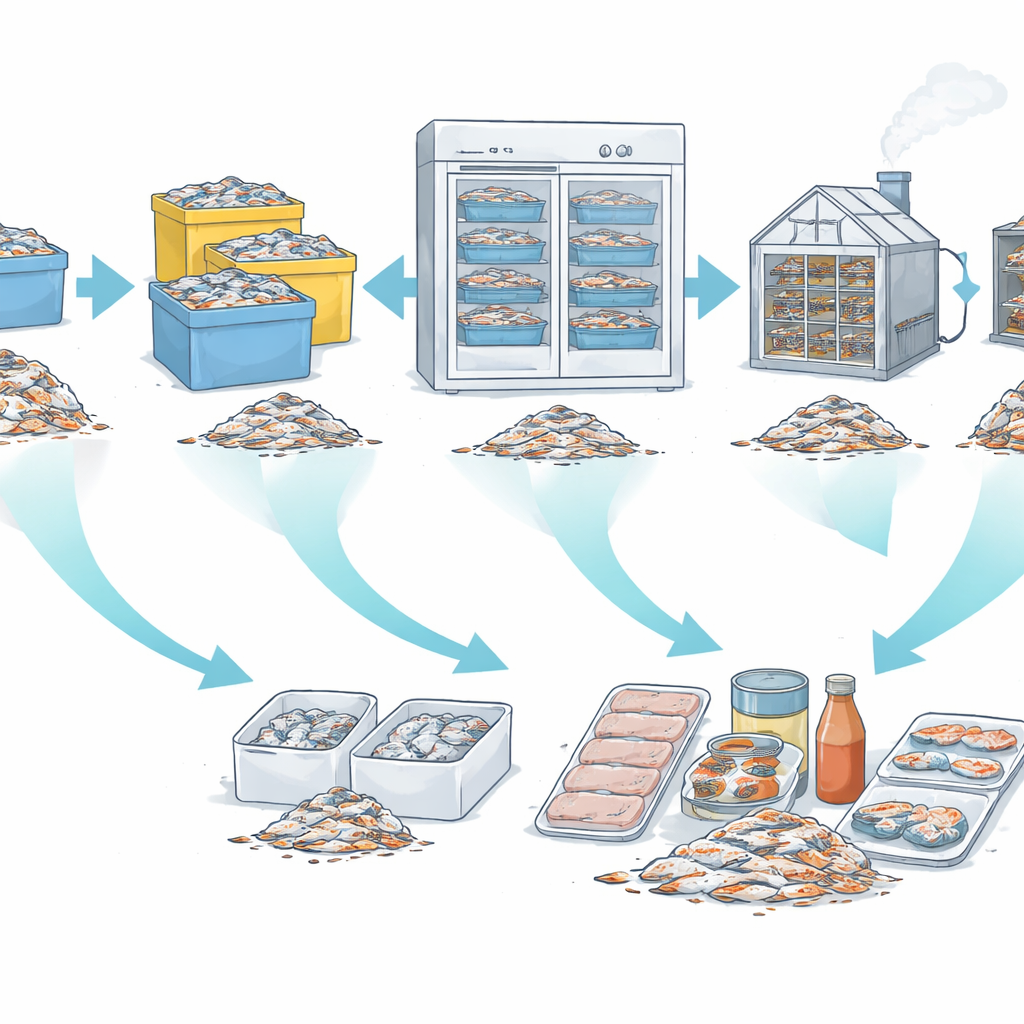
The paper explores a range of practical technologies that can plug these leaks along the supply chain. At sea and at landing sites, sturdy crates, better handling, and ice boxes prevent bruising and early spoilage. Cold rooms and solar-powered freezers keep fish chilled on the way to market. Improved smoking ovens and solar dryers protect fish from insects and smoke pollution while extending shelf life. Finally, modern processing can turn leftover parts—such as frames and heads—into safe, appealing foods like powders, soups, and protein concentrates. When the authors model what would happen if such tools were widely adopted around the world, they find that the share of harvested fish eaten by people could rise from 54% to about 74%.
Hidden meals and better nutrition
That 20-point jump in efficiency is not a minor tweak—it translates into roughly 850 million extra 100-gram portions of fish every single day. This would be enough to give around 10% of the world’s population half of their daily protein from fish alone. Because fish is also rich in omega-3 fats, vitamin D, iodine, selenium, and essential amino acids, these recovered portions could make a real dent in malnutrition, especially in regions where diets lack high-quality protein. The study highlights one example: concentrated protein made from fish by-products can far exceed daily needs for key amino acids and healthy fats in a single modest serving, making it a powerful ingredient for fortified foods, school meals, and emergency rations.
Stronger livelihoods and lower prices
Cutting waste is not just good for nutrition; it is also good business. When more of each catch is sold instead of spoiled, fixed costs like boats, fuel, and processing facilities are spread over more usable product. The authors’ economic model suggests that, under high adoption of preservation and processing technologies, the overall cost of bringing fish to market could drop enough to lower consumer prices by about 8–10% per tonne. Case studies from India, Africa, and Cambodia show that fishers and processors who adopt ice boxes, solar dryers, or improved ovens often see higher incomes and more stable markets, while also using less fuel and energy.
Using what we have instead of taking more
For a lay reader, the main takeaway is straightforward: the world does not need to pull ever more fish from already pressured seas to feed people better. Instead, it needs to look after the fish it already catches. The study shows that with proven, often low-cost technologies—and with supportive policies and fair access to credit and training—global fisheries could provide hundreds of millions of extra meals every day, improve nutrition in vulnerable communities, boost small-scale livelihoods, and ease pressure on marine ecosystems. In short, the next big leap in blue food sustainability will come not from bigger nets, but from smarter use of every fish already in hand.
Citation: Wu, H., Zhang, J., Zhu, H. et al. Technology-driven reduction of fish post-harvest loss could enhance food security and economic resilience. Commun. Sustain. 1, 45 (2026). https://doi.org/10.1038/s44458-026-00048-4
Keywords: fish post-harvest loss, food security, cold chain, by-product valorisation, blue food systems