Clear Sky Science · en
Public support for meat-reduction policy instruments is higher for subsidies and health framing than alternatives across six countries
Why meat and policy matter to all of us
What we put on our plates affects not only our bodies but also the planet. Livestock farming drives climate change and deforestation, while heavy consumption of red and processed meat is linked to heart disease and other health problems. Governments are starting to explore policies such as taxes on unhealthy or high‑impact foods, subsidies for fruits and vegetables, and limits on junk‑food advertising. But these ideas quickly run into a key question: will ordinary people accept them, or push back?
Asking the world about changing what we eat
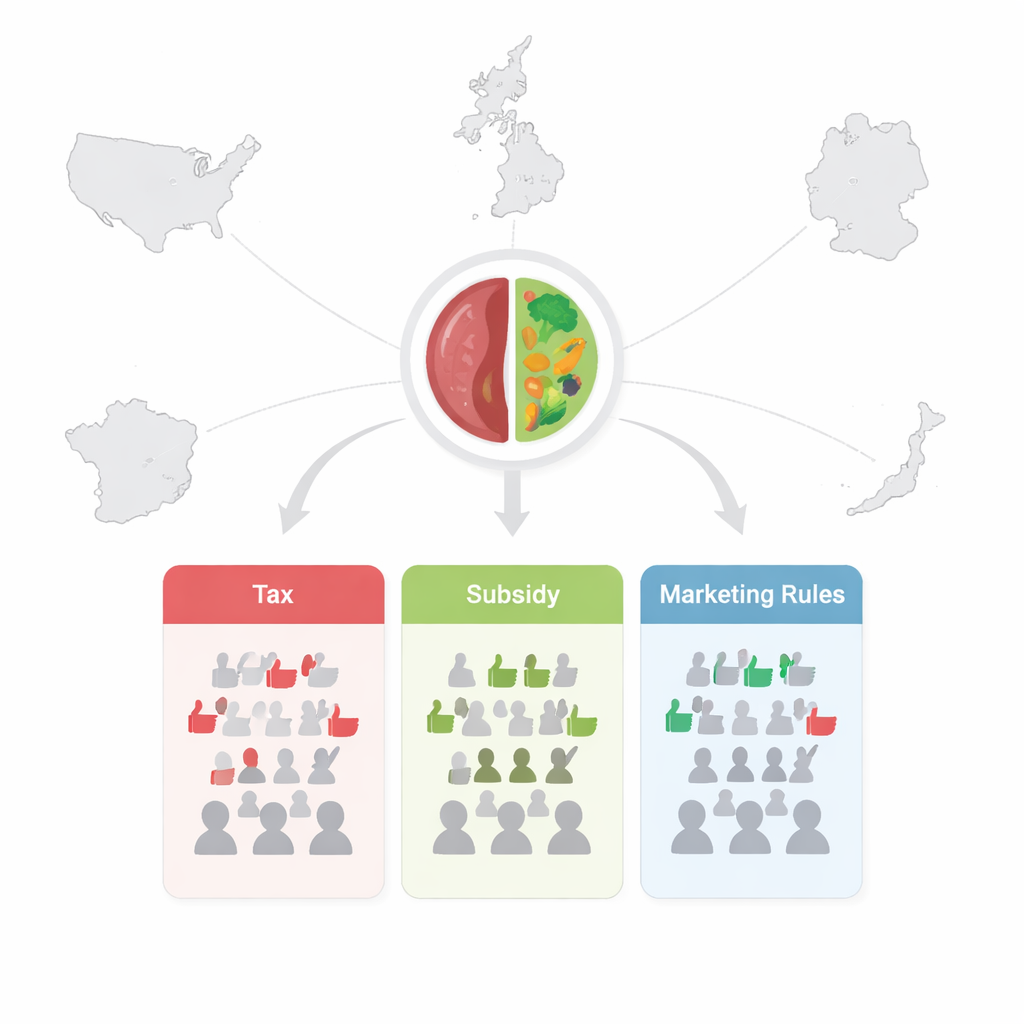
To explore that question, researchers surveyed more than 10,000 adults in six countries: the United States, Germany, Sweden, Brazil, South Africa and India. These nations differ in income, meat‑eating habits, and existing food policies, offering a broad snapshot of global opinion. Participants were asked how strongly they supported or opposed six different policy proposals aimed at reducing meat consumption and promoting healthier, lower‑impact diets. Each proposal combined one of three tools—taxes, subsidies, or marketing bans—with one of two justifications: protecting the climate or improving personal health. The team then linked people’s answers to their political views, concern about climate change, trust in government and basic demographics.
What kinds of rules people accept most easily
The survey reveals a clear pattern: policies that reward better choices are more popular than those that punish bad ones. Across all six countries, subsidies for healthy or climate‑friendly foods—such as lower prices for fruits and vegetables—face the least resistance. Taxes on unhealthy or climate‑damaging foods, like red meat, draw the most opposition, particularly in wealthier countries. Marketing bans that restrict advertising for unhealthy or high‑impact foods generally land in the middle, with notable pushback in the United States. Still, when the researchers compared supporters and opponents, they found net support for most policies overall. Even taxes, while controversial, often had more people in favor than firmly against, especially when justified by climate concerns in countries such as Germany, Brazil and South Africa.
Health versus climate: which story works better?
How a policy is explained also shapes reactions. On average, people are somewhat more positive about policies framed around health benefits than those framed around climate benefits, particularly when all policies are considered together. Yet the details matter. For taxes, climate‑based arguments typically face slightly less resistance than health‑based ones in most countries, except India. For subsidies, the difference flips: health‑framed subsidies are at least as acceptable as climate‑framed ones, and sometimes more so, likely because the personal payoff—feeling better and lowering medical risks—is easy to grasp. For marketing bans, climate framing tends to do a bit better than health framing, though this pattern is not consistent everywhere. These nuances suggest that there is no single “magic message,” but that matching the reason to the policy type and local context is important.
Who resists food rules, and why
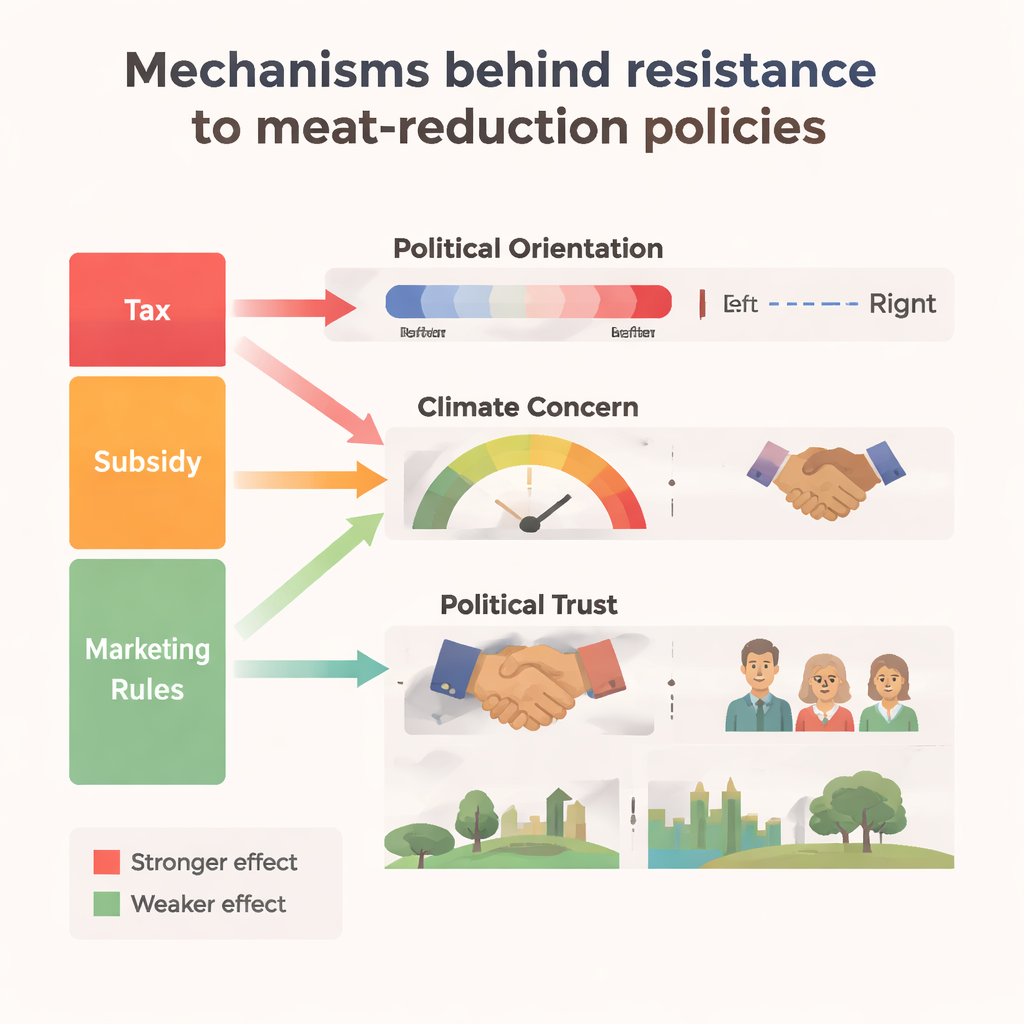
Beyond averages, the study probes where resistance is strongest. People who place themselves on the political right are more likely to oppose both climate‑ and health‑motivated policies, especially taxes and advertising bans. Concern about climate change has the opposite effect: those who worry more about the climate are less resistant, particularly in the United States, Germany and Sweden. Trust in political institutions generally reduces opposition to taxes and some health‑related rules. Demographic factors—such as gender, age, education, income and whether someone lives in a city or rural area—play a smaller but still noticeable role. Men, older people and rural residents tend to be more skeptical of taxes, while women are more open to subsidies and some marketing restrictions. Interestingly, these influences are stronger in the Global North than in the Global South, where support and opposition are less tightly tied to ideology or individual traits.
What this means for everyday eaters and decision‑makers
For non‑specialists, the key takeaway is that many people around the world are open to government action that nudges diets toward healthier, lower‑impact foods, especially when it comes in the form of subsidies rather than new taxes. At the same time, small but vocal groups—often more right‑leaning or distrustful of government—can amplify resistance and shape public debate. The study suggests that if policymakers want to change how societies eat, they will have better luck starting with positive incentives and messages that highlight clear health benefits, while being mindful of local politics and concerns. In short, shifting diets is politically challenging but far from impossible, and understanding where resistance comes from can help design food policies that both protect the planet and make it easier for people to choose what is good for their bodies.
Citation: Elwing, E., Harring, N., Jagers, S.C. et al. Public support for meat-reduction policy instruments is higher for subsidies and health framing than alternatives across six countries. Commun. Sustain. 1, 38 (2026). https://doi.org/10.1038/s44458-026-00043-9
Keywords: meat consumption, food policy, climate change, public opinion, healthier diets