Clear Sky Science · en
Vitrimer-enabled circularity through upcycling mixed polyolefin waste from milk packets into valuable 3D printing feedstock
Turning Everyday Plastic Trash into New Tools
Plastic bags for milk and bottles for toiletries are used for minutes but can linger in the environment for centuries. Much of this waste is made from two kinds of plastics—polyethylene and polypropylene—that do not mix well when recycled together, so they’re usually turned into low‑value products or simply discarded. This study explores a way to transform that mixed plastic trash into tougher, reusable material that can even serve as feedstock for large‑scale 3D printing, helping move society toward a more circular use of plastics. 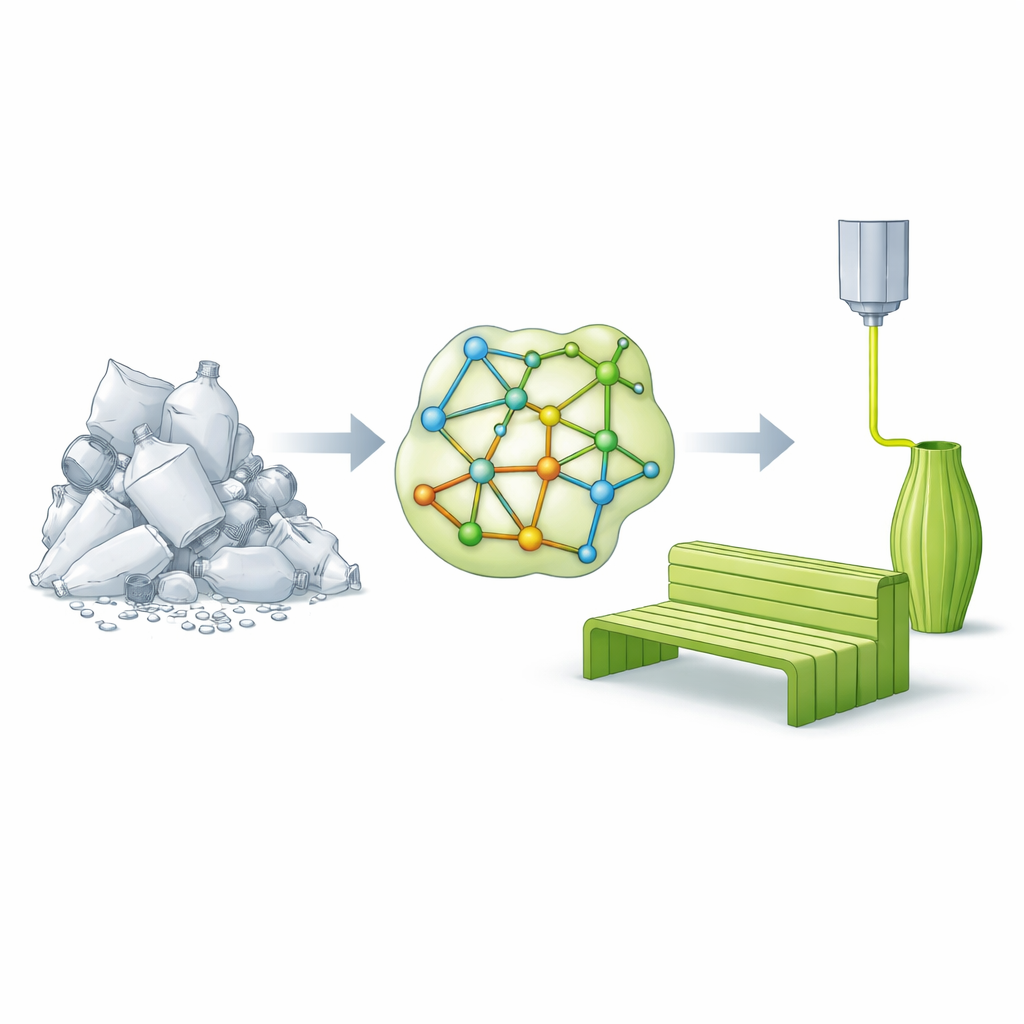
Why Mixing Common Plastics Is So Hard
Polyethylene and polypropylene dominate global plastic production because they are strong, cheap, and easy to mold. Yet when products made from these two plastics reach the end of their life, they create a stubborn problem. The two materials are chemically similar enough that separating them is difficult, but still different enough that, when melted together, they behave like oil and water. The result is a weak, patchy blend that can’t replace high‑quality virgin plastic. Conventional tricks for helping polymers mix depend on carefully tailored additives and clean input streams, which are rarely available in messy real‑world waste.
Building a Smart Network Inside Old Plastic
The researchers tackled this challenge by reshaping the internal structure of post‑consumer polypropylene from rigid packaging. In a first step, they gently attached new reactive groups along the recycled polypropylene chains while avoiding the usual chemical damage that would make the plastic brittle. In a second step, they linked these modified chains together with a special epoxy‑based cross‑linker that forms what is known as a “vitrimer” network—an arrangement of bonds that is solid at room temperature but can rearrange at high temperatures. When this vitrimerized polypropylene is later blended with recycled polyethylene from milk pouches, the dynamic network acts like a chemical bridge, helping the two previously incompatible plastics lock together into a single, more uniform material.
Seeing the Changes from Molecules to Mechanics
To confirm that this hidden network really forms and works as intended, the team combined computer modeling with a suite of lab tests. Quantum‑chemistry calculations mapped how radical sites and added groups on the modified polypropylene capture polyethylene chains, showing that certain reaction pathways create especially stable joint structures. In the lab, infrared spectroscopy tracked the growth of new bonds, while thermal measurements revealed how the network changes the way the plastics crystallize and melt. Mechanical tests showed that blends containing the vitrimer withstand higher stresses and deform less under long‑term loading, and microscopy images displayed smoother, more continuous textures where the two plastics meet, rather than the large, brittle droplets typical of unmodified blends. 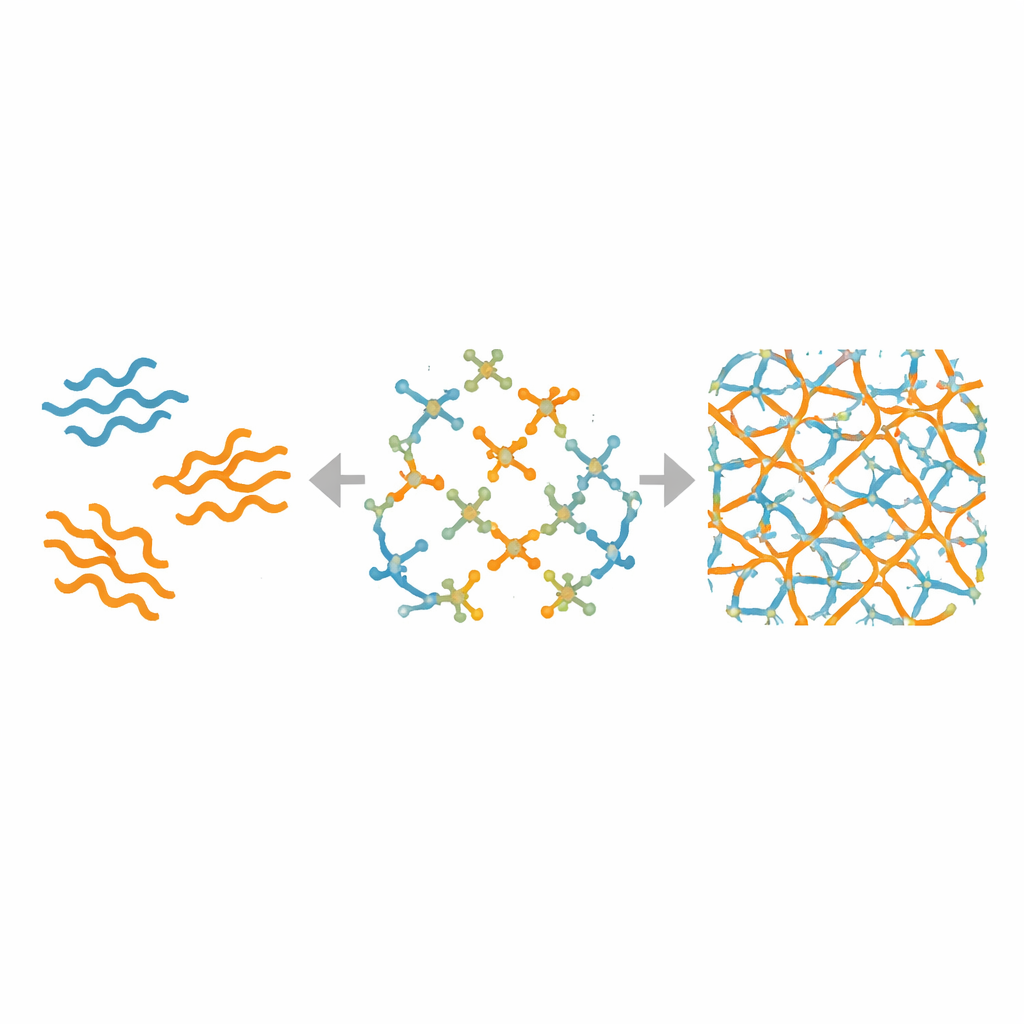
From Waste Stream to 3D‑Printed Products
Beyond improving strength, the vitrimer network also changes how the material flows when heated. The modified blends are thicker and more elastic in the melt, which helps them hold their shape as they are extruded. This makes them well suited to fused‑granulate fabrication, a robotic 3D‑printing method that feeds plastic pellets directly into a large‑scale printer. Using a 50/50 mix of vitrimerized polypropylene and recycled polyethylene, the researchers successfully printed objects like a park bench and a vase with good layer adhesion and dimensional stability—something the same waste plastics could not achieve without the vitrimer treatment. Importantly, when the material was processed and remolded three times, its strength, thermal behavior, and internal structure stayed nearly unchanged, showing that it can circulate repeatedly through manufacturing cycles.
What This Means for Cleaner Plastic Use
In everyday terms, this work shows that it is possible to turn mixed, low‑grade plastic trash—such as milk pouches and old bottles—into a tougher, moldable material that can be re‑shaped again and again without losing performance. By installing a dynamic network inside one of the plastics, the researchers create a kind of molecular glue that knits different waste streams together and makes them suitable for high‑value uses like 3D printing of durable goods. If scaled up, this strategy could help divert large volumes of difficult‑to‑recycle packaging from landfills and incinerators, supporting a more circular and sustainable plastics economy.
Citation: Dey, I., Samanta, K., Debnath, T. et al. Vitrimer-enabled circularity through upcycling mixed polyolefin waste from milk packets into valuable 3D printing feedstock. Commun. Sustain. 1, 50 (2026). https://doi.org/10.1038/s44458-026-00042-w
Keywords: plastic upcycling, mixed polyolefin waste, vitrimer networks, recycled 3D printing, circular polymer economy