Clear Sky Science · en
Priority control of classical contaminants over emerging contaminants in the Asia’s largest river sediments
Why river mud matters for our health
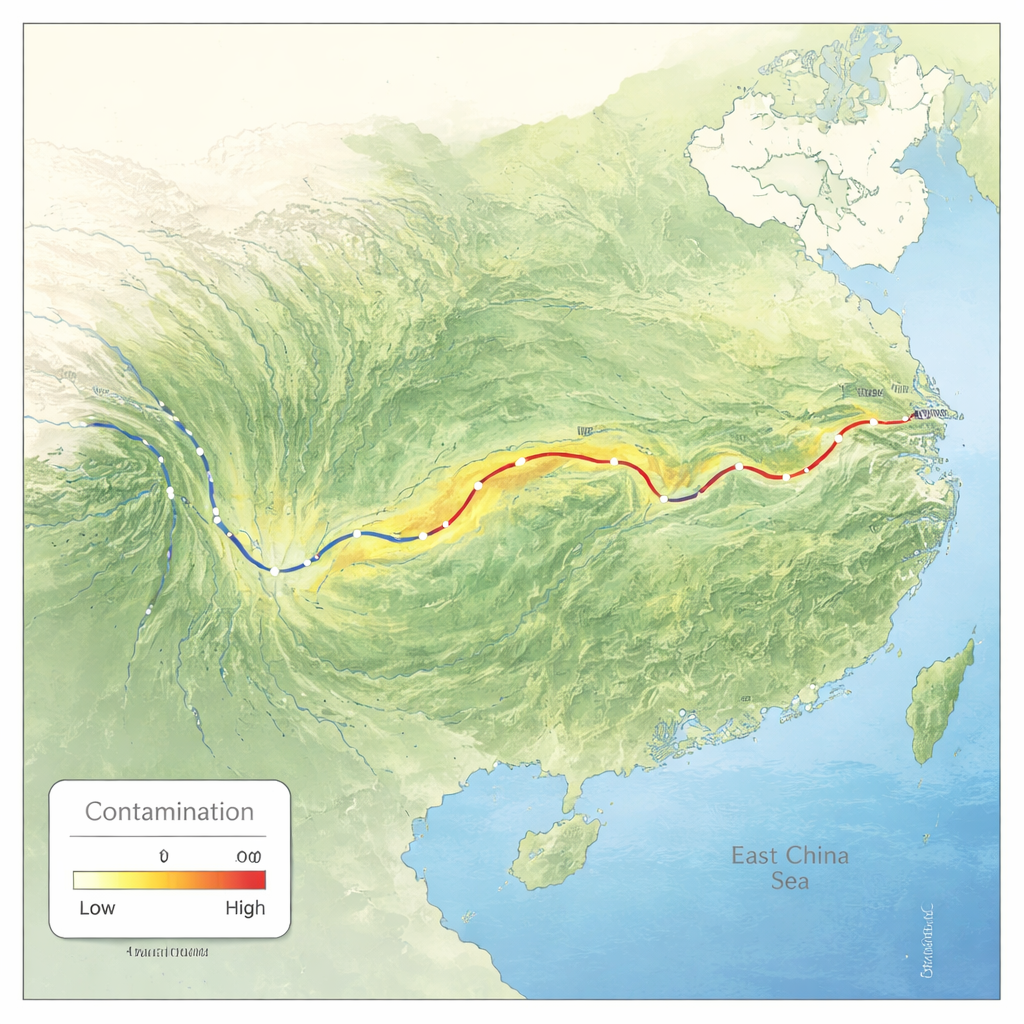
The Yangtze River is Asia’s largest river and a lifeline for hundreds of millions of people. Hidden in its muddy bottom, however, is a long-term record of our chemical footprint: traces of plastics, fuels, medicines and more that can linger for years and affect fish, wildlife and, ultimately, human health. This study dug into those sediments to answer a deceptively simple question with big policy implications: which pollutants in the Yangtze’s mud are most urgent to control right now?
A closer look at tiny but stubborn pollutants
The researchers focused on 112 so‑called micro‑organic contaminants—chemicals that occur in very small amounts but can still be harmful. These included older “classical” pollutants, such as compounds from fuel burning and plastic additives, and “emerging” pollutants like antibiotics, waterproofing agents and ingredients in personal care products. Because many of these substances dissolve poorly in water and stick to particles, they gradually settle into river sediments, turning the riverbed into both a sink and a historical archive of contamination.
Measuring pollution along the river’s full length
In late 2019, the team collected surface sediment from 38 sites stretching from the Yangtze’s upper reaches in the mountains to its mouth near the sea. They measured how much of each of the 112 chemicals was present, how often each was detected and how toxic those levels were to aquatic life. Overall, the total amount of these contaminants varied by more than a factor of six between sites. Two families of classical pollutants dominated: plastic softeners called phthalate esters and combustion‑related compounds known as polycyclic aromatic hydrocarbons. Together they accounted for almost 90% of the micro‑organic chemicals found.
Finding the chemicals that pose the greatest threat
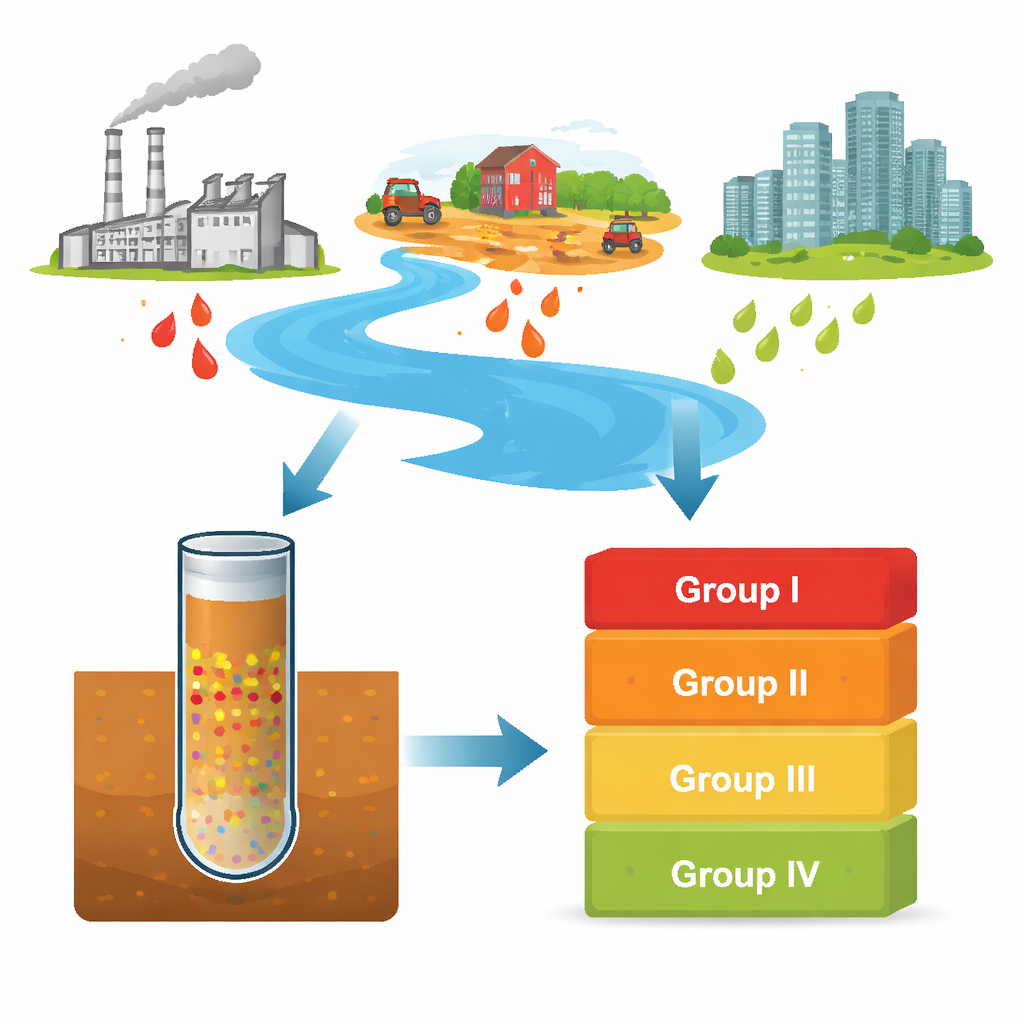
Most previous studies—and even many regulatory lists—rank pollutants using average levels alone. That approach can miss “hotspots,” places where concentrations spike to levels that are highly dangerous even if the river‑wide average looks modest. To fix this, the authors adapted an environmental health prioritization index that combines how often a chemical is found, how much is present, and how toxic it is. Crucially, they added the maximum measured concentration and the highest calculated ecological risk for each pollutant. This “risk maximization” step gives extra weight to chemicals that may be rare overall but reach alarming levels in specific stretches of the river.
Old pollutants still outrank the new ones
When all 112 substances were scored, seven classical chemicals emerged as top priorities for control across the entire basin. These were mainly phthalate plasticizers and combustion‑related compounds such as naphthalene and pyrene, which are linked to cancer and damage to the nervous and reproductive systems. Emerging pollutants like certain antibiotics and long‑lasting stain‑ and water‑repellent chemicals did show worrying risks in some locations, but they generally fell into lower‑priority groups. The ranking also varied from province to province, reflecting differences in industry, farming and fuel use; for example, more industrialized and highly urbanized regions showed longer priority lists and higher overall scores.
What this means for protecting the Yangtze
For non‑specialists, the key message is that the biggest current threats in Yangtze sediments are not just the headline‑grabbing “new” chemicals, but many long‑known pollutants from burning fuel and making or using plastics. The study offers a practical way for governments to build and regularly update targeted control lists based on both everyday exposure and worst‑case hotspots. By focusing first on the seven highest‑priority chemicals and tailoring actions to each province’s pollution profile, regulators can get more protection for ecosystems and people from limited monitoring and cleanup resources.
Citation: Gao, S., Zang, L., Chen, Y. et al. Priority control of classical contaminants over emerging contaminants in the Asia’s largest river sediments. Commun. Sustain. 1, 35 (2026). https://doi.org/10.1038/s44458-026-00039-5
Keywords: Yangtze River pollution, river sediments, chemical contaminants, plasticizers and PAHs, environmental risk prioritization