Clear Sky Science · en
A predictive model to assess liability in earthquake disasters
Why Earthquakes Are Not Just “Natural”
When a devastating earthquake strikes, news reports focus on magnitude and epicenters, as if nature alone were to blame. This paper argues that the true story is more complicated—and more human. Using ideas from both earth science and law, the authors show how government choices, building rules, and even deliberate inaction can turn a strong quake into either a survivable emergency or a national tragedy. Their goal is to provide a structured way to discuss not only what happened in the ground, but who may be responsible for avoidable loss of life and damage.
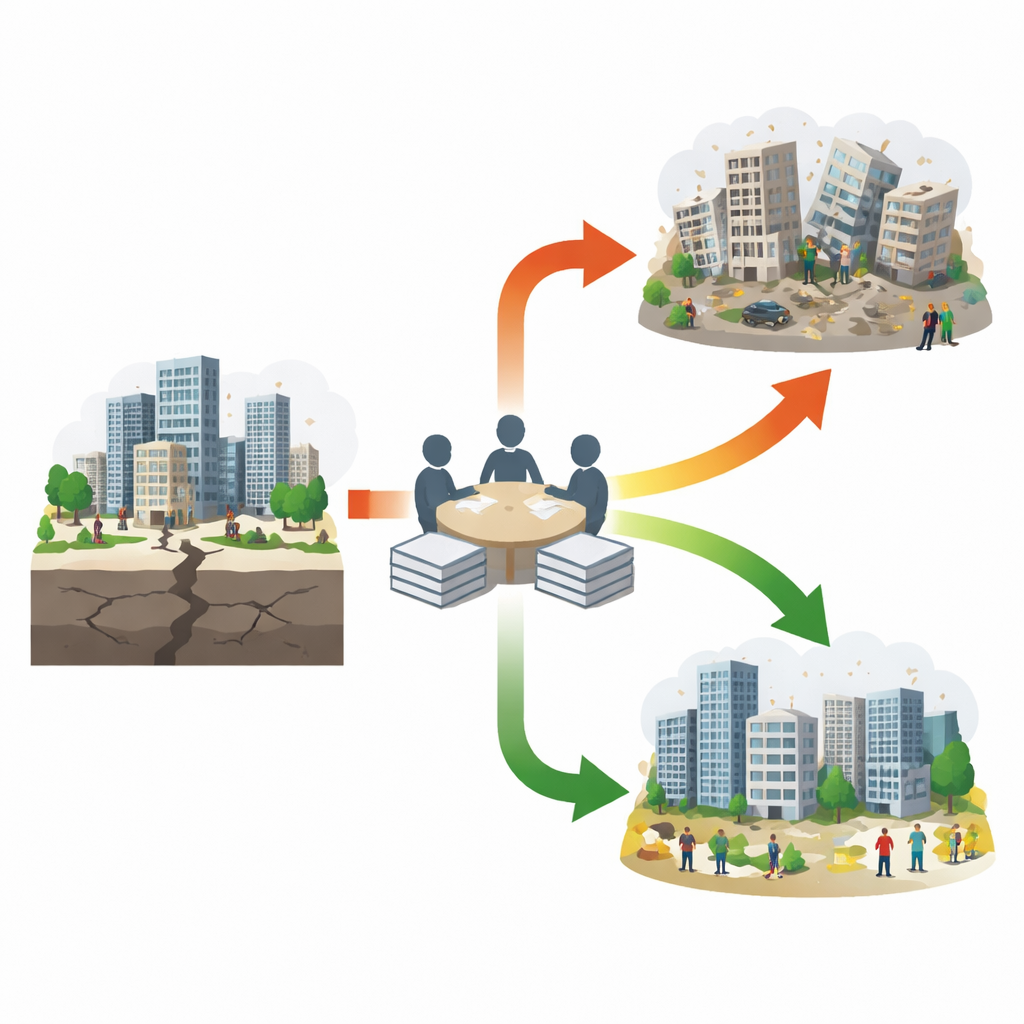
How Human Choices Shape Disaster
The authors start from a simple but powerful observation: earthquakes are natural, disasters are not. The same level of shaking can cause very different outcomes depending on how well a society has prepared. They review striking examples, from the deadly 1999 and 2023 earthquakes in Turkey, where corruption and construction amnesties allowed unsafe buildings to remain, to the much lower death toll in Taiwan’s 2024 quake after years of strengthening structures and emergency systems. People often look to local and national authorities for protection, and when they feel more could have been done—better zoning, clearer warnings, safer buildings—they assign blame, at the ballot box or in court.
From Climate Lawsuits to Earthquake Responsibility
To make sense of responsibility, the paper borrows from “attribution science,” a field that has transformed climate lawsuits. In climate cases, scientists estimate how much human actions (like greenhouse gas emissions) raise the odds or severity of extreme heatwaves or floods, helping courts decide whether a government’s inaction contributed to harm. The authors argue that earthquakes are in some ways even clearer: seismic hazard in many regions is well mapped, building techniques to resist shaking are known, and technical standards exist. As a result, it is harder to claim that earthquakes are unforeseeable “acts of God” that erase human responsibility.
Turning Risk Into a Legal Equation
The core of the article is a predictive model that links three elements: the strength of the earthquake, the severity of the consequences, and the efforts authorities made beforehand to reduce risk. The authors adapt the engineering idea of keeping danger “as low as reasonably practicable,” a principle used in nuclear and industrial safety, and translate it into a legal tool. They rate how many people are killed or how much money is lost, and pair this with a score for what was done in advance—such as enforcing building codes, guiding urban growth away from known danger zones, informing residents, running drills, and reinforcing key structures. Together, these pieces define how likely it is that a court could find an administration legally responsible.
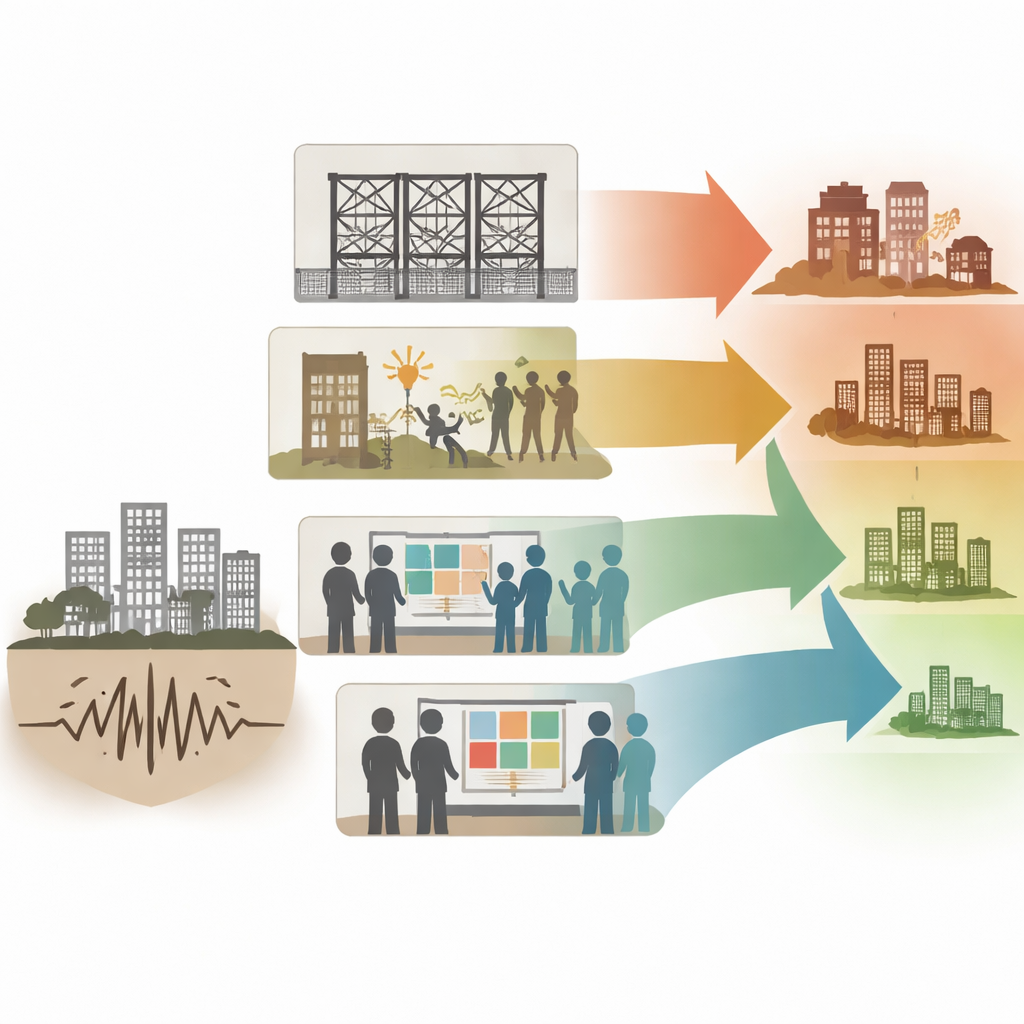
Judging Preparation, Not Just Damage
To make the model concrete, the authors draw on French and European rules and past court decisions about floods, storms, and other hazards. They group public authorities into four behavioral types: reactive (doing the bare minimum), active-reactive, active, and proactive (planning, checking, and improving over time). Even a proactive authority can face legal exposure after a major disaster, but the risk of conviction rises sharply when serious harm combines with weak or neglected measures. The model also reflects a broader legal shift: as science improves mapping and prediction, judges are less willing to treat natural events as unforeseeable. The more a hazard can be anticipated, the more a failure to prepare looks like negligence or even wilful ignorance.
What This Means for Citizens and Governments
In everyday terms, the paper’s conclusion is that earthquakes expose not only faults in the Earth’s crust but also faults in governance. By quantifying how much was reasonably possible to do in advance—given known hazard, available funds, and established techniques—the model helps separate unavoidable tragedy from preventable loss. It does not say that every inaction is a crime, or that governments must eliminate all risk. Instead, it offers judges, policymakers, and communities a clearer way to ask: given what we knew and could do, was enough done to protect people? As scientific knowledge grows, the authors argue, it will become harder to hide behind the idea of freak, unforeseeable events—and easier to demand accountability from those whose choices silently shape the toll of future quakes.
Citation: Guéguen, P., Dollet, C. A predictive model to assess liability in earthquake disasters. Commun. Sustain. 1, 39 (2026). https://doi.org/10.1038/s44458-025-00028-0
Keywords: earthquake risk, disaster law, public accountability, building safety, attribution science