Clear Sky Science · en
Environmental gradients explain nearshore microplastic distribution patterns: insights from machine learning models
Why tiny plastics near our coasts matter
Our oceans are awash with microscopic plastic fragments that are too small to see but large enough to affect marine life and coastal ecosystems. Yet even as governments pledge to curb plastic pollution, we still know surprisingly little about what controls where these tiny particles end up once they reach the sea. This study follows three years of measurements along the crowded shoreline of Shenzhen, China, and uses modern data-mining tools to uncover a striking pattern: microplastics tend to gather where chemical pollution is strongest, turning them into tracers of the coastal environment itself. 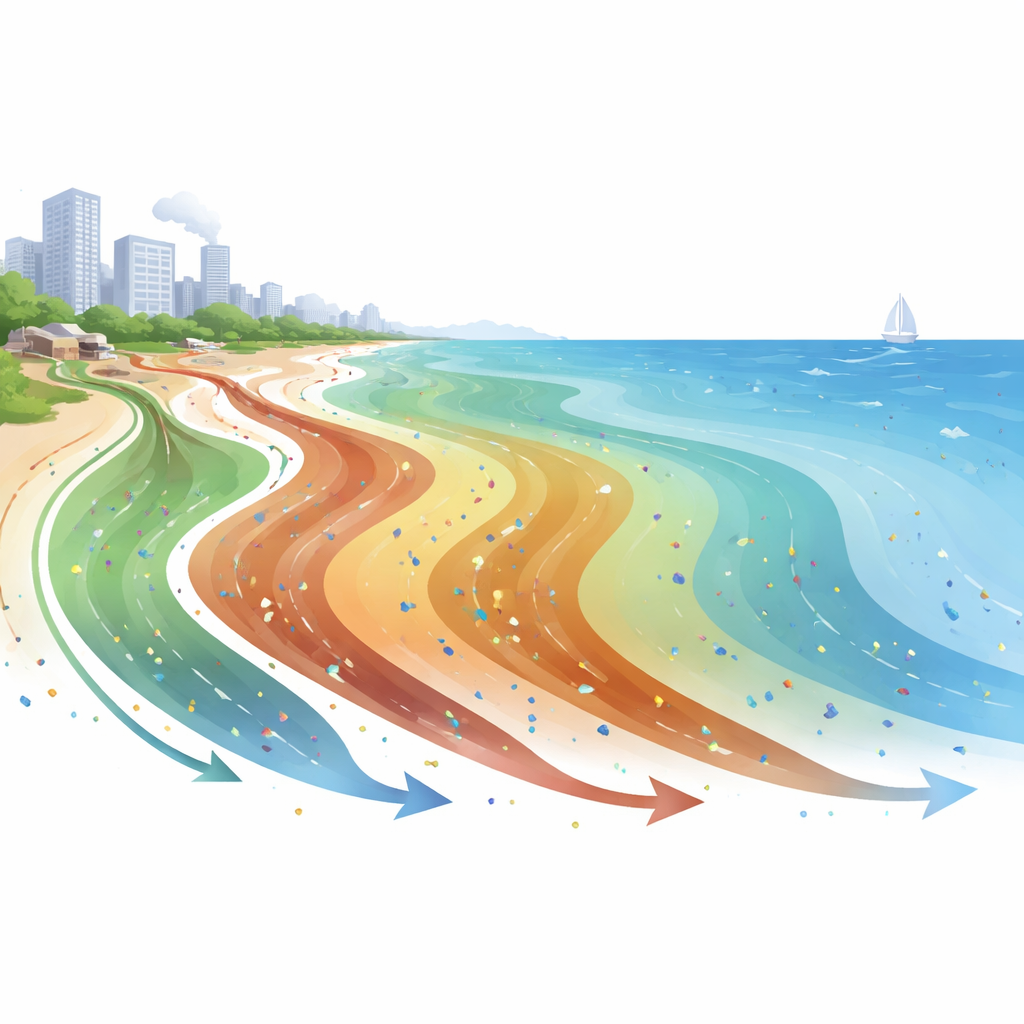
Looking at the coast as a patchwork of conditions
Instead of treating microplastics as a single, simple pollutant, the researchers viewed the shoreline as a patchwork of overlapping influences. Urban rivers, sewage outfalls, industrial zones, and ports all deliver not only plastics, but also nutrients from fertilizers and wastewater, oil residues, and dissolved metals such as zinc and lead. Over three summers and one autumn between 2022 and 2024, the team mapped these variables onto a fine grid covering Shenzhen’s nearshore waters. They then applied statistical methods that look for hidden patterns in large datasets, grouping areas of the sea that share similar “chemical fingerprints,” and checking how closely those fingerprints line up with the abundance of microplastics.
Chemical fingerprints that guide tiny particles
The analysis revealed that microplastics do not spread randomly once they enter coastal waters. Instead, their highest concentrations repeatedly appeared in zones rich in nitrogen and phosphorus compounds, oil-like organic pollution, and trace metals. Areas with lower salt content and altered acidity—signs of river influence and intense coastal activity—also tended to harbor more microplastics. In contrast, factors that were meant to stand in for water movement, such as distance from river mouths, water depth, and rainfall-driven runoff, explained far less of the observed variation. This suggests that, at the scale and timing of this study, the long-lived chemical conditions of the water tell us more about microplastic hotspots than the immediate push and pull of currents alone.
Teaching computers to recognize pollution patterns
To test whether these relationships could be used predictively, the authors trained several machine-learning models to sort coastal locations into five levels of microplastic abundance based only on their environmental measurements. One method in particular, known as CatBoost, was able to correctly classify most locations in both the training data and an independent year of observations. When the team probed how the models were making their decisions, the same story emerged: nutrients, especially total nitrogen and phosphorus forms, along with oil residues, dissolved oxygen, and certain metals consistently ranked as the most influential inputs. When these key chemical families were removed from the training process, the models’ skill dropped sharply, confirming that they are central to organizing microplastic patterns. 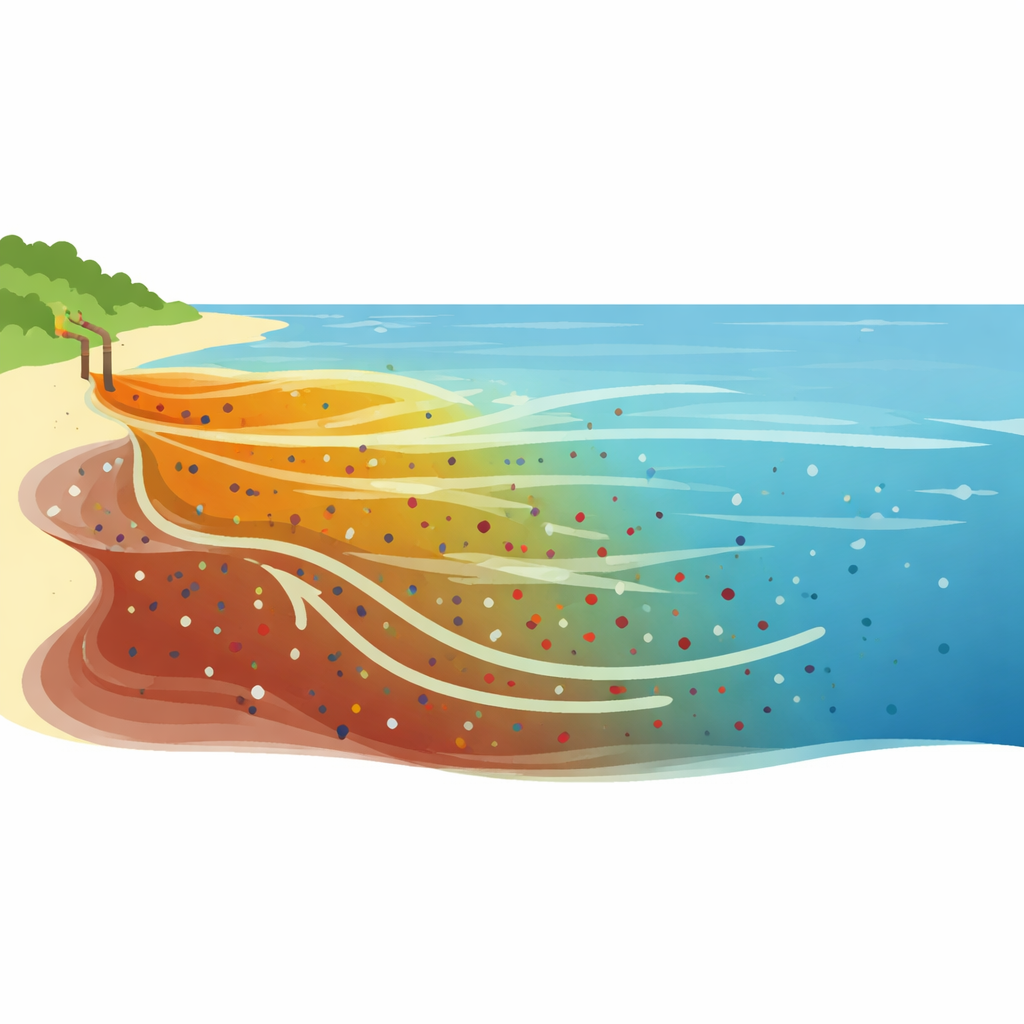
Tiny plastics as messengers of human impact
Taken together, the results support a simple but powerful idea. Once microplastics reach the sea, they largely behave like “quasi-passive” passengers that hitch a ride on the broader chemical state of coastal waters. They accumulate and linger where nutrient enrichment, industrial emissions, and urban wastewater have already altered the environment, rather than being controlled solely by bursts of river flow or single pollution events. For policy makers and coastal managers, this means that efforts to reduce fertilizer runoff and industrial discharges could simultaneously lower microplastic risks. It also suggests that routine water-quality measurements, which many regions already collect, can help predict and interpret plastic pollution patterns. In this way, microplastics are more than just contaminants: they may also serve as visible indicators of the invisible chemical gradients that define our modern coastal seas.
Citation: Li, J., Sun, W., Wang, Y. et al. Environmental gradients explain nearshore microplastic distribution patterns: insights from machine learning models. npj Emerg. Contam. 2, 11 (2026). https://doi.org/10.1038/s44454-026-00028-2
Keywords: microplastics, coastal pollution, nutrient enrichment, machine learning, trace metals