Clear Sky Science · en
Experimental infection and viral pathogenesis of a human isolate of H5N1 highly pathogenic avian influenza strain in Jersey cows
Why Sick Cows Matter to Everyone’s Health
Most people never think about the health of dairy cows when pouring milk into a glass. Yet new strains of bird flu are quietly testing the boundaries between species, including cows and humans. This study looks at what happens when a highly dangerous H5N1 bird flu virus infects Jersey dairy cows, a major milk-producing breed. By understanding how the virus behaves in cows’ udders and milk, scientists hope to better protect the food supply, farm workers, and possibly even head off future pandemics.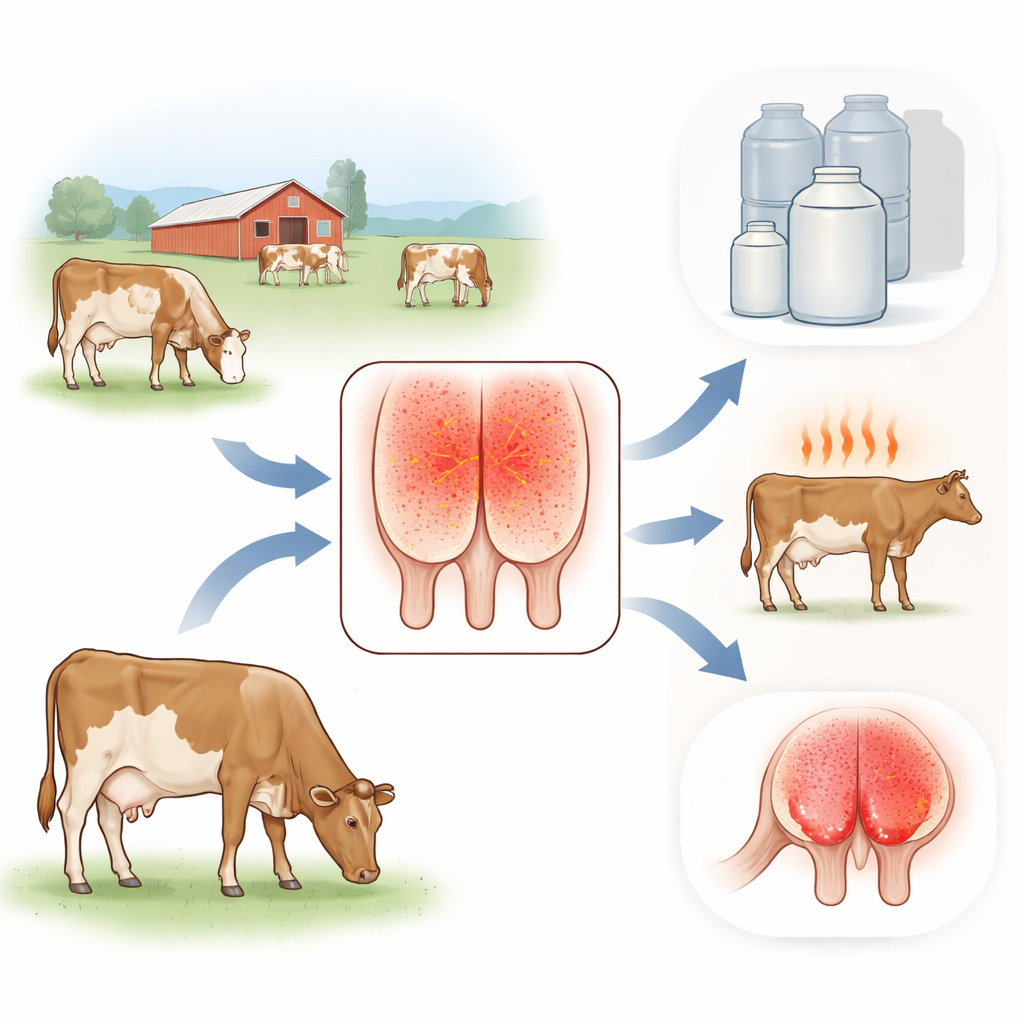
A New Virus in an Old Farm Animal
For decades, H5N1 bird flu has mainly been a threat to poultry and wild birds, occasionally jumping into humans with deadly results. Recently, however, a newer version of the virus has begun infecting many mammals, including dairy cattle in the United States. Earlier work showed that Holstein cows could develop udder infections and strange, colostrum-like milk after exposure. What remained unknown was whether Jersey cows, whose numbers are rising in U.S. herds, were equally vulnerable to this virus.
How the Experiment Was Done
To answer this, researchers worked with four adult Jersey cows. One served as a healthy comparison animal, while three were deliberately exposed to a human H5N1 virus isolated from the Texas dairy outbreak. The virus was placed both into the cows’ noses and directly into two quarters of each udder, mimicking how infection might reach the mammary gland. Over the following week, the team carefully tracked body temperature, milk output and appearance, and signs of udder inflammation. They also collected frequent swabs, milk, and tissue samples to measure how much virus was present and where it was multiplying.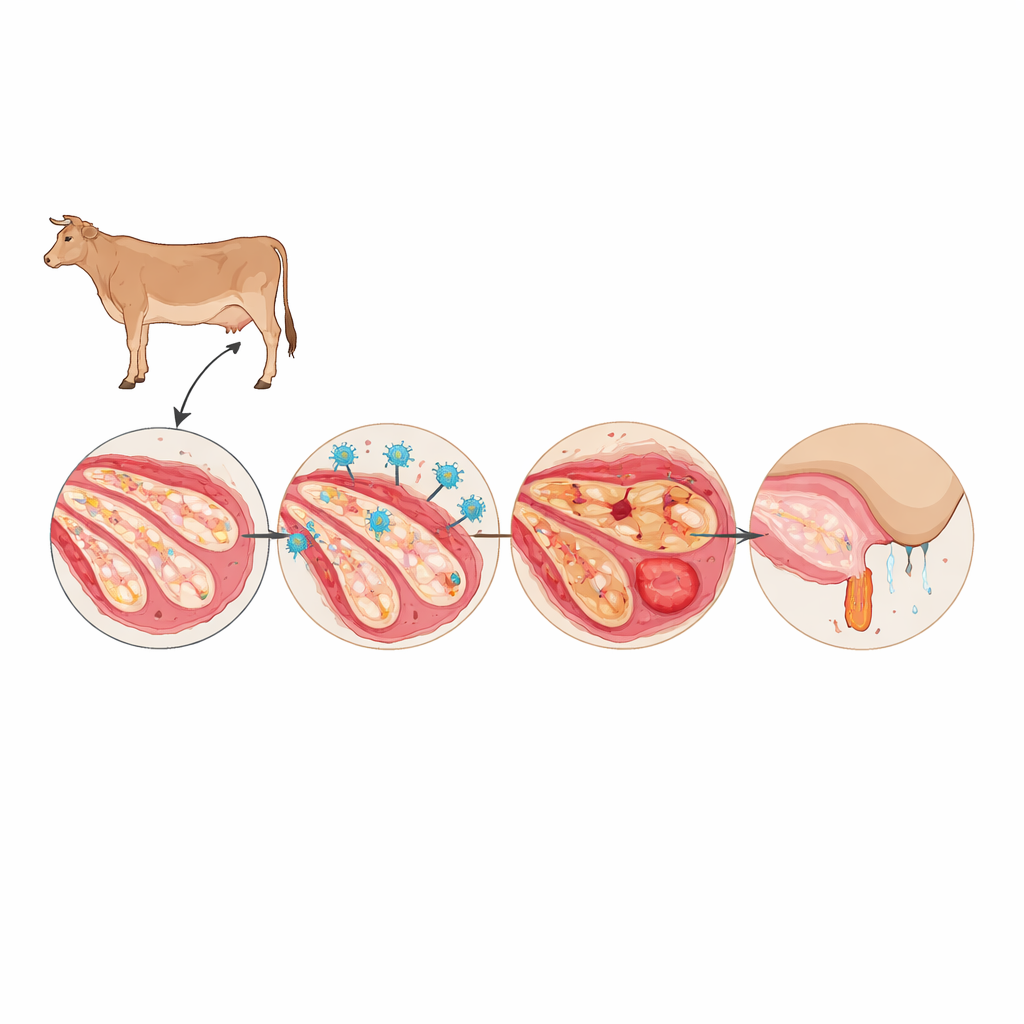
What Happened to the Cows and Their Milk
The infected cows all showed mild illness: they developed high fevers within a day, had some cough and reduced appetite, but no severe breathing problems. The most striking change was in the udder and milk. Within two days, milk output plunged from roughly 20 pounds a day to about 5, and the milk turned thick and yellow, resembling early colostrum rather than normal milk. Simple on-farm tests signaled mastitis, an inflammation of the udder. In contrast, the uninfected control cow briefly lost milk because of the stress of being moved but quickly bounced back, underscoring that the sustained drop in the other cows came from infection, not handling.
Where the Virus Took Hold Inside the Cow
Laboratory tests revealed that the virus strongly favored the mammary gland. Swabs taken from inside the infected teats and samples of milk contained very high amounts of viral genetic material for at least seven days. The outside of infected teats also carried virus, hinting at a possible route for spread to farm workers or equipment during milking. By comparison, nasal swabs and tissues from the airways held only low levels of virus, suggesting that, in Jersey cows, H5N1 does not thrive well in the lungs. Under the microscope, infected udder tissue showed classic signs of severe mastitis: damaged milk-producing structures, plugged ducts filled with dead cells and thick secretions, and clear staining for viral components within both tissue and milk.
Why These Findings Raise a Red Flag
Taken together, the results show that Jersey cows are indeed susceptible to infection with a human-derived H5N1 virus, and that the udder is the main target. The virus can multiply to very high levels in milk and udder tissue, causing painful mastitis and long‑lasting drops in milk production. Because the virus reaches the outer surface of the teats and the milk itself, it may provide new opportunities for the virus to adapt in mammals or jump back into people, a process called reverse spillover. The authors conclude that Jersey cows can serve as an important model to study H5N1 in large animals and to test vaccines and treatments. More broadly, the work underlines that what happens in the milking parlor is not just a farm problem—it is directly linked to public health and to our preparedness for the next pandemic threat.
Citation: Cargnin Faccin, F., Gay, L.C., Regmi, D. et al. Experimental infection and viral pathogenesis of a human isolate of H5N1 highly pathogenic avian influenza strain in Jersey cows. npj Vet. Sci. 1, 2 (2026). https://doi.org/10.1038/s44433-025-00002-5
Keywords: H5N1, dairy cattle, mastitis, zoonotic influenza, milk safety