Clear Sky Science · en
Integrated pollution and carbon mitigation delivers major health and economic co-benefits in China
Why Cleaner Air and Lower Carbon Matter Together
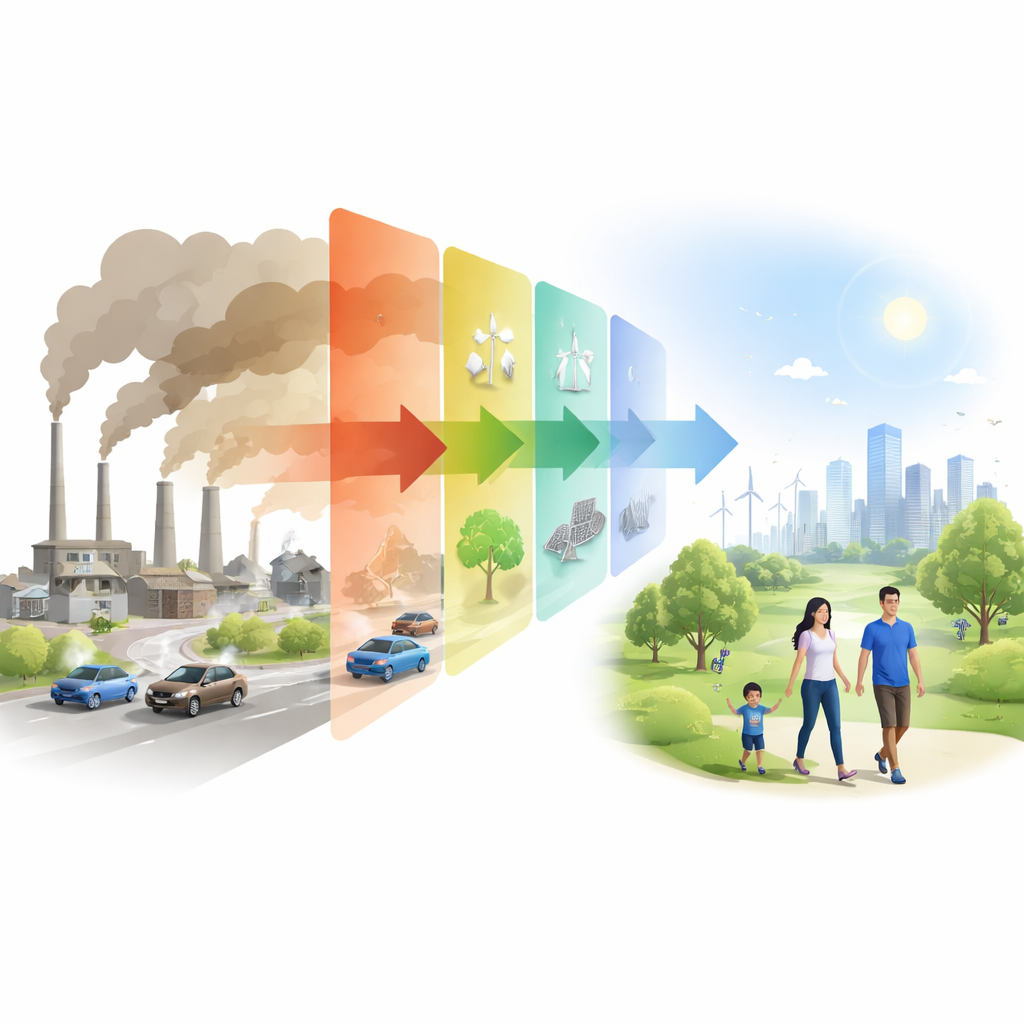
China’s struggle with smog and climate change is not just an environmental story; it is about people’s health, household budgets, and the country’s economic future. This study explores what happens when policies to cut traditional air pollution and policies to cut climate-warming carbon emissions are planned together instead of separately. Using a detailed, data-rich model of China’s economy, energy system, air quality, and health, the authors show that smarter, coordinated action can save hundreds of thousands of lives, clean the air across provinces, and still make economic sense.
Looking at the Whole System
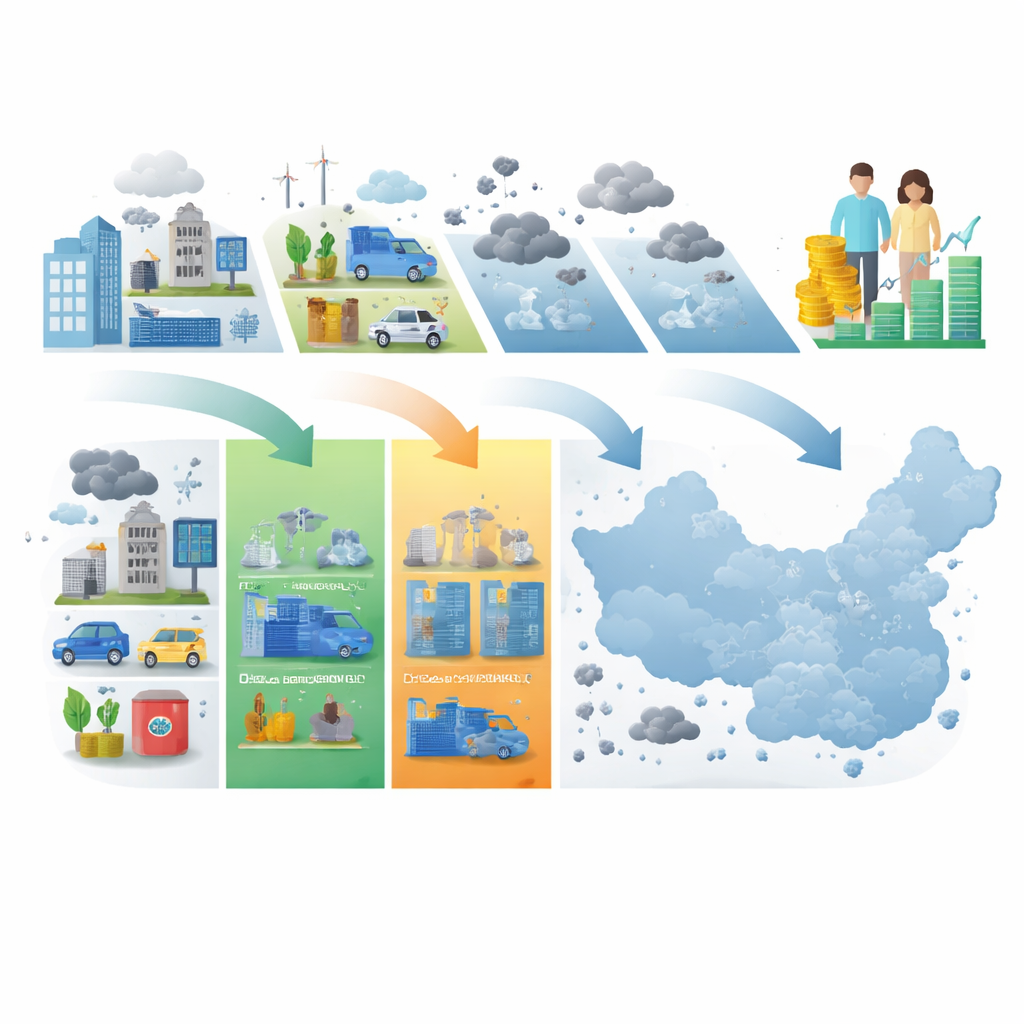
The researchers built an integrated framework that links how energy is produced and used, how much pollution enters the air, how that pollution spreads, and how it affects people’s health. They combined three major tools: an economic model of China’s energy choices, a technology-based model of smokestack and tailpipe pollution controls, and a health model that estimates deaths linked to fine particles in the air. By feeding results stepwise from one tool into the next, they tracked how different policy choices between 2020 and 2050 would change emissions, air quality, and health in each province.
Different Paths to a Low-Carbon Future
The study compares a “business-as-usual” energy pathway with a much stronger decarbonization pathway that better fits China’s goals of peaking carbon emissions before 2030 and reaching carbon neutrality before 2060. In both cases, carbon emissions peak around 2030, but deep decarbonization roughly doubles the speed of cuts afterward and lowers emissions by about three quarters by mid-century. Early on, cleaner power generation drives most of the reductions. Later, changes in industry, buildings, and everyday lifestyles—such as efficiency improvements and electrification—become increasingly important as easy gains from the power sector are used up.
Cutting Smoke and Soot Across China
Alongside these carbon pathways, the authors design seven sets of stronger end-of-pipe measures for power plants, factories, vehicles, homes, and farms, and then mix and match them with the two carbon paths. They find that filters and scrubbers on smokestacks, cleaner household stoves, and tighter vehicle standards can quickly slash sulfur dioxide and fine particle emissions, visibly improving air quality within a decade. Nitrogen oxides, which are tied closely to fuel combustion, fall more when the energy system itself is transformed. Under the most ambitious combined scenario, emissions of key pollutants drop by roughly 80 percent or more by 2050 compared with 2020, and almost all provinces meet China’s national fine-particle standard, though most still miss the stricter World Health Organization guideline.
Lives Saved and Money Gained
Cleaner air means fewer people dying early from heart disease, stroke, lung disease, and other illnesses linked to fine particle exposure. Under existing policies, the models project about 1.3 million premature deaths related to this pollution in 2050. With deep decarbonization plus strong pollution controls, this number falls to around 830,000, avoiding over 500,000 premature deaths in that year alone. The benefits are not spread evenly: heavily industrial and populous provinces in central and eastern China gain the most, while sparsely populated western regions see smaller health gains. When the avoided deaths are converted into monetary terms, the health benefits total about 3.6 trillion yuan, far exceeding the 2.6 trillion yuan cost of the extra pollution-control measures.
Designing Smart, Tailored Policies
The analysis shows that an all-in strategy is more efficient than focusing only on either climate or air pollution. Deep decarbonization reduces the need for expensive end-of-pipe controls by cutting the use of fossil fuels in the first place, lowering overall costs by about 11 percent compared with a “filters only” path. At the same time, near-term filters and retrofits deliver fast air-quality and health gains while the slower process of transforming the energy system unfolds. Because each province has its own mix of industries, fuels, and population patterns, the authors argue that policies should be tailored region by region—for example, stressing industrial retrofits in coal-heavy provinces and transport electrification in coastal, service-oriented regions.
What This Means for Everyday Life
In simple terms, the study finds that China can clean its air, protect people’s health, and move toward its climate goals at the same time, and that doing so in a coordinated way actually saves money overall. The most successful strategy combines quick fixes that trap pollution before it reaches the air with long-term changes in how energy is produced and used. If these steps are carried out with attention to regional differences and guided by health indicators—not just emission targets—millions of people could breathe easier, live longer, and share in the economic benefits of a cleaner, low-carbon future.
Citation: Xiao, YX., Wang, H., Liu, LJ. et al. Integrated pollution and carbon mitigation delivers major health and economic co-benefits in China. npj Clean Air 2, 22 (2026). https://doi.org/10.1038/s44407-026-00062-9
Keywords: air pollution, carbon mitigation, health co-benefits, China climate policy, PM2.5