Clear Sky Science · en
Effects of urbanization, scale, and geography on air pollution in India
Why this story about India’s air matters
India is home to some of the world’s fastest-growing cities—and some of its dirtiest air. This study looks across the entire country to understand where air pollution is worst, how it is changing, and what that means for people’s health. By combining satellite pictures of the atmosphere with data from ground monitors, the authors trace how city growth, location, and population size interact to shape the air millions of Indians breathe every day.
Where the air is hardest to breathe
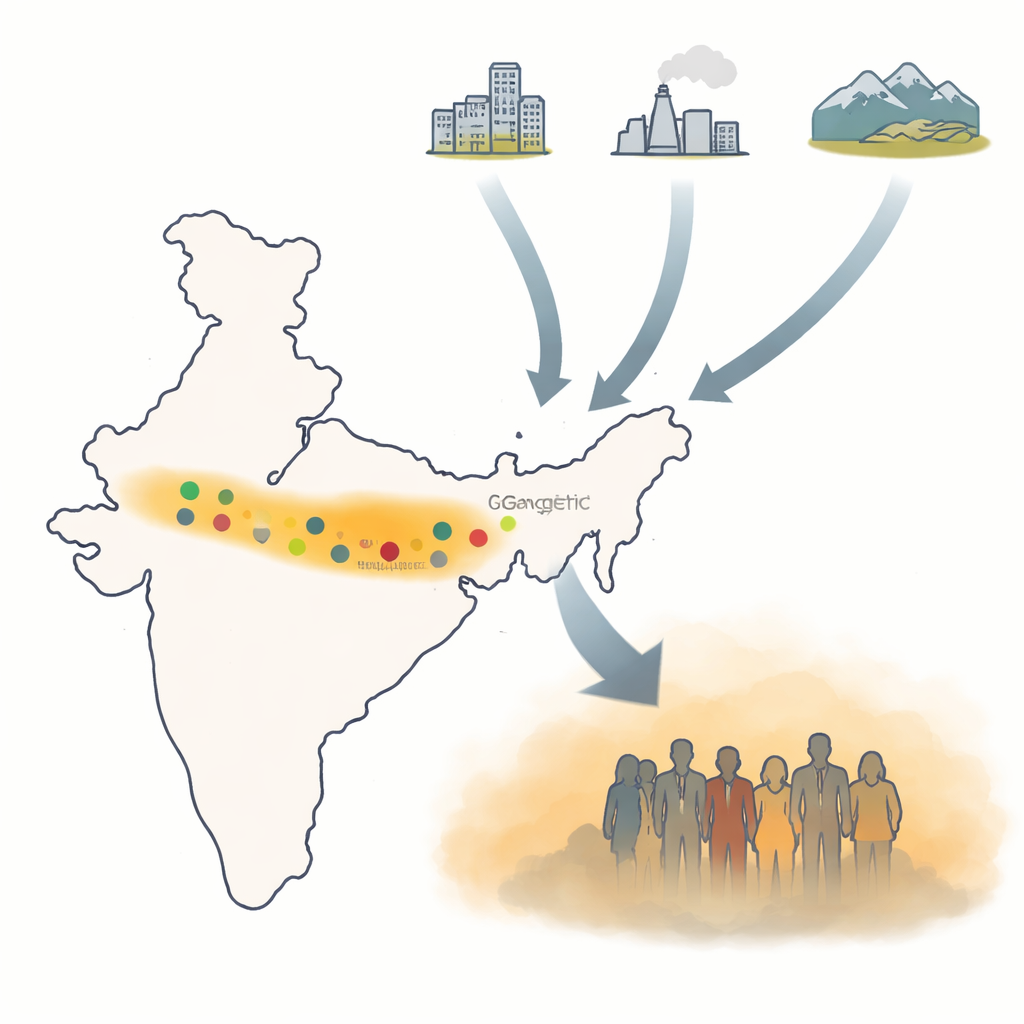
The study focuses on two major kinds of pollution: nitrogen dioxide (NO2), a gas mainly produced by engines and power plants, and coarse particles known as PM10, which come from dust, smoke, industry, and traffic. Looking at every district in India between 2005 and 2019, the researchers find that NO2 levels rose in 86% of districts. One broad region stands out: the Indo-Gangetic Plain, a densely populated belt stretching from Punjab in the northwest to West Bengal in the east. Districts there now have much higher NO2 levels than the rest of the country, meaning that roughly a quarter of India’s population lives in areas with especially heavy exposure to this harmful gas.
How city growth changes the pollution picture
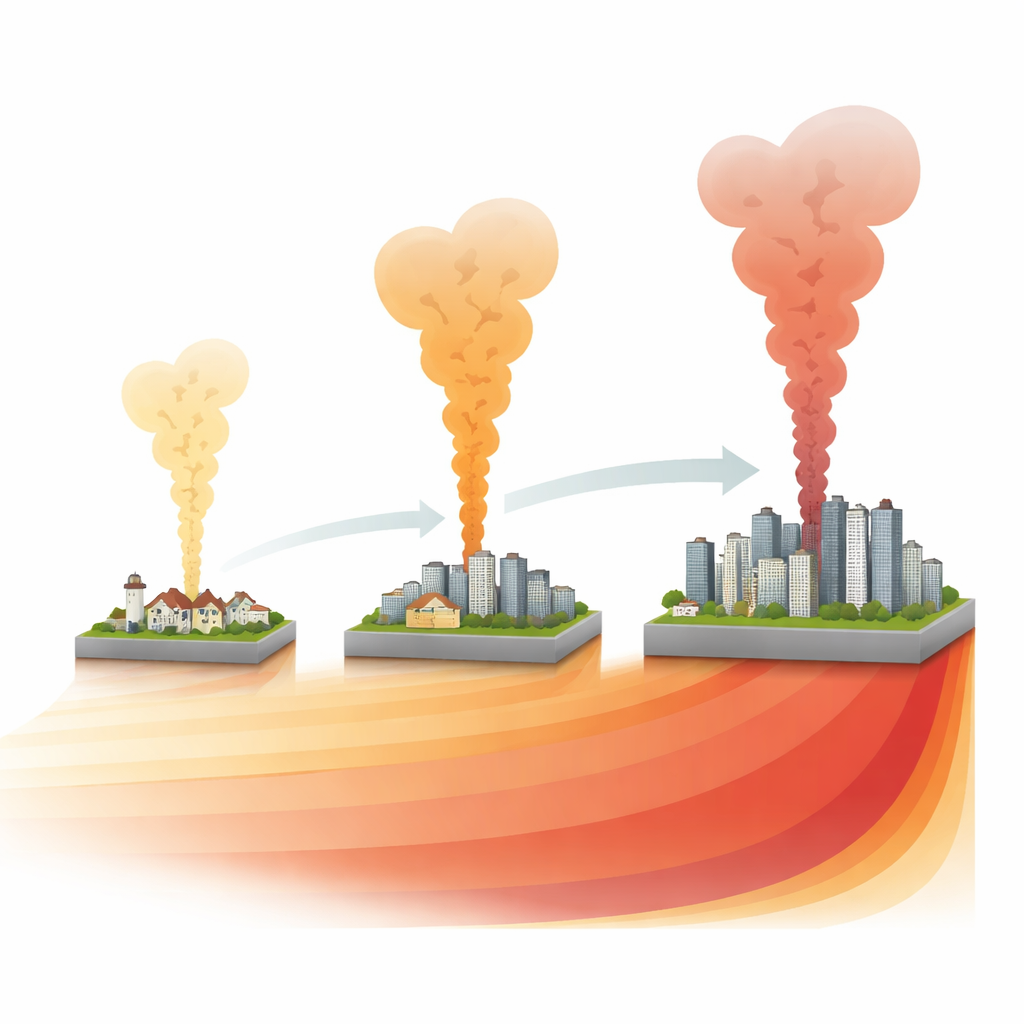
The link between urbanization and pollution turns out to be more nuanced than simply “more city, more smog.” On average, districts with higher shares of urban residents already have the highest NO2 levels, but their pollution is rising more slowly—and in many cases even falling. Among the 50 most urbanized districts, nearly 40% have actually seen NO2 decline, and most others show only modest growth. In contrast, districts that are still only partly urban, especially those with around one-third of their population in towns and cities, are where NO2 is both relatively high and climbing fastest. This suggests that as regions industrialize and motorize, pollution shoots up unless cleaner technologies and regulations arrive quickly.
City size, dust, and the special case of the Indo-Gangetic Plain
Zooming in from districts to 106 individual cities, the authors examine both NO2 and PM10 between 2016 and 2019. They find that PM10 levels are alarmingly high almost everywhere: more than four out of five cities exceed India’s own air quality standard, often by a wide margin, and every single city in the Indo-Gangetic Plain fails to meet the limit. By studying how pollution changes with city population, the team shows that in most of India, larger cities are slightly more efficient: pollution levels rise more slowly than population, hinting at better technology and infrastructure. But in cities within the Indo-Gangetic Plain, the pattern reverses—larger cities have disproportionately higher NO2, so residents of the biggest urban centers there face the heaviest burden.
Why geography and development both matter
The Indo-Gangetic Plain’s grim distinction is not just about smokestacks and traffic jams. This region concentrates coal power plants, heavy industry, mining, and major freight corridors alongside intense farming and widespread burning of crop residues and household fuels. Its bowl-like geography between the Himalayas and the Deccan Plateau helps trap pollutants near the ground, especially outside the monsoon season. At the same time, the region includes some of India’s poorest states, which are expected to grow economically and expand their energy use in the coming years—potentially making today’s bad air even worse if cleaner options are not adopted in time.
What this means for India’s future air
For a lay reader, the key message is that India’s air pollution problem is both severe and uneven. The country’s biggest, most developed cities have started to slow or even reverse their growth in NO2, likely reflecting stricter fuel rules, better vehicles, and controls on factories and power plants. Yet vast areas, especially in the Indo-Gangetic Plain and in regions now slated for rapid development, are still on a path of rising pollution. The authors argue that India faces a twin challenge: cleaning the air in its largest cities while preventing newly growing regions from repeating the same dirty path. Because the data sources used in the study will keep improving over time, this type of nationwide tracking can help guide policies so economic growth and cleaner air advance together, rather than in conflict.
Citation: Sahasranaman, A., Kumar, N., Erbertseder, T. et al. Effects of urbanization, scale, and geography on air pollution in India. npj Clean Air 2, 20 (2026). https://doi.org/10.1038/s44407-026-00060-x
Keywords: air pollution, India, urbanization, Indo-Gangetic Plain, nitrogen dioxide