Clear Sky Science · en
Short-term PM2.5 exposure disproportionately increases pediatric ambulance dispatches among girls and children under age five in India
Why Dirty Air Matters for Children
Across many Indian cities and villages, a hazy sky is part of daily life. But that haze is more than an eyesore: it can send young children to the emergency room. This study looks closely at how short bursts of fine air pollution, called PM2.5, are linked to ambulance calls for children in India, revealing which kids are most at risk and how cleaner air could ease pressure on an already stretched health system.
Following Millions of Ambulance Calls
To uncover this connection, the researchers combined two powerful data sources: detailed daily estimates of PM2.5 levels and more than one million records of pediatric ambulance dispatches from 11 Indian states and union territories between 2013 and 2015. Each dispatch record indicated where and when the ambulance was sent and whether it was for illness or injury. By matching these records to local air quality day by day at the sub-district level, the team built a rich picture of how changes in pollution line up with surges in emergency care for children. 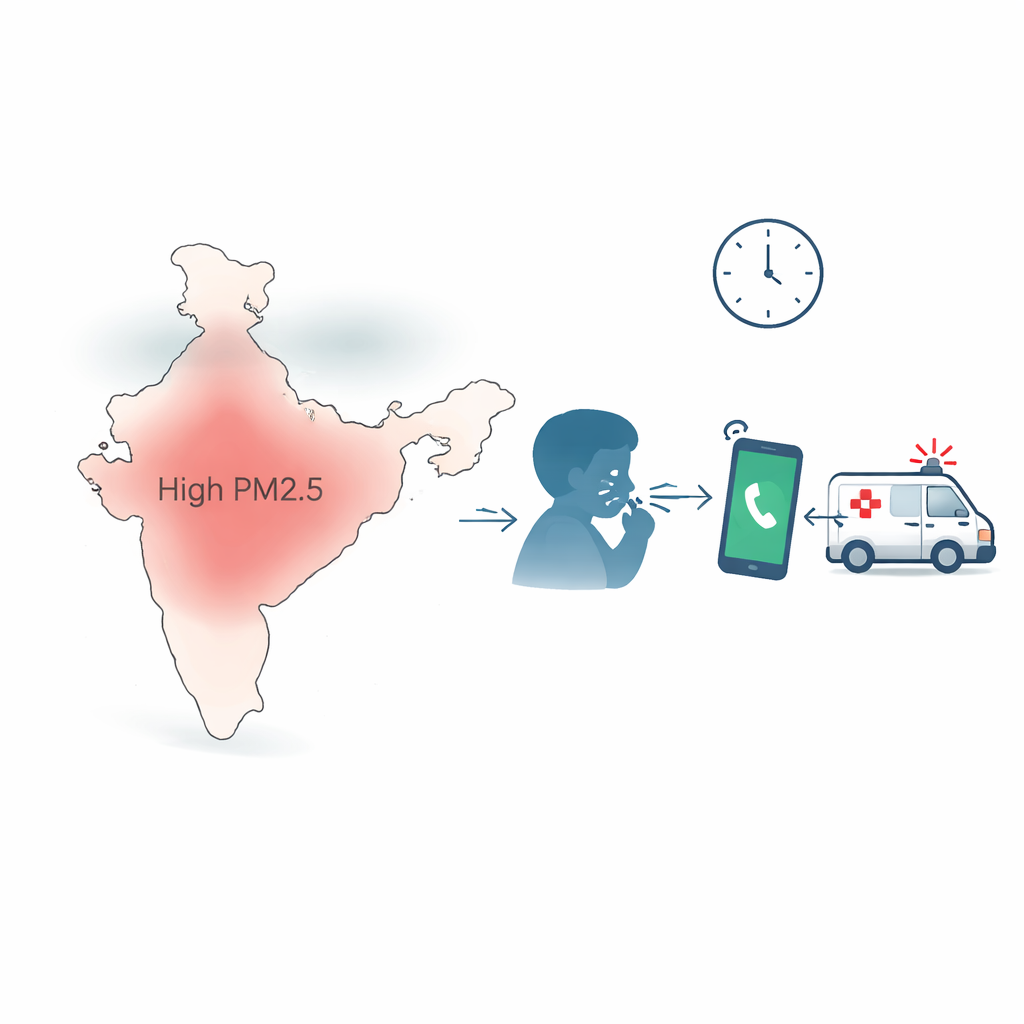
Using Weather to Isolate Pollution’s Impact
One challenge in this kind of research is separating the effect of pollution from other factors that might also drive ambulance use, such as traffic accidents or economic activity. The team solved this by using a weather phenomenon called a thermal inversion, which traps dirty air close to the ground. Because inversions depend on regional weather rather than local behavior, they provide a kind of natural experiment: on inversion days, PM2.5 spikes for reasons unrelated to local choices. The researchers used these inversions as a statistical lever to estimate how much short-term rises in PM2.5 alone change ambulance dispatch rates, while also accounting for temperature, rainfall, wind, and seasonal patterns.
Polluted Days Mean More Emergency Trips
The results were striking. A same-day increase of 10 micrograms of PM2.5 per cubic meter was linked to a 3.78% rise in total pediatric ambulance dispatches and a 3.25% rise in illness-related calls. Injury-related calls jumped even more sharply—by about 6%—on high-pollution days, likely reflecting a mix of poorer visibility, impaired attention, and worsening underlying health. Some of these effects persisted over the following week, especially for illness, suggesting that bad air can trigger not only immediate crises but also lingering problems that keep children needing urgent care. The authors estimate that simply meeting India’s own annual PM2.5 guideline could cut pediatric ambulance dispatches by about 10%, and meeting the stricter World Health Organization standard could reduce them by nearly one-third.
Girls and the Youngest Children Bear the Brunt
Beneath these averages lies an even more troubling story about inequality. Although boys currently account for more ambulance trips overall, girls show much larger percentage increases in dispatches when PM2.5 rises. A 10-unit increase in PM2.5 leads to about a 5.4% jump in all-cause ambulance calls for girls, compared with 2.4% for boys. The study suggests several reasons: families may delay seeking care for girls until they are more severely ill, girls may be more vulnerable because of poorer nutrition, and they may face higher risks of intentional injury in the home. Age also matters. Children under five not only have the highest baseline use of ambulance services, they also show the strongest and most sustained increases in dispatches after polluted days, reflecting their still-developing lungs, immune systems, and limited ability to describe early symptoms. Older children show weaker or no clear responses, hinting at greater resilience and better access to non-emergency care.
What Cleaner Air Could Mean for Families
To translate these findings into real-world consequences, the authors calculated how many ambulance trips could be avoided if air were cleaner. Meeting India’s national air standard everywhere could prevent roughly 20 pediatric ambulance dispatches per 100,000 children each year; meeting the WHO guideline could prevent about 65. Those avoided emergencies represent fewer panicked calls, fewer rushed trips for families, and less strain on emergency medical services—especially in rural and under-served areas where ambulances are often the only path to care. 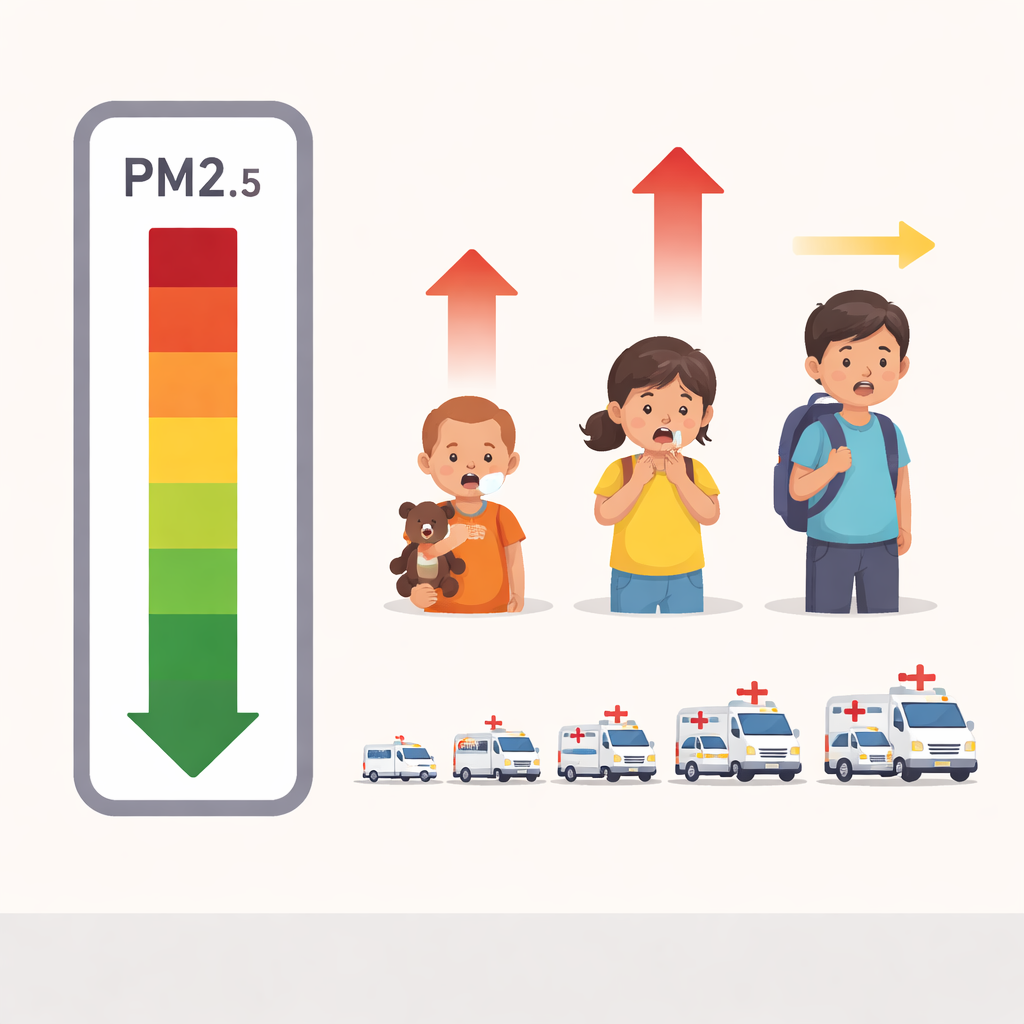
Protecting the Most Vulnerable
In simple terms, this study shows that when the air gets dirtier, more ambulances rush to help young children—especially girls and those under five. Improving air quality is therefore not just an environmental goal; it is a direct way to reduce medical crises, ease the burden on India’s emergency system, and protect the country’s youngest and most vulnerable citizens.
Citation: Kawano, A., Heft-Neal, S., Janagama, S.R. et al. Short-term PM2.5 exposure disproportionately increases pediatric ambulance dispatches among girls and children under age five in India. npj Clean Air 2, 6 (2026). https://doi.org/10.1038/s44407-026-00053-w
Keywords: air pollution, PM2.5, child health, India, ambulance use