Clear Sky Science · en
Short-term environmental changes and respiratory syncytial virus infection in Chile
Why winter viruses and dirty air matter
Each winter, a virus called respiratory syncytial virus (RSV) quietly sends thousands of young children and older adults to hospitals around the world. Chile has recently introduced an expensive shot to protect babies during RSV season, but to get the most benefit, it must be given just before infections surge. This study asks a practical question with global relevance: can short-term changes in weather and air pollution help predict when RSV will spike, and do those patterns differ from one region to another within a country?
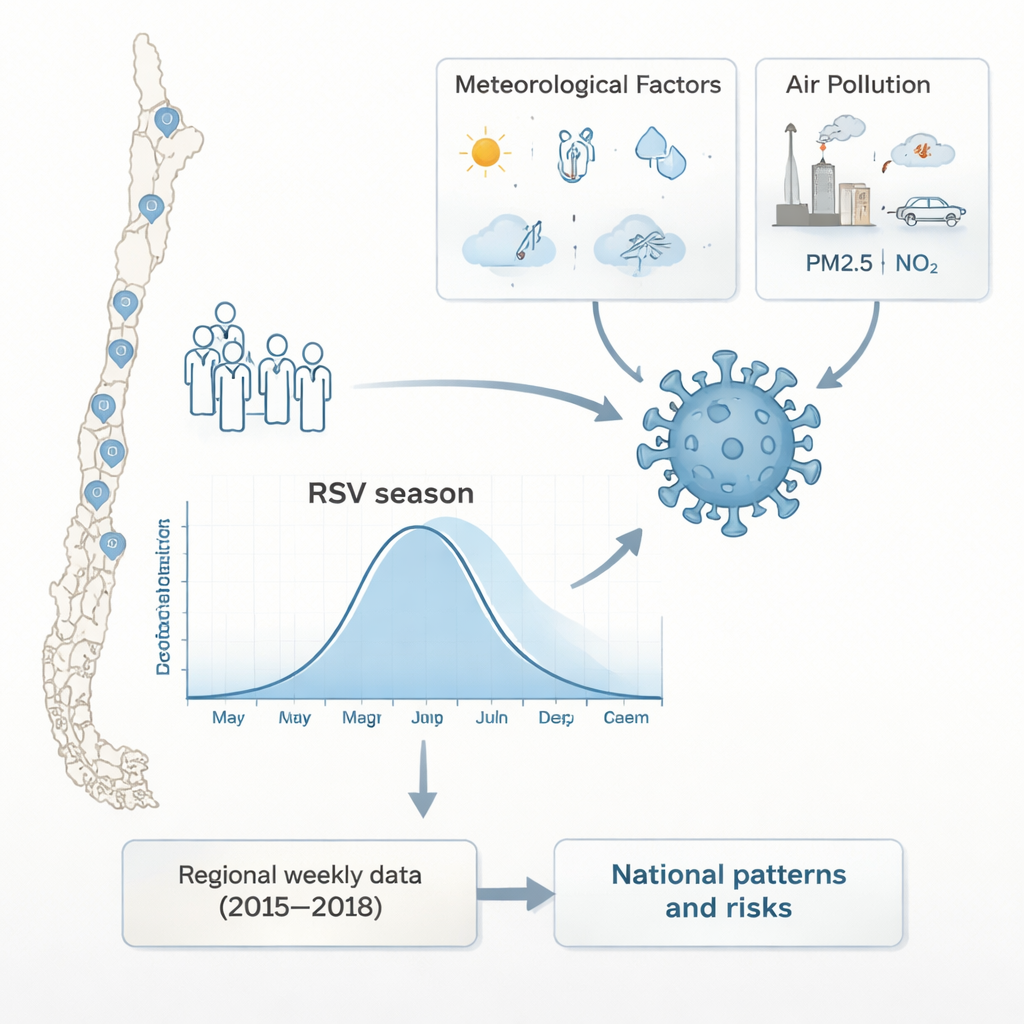
Following RSV across a long, thin country
Researchers gathered weekly RSV test results from 31 public hospitals across all 16 regions of Chile between 2015 and 2018, totaling more than 120,000 tests and nearly 19,000 confirmed infections. Most cases occurred in children under five, especially infants. The team combined these health data with detailed records on temperature, humidity, wind, and levels of major air pollutants, such as fine particles (PM2.5), larger particles (PM10), nitrogen dioxide (NO2), and ozone (O3). They then used a two-step statistical approach: first estimating the relationship between environmental conditions and RSV in each region, and then pooling these results to see the overall national picture and how it varied by geography and income level.
Cold weeks, smoky air, and rising infections
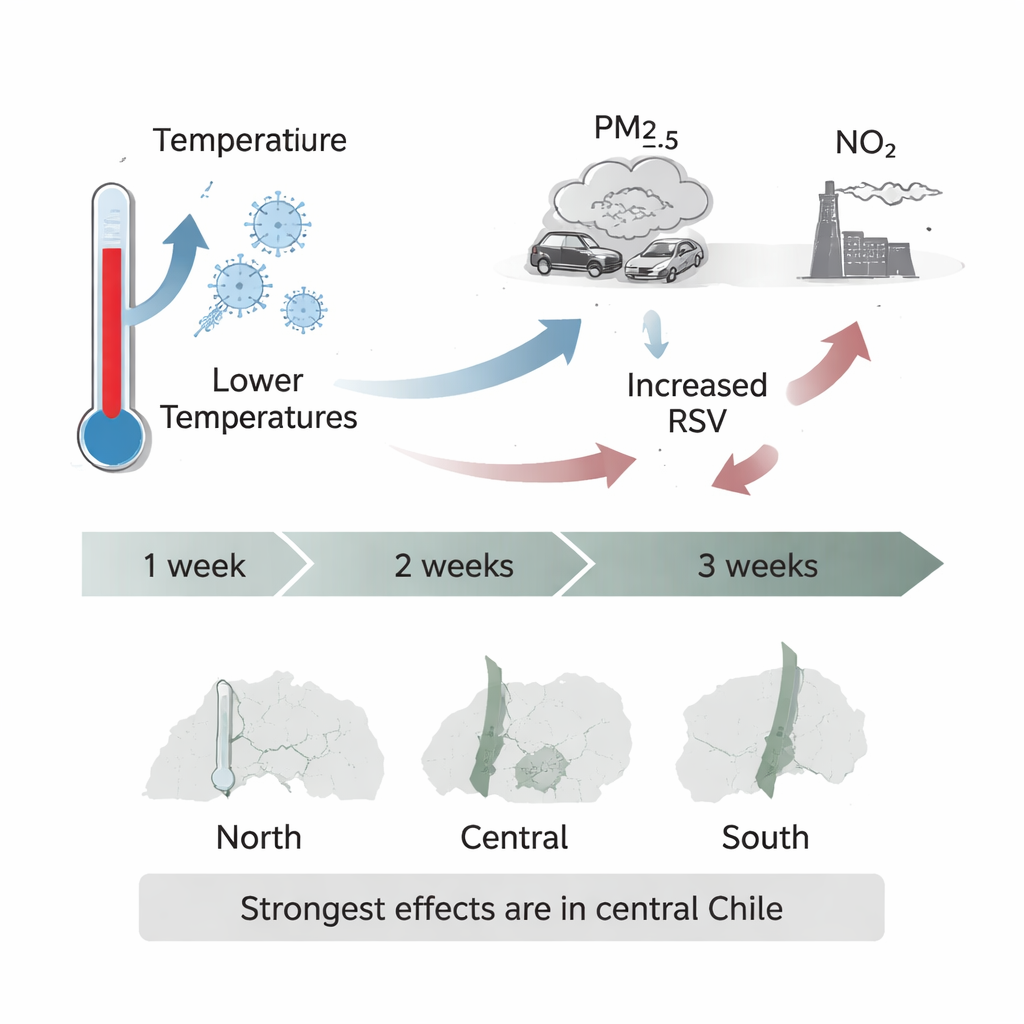
Across Chile, RSV followed a clear winter pattern, with epidemics starting in June and ending in September. The analysis showed that cooler weather and dirtier air were consistently linked to higher RSV activity, but with a delay of up to three weeks. For each degree Celsius increase in average temperature, RSV test positivity fell, meaning colder weeks tended to precede surges in infections. In contrast, weeks with higher levels of fine particle pollution (PM2.5) and NO2 were followed by modest but measurable increases in RSV positivity. The study also found that higher ozone levels usually coincided with seasons when RSV was low, producing an apparent negative link between ozone and the virus that may reflect opposing seasonal cycles rather than a protective effect.
Not all regions are affected in the same way
Chile stretches from the tropics to cool southern latitudes, with big differences in climate, population density, and sources of pollution. When the researchers examined subgroups, they found that the strongest ties between particle pollution and RSV appeared in central Chile, where cities are more crowded and wintertime wood-burning for heating is common. In these central regions, small increases in PM2.5 and PM10 were linked to notably higher RSV positivity, and there were signs that very high levels of both particle types together might amplify risk even further. The team also saw that background conditions like average wind speed and long-term pollution levels could subtly change how strongly humidity and temperature related to RSV.
What this means for planning and prevention
The findings suggest that short-term spikes in cold weather and key air pollutants can nudge RSV activity upward for up to three weeks, even if each change alone has only a modest effect. For health planners, this means that routinely collected weather and air-quality data could help fine-tune forecasts of when RSV surges are likely to begin in different parts of the country. In turn, that information can guide the timing of seasonal protective treatments, such as the new RSV antibody shot, so that costly doses are given as close as possible to the local start of the epidemic. More broadly, the results highlight that cleaning up the air—especially in regions with heavy winter pollution from wood burning and traffic—may bring added benefits for protecting children and older adults from serious RSV infections.
Citation: Liang, J., Fasce, R., Luz, S. et al. Short-term environmental changes and respiratory syncytial virus infection in Chile. npj Clean Air 2, 7 (2026). https://doi.org/10.1038/s44407-026-00049-6
Keywords: respiratory syncytial virus, air pollution, PM2.5, Chile, seasonal infections