Clear Sky Science · en
Strategising steel sector capacities and employment in the Global South: the case of South Africa
Why the Future of Steel Matters
Steel is woven into almost everything around us, from buildings and bridges to cars and household appliances. But making steel is also one of the dirtiest industrial activities on the planet. This article looks at how South Africa, a major steel producer in the Global South, could remake its steel industry around renewable energy and hydrogen. The story matters far beyond South Africa because it shows whether cleaner steel can create jobs and new export opportunities without repeating old patterns of resource extraction and inequality.
A Turning Point for Steel in South Africa
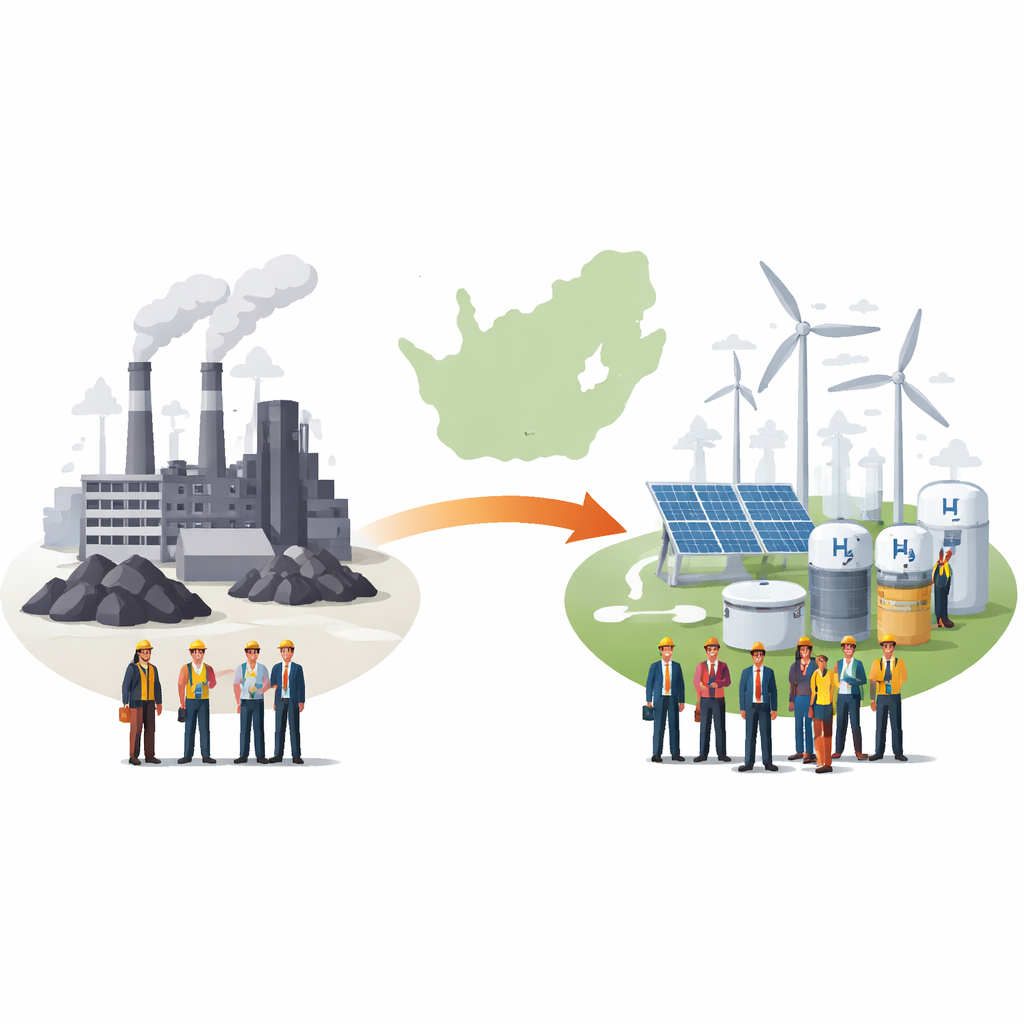
South Africa’s steel plants were historically built near coal mines, because coal was both the fuel and the chemical ingredient needed to turn iron ore into steel. This coal-based model anchored factories, railways and ports, and provided relatively stable jobs. Today, that model is under pressure. Wealthy countries are tightening trade rules to favor cleaner products, and the European Union’s new carbon border tax makes high‑emission steel less welcome in its markets. At the same time, South Africa has strong sunshine and wind, plus existing facilities that can be adapted to use hydrogen for ironmaking. These factors turn the country into a key test case: can a coal-based steel economy reinvent itself as a green steel supplier while still serving local needs and supporting workers?
Exploring Possible Steel Futures
The authors use a detailed energy system model called GENeSYS-MOD to explore how South Africa’s steel sector could evolve up to 2050. Unlike many models that only look at electricity, this one embeds steelmaking within the whole energy system and distinguishes South Africa’s nine provinces. The study contrasts four what‑if scenarios that mix two dimensions: how strong national climate policy is, and how much global and domestic demand there is for low‑carbon iron and steel. In high‑demand futures, South Africa both makes more steel for itself and exports hydrogen‑based direct reduced iron (DRI). In low‑demand futures, steel demand shrinks and no DRI is exported. For each case, the model calculates which technologies are built, where they are located, how they use energy, and how many jobs they support over time.
From Coal Furnaces to Hydrogen and Recycling
Across all scenarios, a clear technological story emerges: coal‑based blast furnaces steadily lose ground and are almost fully phased out by mid‑century. They are replaced by two main routes. First, hydrogen‑based DRI uses hydrogen made from renewable electricity to remove oxygen from iron ore without burning coal. Second, electric arc furnaces melt scrap steel and DRI using clean power. In high‑demand cases, export opportunities for low‑carbon DRI trigger a rapid build‑out of hydrogen‑based plants between 2030 and 2050. Even when climate policy is weak and demand is modest, coal technology becomes uneconomic compared with renewables‑powered options. Carbon capture and storage, often promoted as a way to keep coal in the mix, does not prove competitive in any of the scenarios for South Africa’s conditions.
Shifting Industrial Maps and Job Prospects
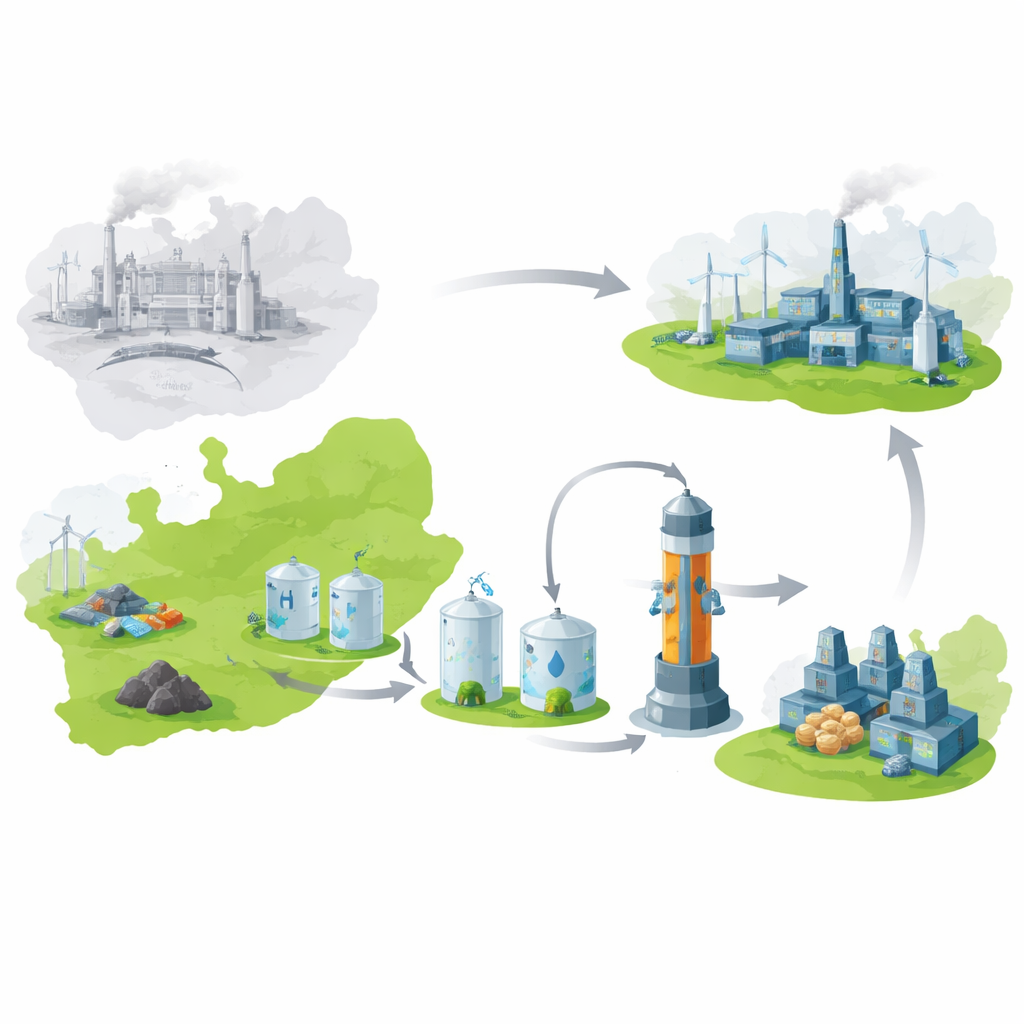
The move to green steel also reshapes where factories are likely to be located. Instead of clustering mainly around coal fields, new plants follow the sun and wind. The Northern Cape province, with its rich solar and wind resources, iron ore mines and good rail connection to the port of Saldanha, emerges as a future hub for hydrogen‑based DRI and electric arc furnaces. Traditional steel regions such as Gauteng and KwaZulu‑Natal do not simply shut down, but their role shrinks as old blast furnaces are retired and only some cleaner facilities remain. On the jobs side, the model suggests that renewable‑based steelmaking can support more employment in the medium and long term than a fossil‑fuel path. Many positions arise from building hydrogen equipment and power plants, not just running steel mills themselves. However, the study also warns of boom‑and‑bust patterns: construction jobs spike when new plants are built, then fall once projects are completed, and without careful planning high‑skill, long‑term roles may be concentrated in countries that import and process South Africa’s green iron.
What This Means for a Just Transition
For a general reader, the bottom line is that clean steel is not only technically possible in a coal‑dependent country like South Africa; it is also likely to be cheaper in the long term and can create substantial employment. The authors conclude that an early push for hydrogen‑based ironmaking and electric arc furnaces in renewable‑rich regions is a robust strategy, regardless of how strict climate policy becomes. Yet they stress that this must be embedded in a broader framework of justice. That means avoiding a new form of resource extraction where South Africa simply ships low‑carbon iron while others capture most of the value, and instead using trade rules, investment support, skills training and community participation to secure lasting, good‑quality jobs. Done right, South Africa’s steel transition could offer a blueprint for how the Global South can decarbonize heavy industry without sacrificing development.
Citation: Hanto, J., Sultani, D., McCall, B. et al. Strategising steel sector capacities and employment in the Global South: the case of South Africa. npj Clean Energy 2, 5 (2026). https://doi.org/10.1038/s44406-026-00020-0
Keywords: green steel, hydrogen economy, South Africa, energy transition, industrial jobs