Clear Sky Science · en
Extending battery lifetime by pulsed charging
Why this matters for everyday drivers
Fast-charging an electric car is convenient, but it comes with a hidden cost: the battery can wear out faster, making cars more expensive and less sustainable. This study explores a deceptively simple idea—charging batteries in rapid on–off pulses instead of a steady stream—to see whether it can keep charging speeds high while slowing battery ageing. The findings suggest that pulse charging could help electric vehicle batteries last much longer without major changes to existing hardware.
Gentler charging without slowing you down
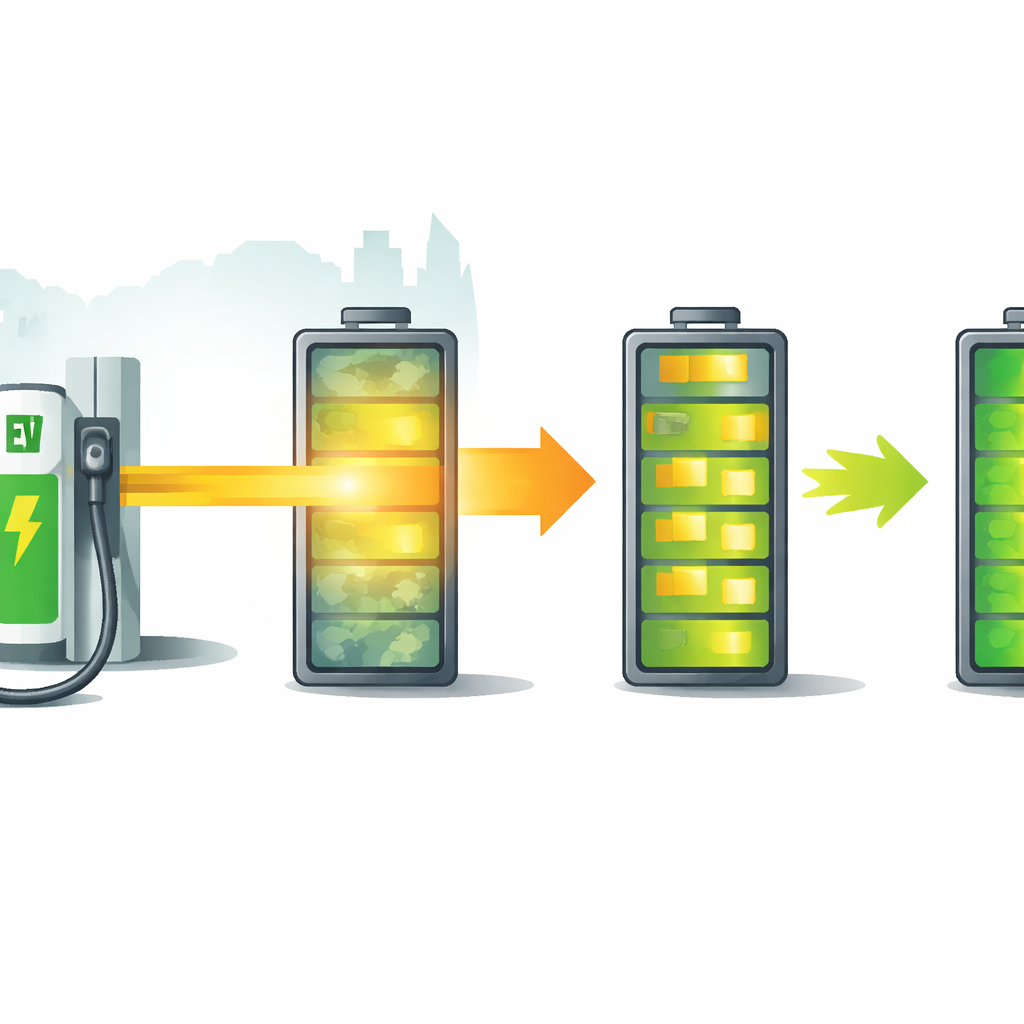
Lithium-ion batteries, the workhorses of modern electric cars, slowly lose capacity each time they are charged and discharged. Traditional laboratory tests usually charge cells with a constant current, but real cars experience constantly changing power demands. The researchers set out to bridge this gap by systematically comparing standard constant-current charging to a range of pulsed charging patterns. In all cases, they kept the average charging power the same, so any difference in ageing would come from how the current was delivered, not how much energy went in.
How the pulse experiments were run
The team tested commercial energy-optimised lithium-ion cells in two main groups. In one group, batteries were charged and discharged with square-wave pulses that switched between zero and a higher current at frequencies between 10 and 1000 millihertz (that is, each full on–off cycle lasted from seconds to minutes). In the other group, they used higher average currents relevant for fast charging and varied both the pulse frequency and the share of time the current was “on” (the duty cycle). Constant-current tests at the same average power served as references. Over hundreds of cycles, the researchers regularly paused the ageing tests to measure capacity, internal resistance and subtle fingerprints of how each electrode inside the cell was changing.
What the batteries revealed over time
The results were striking. Under constant-current charging, capacity faded rapidly, with cells retaining only about 70% of their initial capacity after 400 cycles in some cases. When the same cells were charged using well-chosen pulsed patterns, capacity loss was cut roughly in half. At pulse frequencies above about 100 millihertz, many batteries still held close to 90–97% of their capacity after 400 cycles. The exact timing of the pulses mattered less than how long the current was on during each cycle: lower duty cycles, where the battery got frequent short rests, led to markedly slower ageing than higher duty cycles, even when the average power was identical.
Peeking inside the battery’s hidden wear
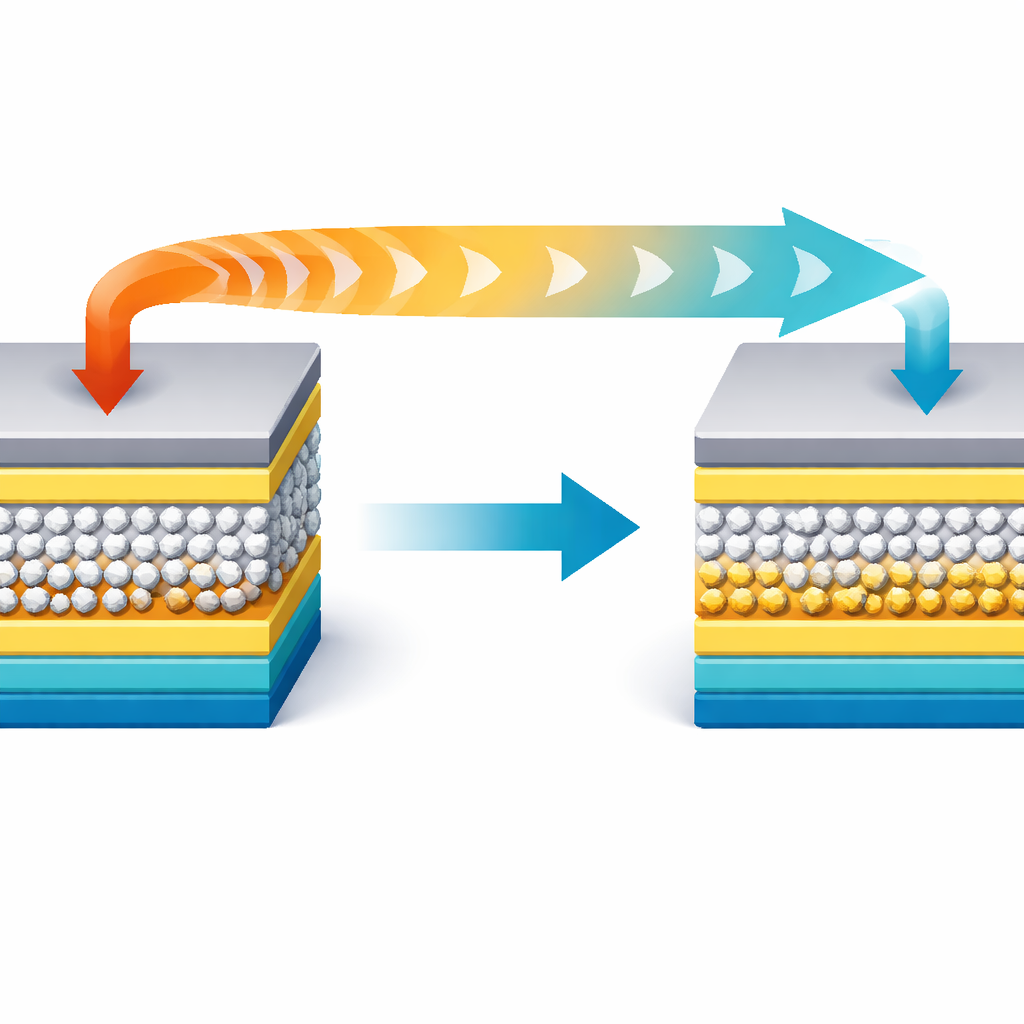
To understand why pulses helped, the researchers used several electrochemical “listening tools” that interpret tiny changes in voltage and resistance as the battery cycles. These analyses pointed to the negative electrode—the graphite-based side that soaks up lithium during charging—as the main trouble spot. Under constant-current or very low-frequency pulsing, signatures associated with surface films and lithium metal buildup grew much stronger. These changes increase resistance and permanently trap active lithium, both of which rob the cell of usable capacity. In contrast, higher-frequency pulsed charging showed much smaller increases in surface resistance and less separation in behaviour between the two electrodes, consistent with milder damage and reduced lithium plating.
Implications for future electric vehicles
From a driver’s perspective, the promising part of this work is that the gains do not depend on exotic materials or futuristic chargers. The beneficial pulse frequencies are low enough that existing power electronics in vehicles and charging stations could, in principle, be programmed to deliver them. By reshaping the current into rapid bursts with short pauses—especially with modest duty cycles—manufacturers could keep charge times similar while significantly extending battery life. In simple terms, this study shows that how we feed energy into a battery can be just as important as how much we feed, and that a staccato rhythm of charging may help electric car batteries stay healthier for longer.
Citation: Frenander, K., Jutsell Nilsson, D. & Thiringer, T. Extending battery lifetime by pulsed charging. npj Clean Energy 2, 4 (2026). https://doi.org/10.1038/s44406-025-00013-5
Keywords: lithium-ion batteries, pulse charging, electric vehicles, battery degradation, fast charging