Clear Sky Science · en
Using data science to identify climate change and health adverse impacts and solutions in Africa: a scoping review
Why this matters for everyday life
Across Africa, shifting weather patterns are not just changing the landscape; they are changing who gets sick, when, and where. This article explores how modern data tools—similar to those used by online maps or streaming services—are being harnessed to track and predict illnesses made worse by climate change. For readers, it offers a window into how numbers and algorithms can help protect families from malaria, heatwaves, and other growing health threats on the continent.
Connecting weather, place, and disease
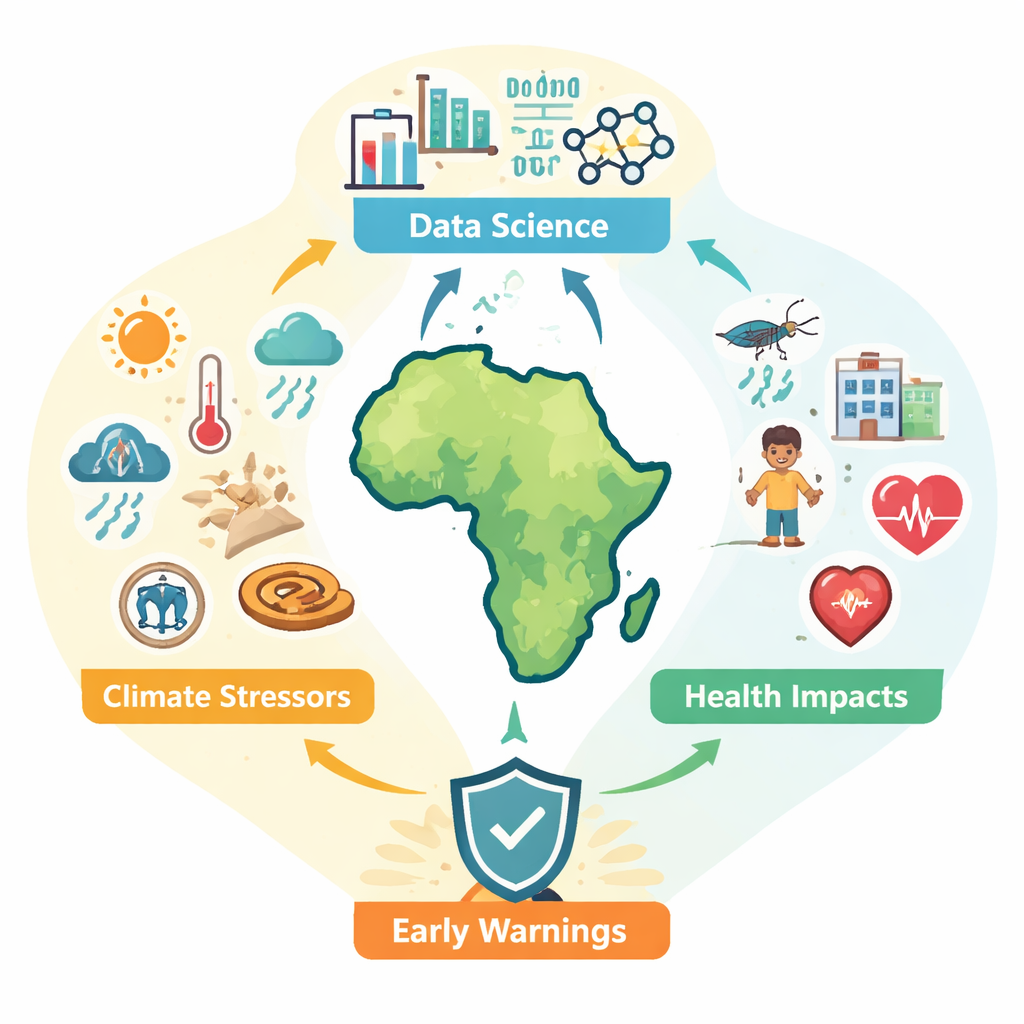
The authors reviewed 100 scientific studies that used data science to understand how climate change affects health in African countries. Instead of running new experiments, they mapped out what has already been done: which diseases were studied, which climate factors mattered most, and what kinds of computer-based methods were used. They found that researchers most often linked shifts in temperature, rainfall, humidity, and extreme events such as droughts and heatwaves to patterns of sickness and death. To make sense of these complex links, scientists relied on advanced tools that can handle large, messy datasets over many years and across wide areas—from time-series models that detect trends, to mapping techniques that show where risks are highest.
Climate-sensitive infections on the rise
Many of the studies focused on infectious diseases that are already familiar across Africa. Malaria alone appeared in 38 articles and was consistently tied to warmer and wetter conditions that favor mosquitoes. Other mosquito- or vector-borne illnesses—such as Rift Valley fever, dengue, yellow fever, and Zika—also showed clear weather-driven patterns, though they were less frequently studied. Water-borne diseases, including diarrhea and cholera, tended to spike after periods of high temperatures followed by heavy rain, when water sources can become contaminated. Researchers also examined lung infections such as tuberculosis, influenza, and pneumonia, finding that these diseases respond in different ways to changes in temperature and humidity, with some increasing during cold, damp periods and others rising with heat and rainfall.
Hidden burdens: hunger, heart strain, and skin disease
Climate change does not only influence germs and mosquitoes; it also shapes nutrition and chronic disease. Several studies linked higher temperatures and unreliable rainfall to child malnutrition, low weight gain, and stunted growth, especially when harsh weather struck during pregnancy or early childhood. Other research connected hotter days and heatwaves with strokes and heart-related deaths, and pointed to worsening skin conditions such as atopic dermatitis under more humid, rainy, and sunny conditions. Yet, compared with malaria and other fevers, these longer-term non-communicable diseases received far less attention, even though they are an increasing cause of illness and death across the continent. The authors argue that Africa is missing opportunities to use data science to understand and prevent this growing burden.
Turning data into action—and who gets to lead
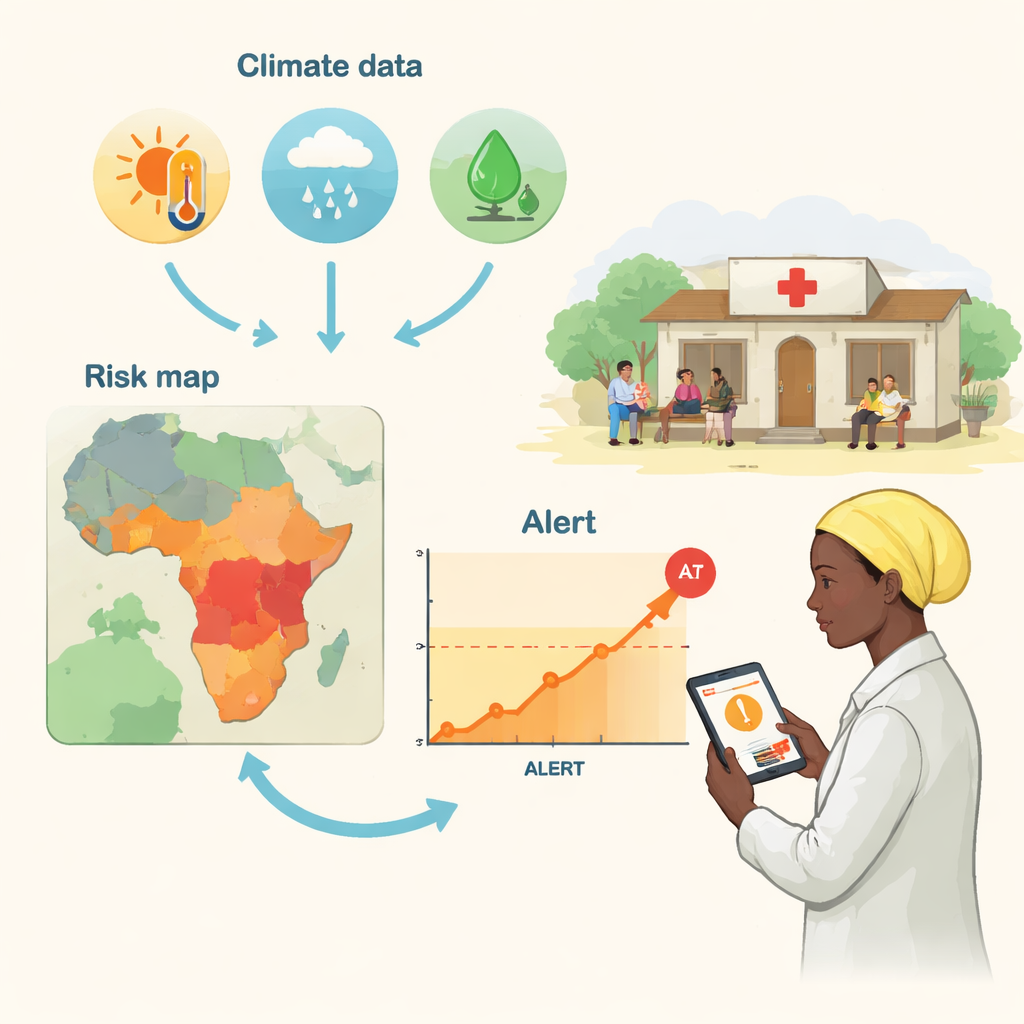
While the technical methods in these studies were often sophisticated, relatively few translated their findings into clear solutions. The most common proposal was to build or improve early warning systems that use climate and health data to signal when an outbreak of malaria or cholera is likely, giving health workers time to prepare. A smaller number of studies used data to pinpoint geographic “hotspots” where prevention programs could have the biggest impact, or called for public education campaigns to raise awareness about weather-related health risks. The review also uncovered sharp imbalances: East and West Africa hosted most of the research, but nearly half the first authors worked at institutions outside Africa, mainly in Europe and the United States. Funding, too, came predominantly from northern-hemisphere donors, highlighting the need for stronger African-led capacity in data and health science.
What this means for people and policy
For non-specialists, the core message is straightforward: climate change is already shaping patterns of disease in Africa, and data science provides powerful tools to see these changes early and respond more effectively. By pulling together weather records, satellite images, and hospital data, researchers can build models that forecast outbreaks, identify communities at greatest risk, and test which interventions might work best. Yet the review shows that these tools are still underused for designing concrete solutions and that African institutions often lack the data systems, funding, and trained specialists needed to fully benefit from them. Strengthening local skills, digital infrastructure, and cross-border data sharing could help turn raw numbers into life-saving early warnings and smarter health planning for a warming world.
Citation: Wright, C.Y., Jaca, A., Kapwata, T. et al. Using data science to identify climate change and health adverse impacts and solutions in Africa: a scoping review. npj Health Syst. 3, 16 (2026). https://doi.org/10.1038/s44401-025-00057-w
Keywords: climate change and health, Africa, data science, malaria and infectious disease, early warning systems