Clear Sky Science · en
Diagnostic accuracy of the Rowland Universal Dementia Assessment Scale (RUDAS) for the detection of dementia
Why this matters to families everywhere
Dementia is rising rapidly around the world, especially in countries with fewer medical specialists. Catching memory problems early can help families plan, access treatment, and get support. But the quick pencil-and-paper tests doctors often use were mostly built for English-speaking, well-schooled patients, which can lead to unfair or inaccurate results for many people. This study asks a simple question with big consequences: how well does an alternative test, the Rowland Universal Dementia Assessment Scale (RUDAS), really work in everyday clinics and communities across different cultures and education levels?
A simple test with global ambitions
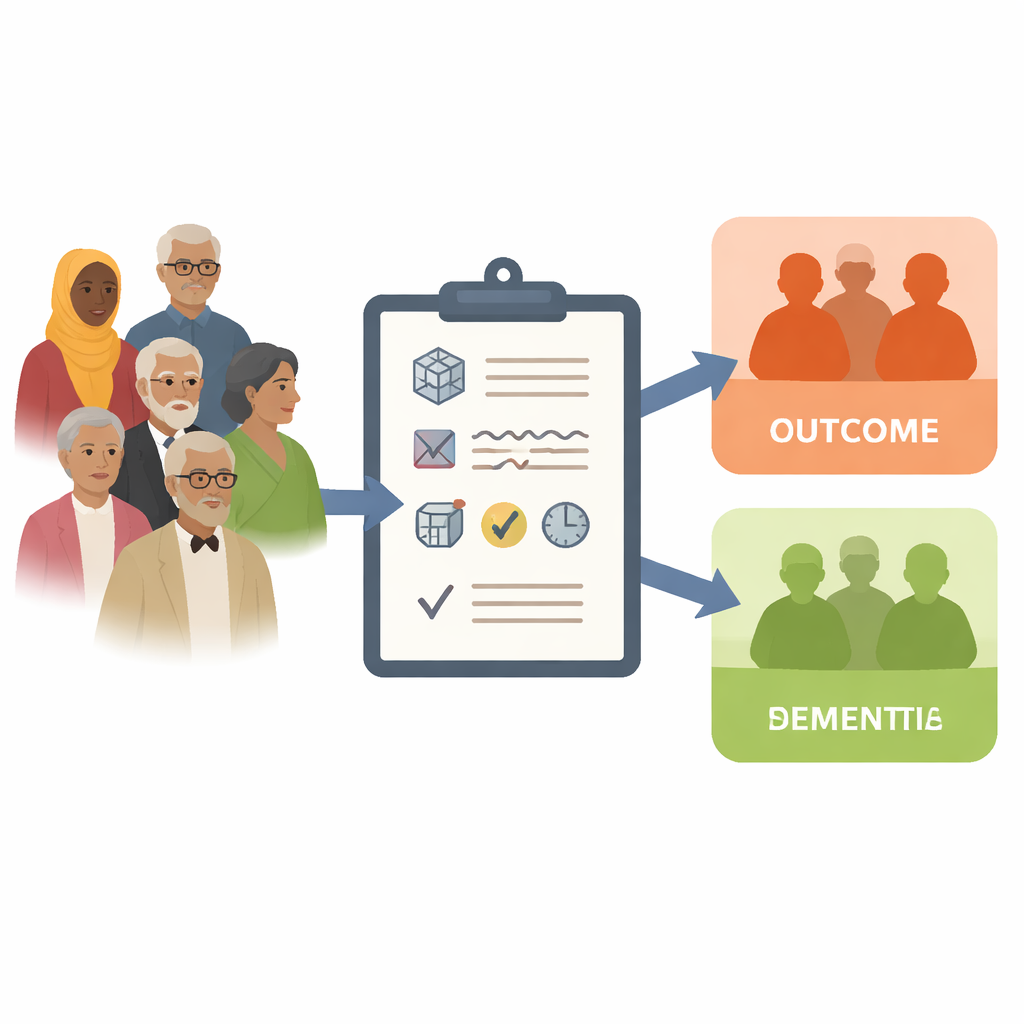
RUDAS was created in Australia in 2004 as a short memory and thinking test designed from the start for culturally and linguistically diverse groups. It can be given through an interpreter and covers several areas of thinking, such as memory, problem-solving, and drawing, in about ten minutes. Earlier reviews suggested it was quite accurate at telling who had dementia and who did not, but many of those studies used idealized case–control designs—comparing clearly sick patients with clearly healthy volunteers. That is not what real clinics look like, where people often fall into a grey zone. The authors of this paper set out to re‑examine RUDAS using only more realistic studies, where patients were recruited consecutively or randomly from clinics or community surveys.
What the researchers looked at
The team searched medical databases without limits on language or country and ended up with 11 suitable studies from nine nations, spanning low-, middle-, and high-income settings. RUDAS had been translated or adapted into 11 languages, from Spanish and Danish to Amharic, Brazilian Portuguese, and Thai, and was sometimes used with trained or untrained interpreters. Most studies took place in hospital-based memory or geriatric clinics, while three came from large community surveys in Brazil, Thailand, and Indigenous Australian communities. In all studies, RUDAS scores were compared with formal clinical diagnoses of dementia based on widely accepted criteria such as DSM or ICD.
How well did RUDAS perform?
For the hospital and specialty clinic studies, the authors could combine data at the commonly recommended cut-off score of 22/23. At this threshold, RUDAS correctly identified about 84% of people who truly had dementia (good sensitivity) but correctly reassured only about 70% of those without dementia (more modest specificity). In practical terms, it tends to err on the side of flagging potential cases, which can mean more false alarms and unnecessary referrals. In community settings, the picture was more mixed. One large Brazilian study using rigorous methods showed RUDAS catching most dementia cases but misclassifying a sizable minority of people who were actually well. Two other community studies gave very different results, in part because their complex sampling methods made it hard to generalize to the broader population.
Education levels shift the testing bar
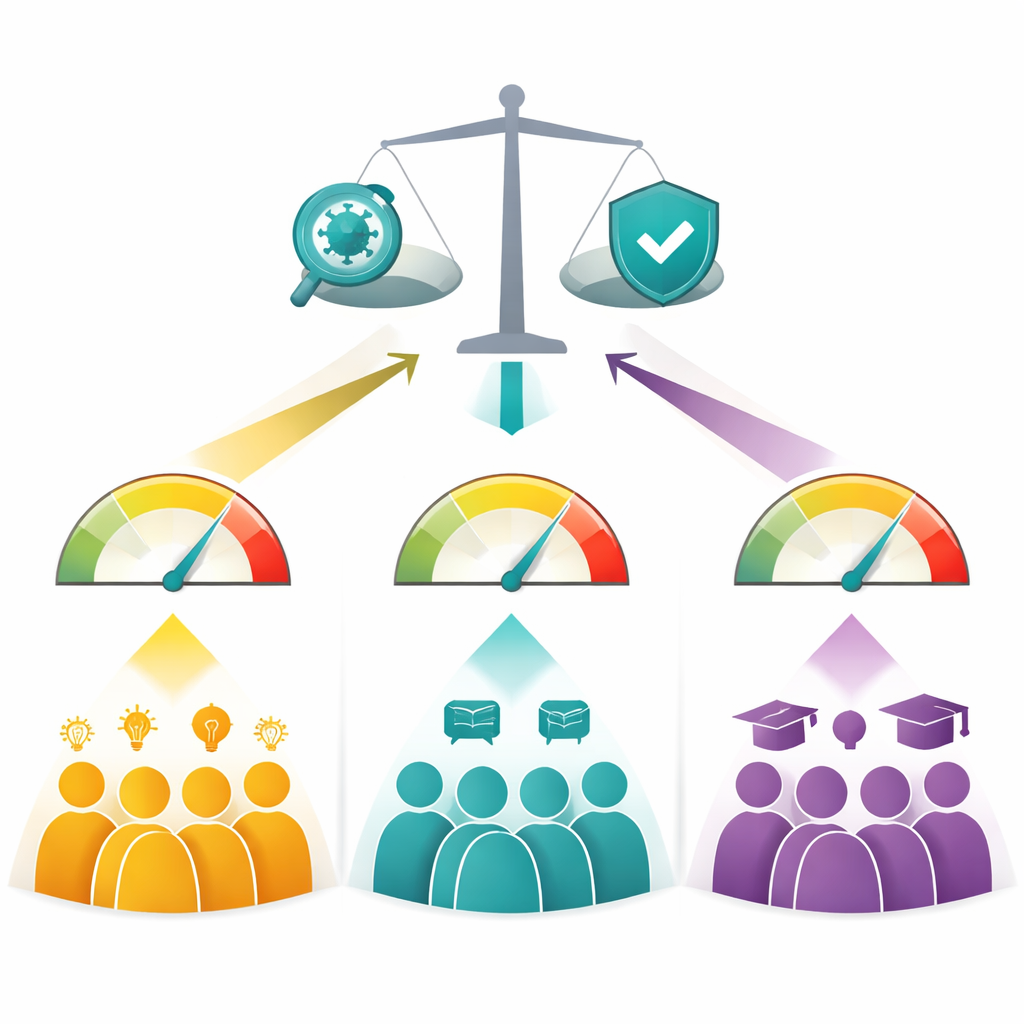
A key finding across countries was that schooling level affected where the “best” cut-off score for RUDAS seemed to lie. In an illiterate group in Peru, a lower score worked better as a trigger for concern, while in better-educated groups in Denmark, Sweden, and Australia, higher cut-offs performed best. The same pattern appeared in the large Brazilian community study: people with no formal education needed a lower threshold, and those with several years of schooling could be judged against a higher one. This suggests that, despite its design to reduce cultural and language bias, RUDAS is not fully immune to the influence of education and test familiarity.
What this means for patients and clinicians
Overall, the review concludes that RUDAS is a useful, simple tool for spotting probable dementia across many languages and health systems, especially in specialist clinics, but it is not perfect. Using the standard cut-off of 22/23 will pick up most people who truly have dementia, yet it may also label some people without dementia as possibly impaired, particularly in settings with lower average education. The authors argue that more research is urgently needed to develop “norms” and tailored cut-offs for different education levels and communities, and to better understand how interpreter training affects results. For families and clinicians, the message is clear: RUDAS can be a valuable first step in raising a flag, but it should always be followed by a fuller assessment rather than treated as a stand‑alone diagnosis.
Citation: Cullum, S., Vara, A., González-Prieto, C.A. et al. Diagnostic accuracy of the Rowland Universal Dementia Assessment Scale (RUDAS) for the detection of dementia. npj Dement. 2, 18 (2026). https://doi.org/10.1038/s44400-026-00064-0
Keywords: dementia screening, cognitive testing, RUDAS, cross-cultural assessment, education and cognition