Clear Sky Science · en
Vector venom: venomics of Aedes albopictus reveals a large enzyme repertoire and novel cecropins with activity against E. coli
Why mosquito spit matters
Most of us think of mosquito bites as an itchy nuisance, but for hundreds of thousands of people each year they are deadly. The Asian tiger mosquito, Aedes albopictus, is spreading into new regions and can transmit many viruses and other pathogens. This study takes a close look at what these mosquitoes inject when they bite—treating their saliva as a kind of venom. By mapping the full mix of molecules in this “vector venom,” the researchers show how it helps mosquitoes feed, shapes disease transmission, and may even inspire new antibiotics and mosquito-control tools.
The hidden cocktail in a bite
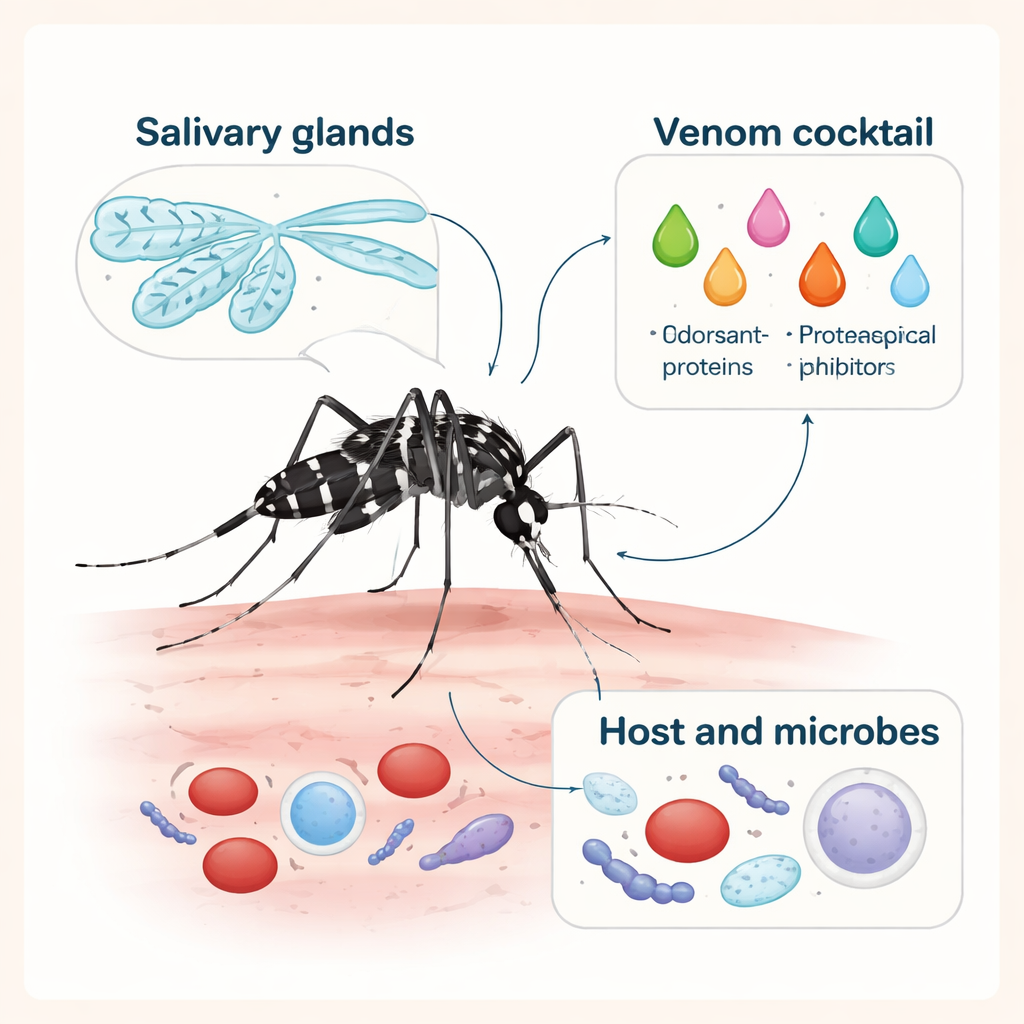
When a female mosquito feeds, she does not just sip blood; she injects a complex cocktail from her salivary glands. The authors dissected glands from 60 Asian tiger mosquitoes and sequenced their active genes, then matched those gene readouts to proteins actually present in collected saliva. They found at least 119 different venom proteins coming from more than 2,000 gene-derived precursors. Many are classic blood-feeding helpers that keep blood flowing and reduce pain and itching, while others interact with the host’s immune defenses or with the microbes the mosquito carries.
Enzymes that keep the blood flowing
A large fraction of the venom turned out to be enzymes—biological machines that speed up chemical reactions. Hydrolases, apyrases, and related enzymes help prevent blood from clotting by breaking down key signaling molecules such as ATP and ADP. Other enzymes, including angiotensin-converting enzymes, may tweak blood vessel tone, while special phosphatases appear for the first time in mosquito venom and might dampen inflammatory signals released by platelets. Together, these enzymes make it easier for the mosquito to draw a steady blood meal and may also influence how well viruses like dengue survive and replicate inside the mosquito and the host.
Non-enzymes that talk to nerves and immunity
Not all venom components are enzymes. The team identified odorant-binding “D7” proteins, protease inhibitors, mucins, and several immune-related factors. D7 proteins can bind substances such as histamine and serotonin that normally cause blood vessels to constrict and skin to itch, thereby making bites less noticeable and feeding more efficient. Protease inhibitors can block host enzymes involved in clotting and inflammation. Other proteins, such as C-type lectins and ficolins, are part of the mosquito’s own immune system but may also help viruses latch onto or evade host cells. This non-enzymatic group makes mosquito venom a rich and surprisingly sophisticated toolkit for manipulating both host and pathogen.
New antibacterial mini-weapons
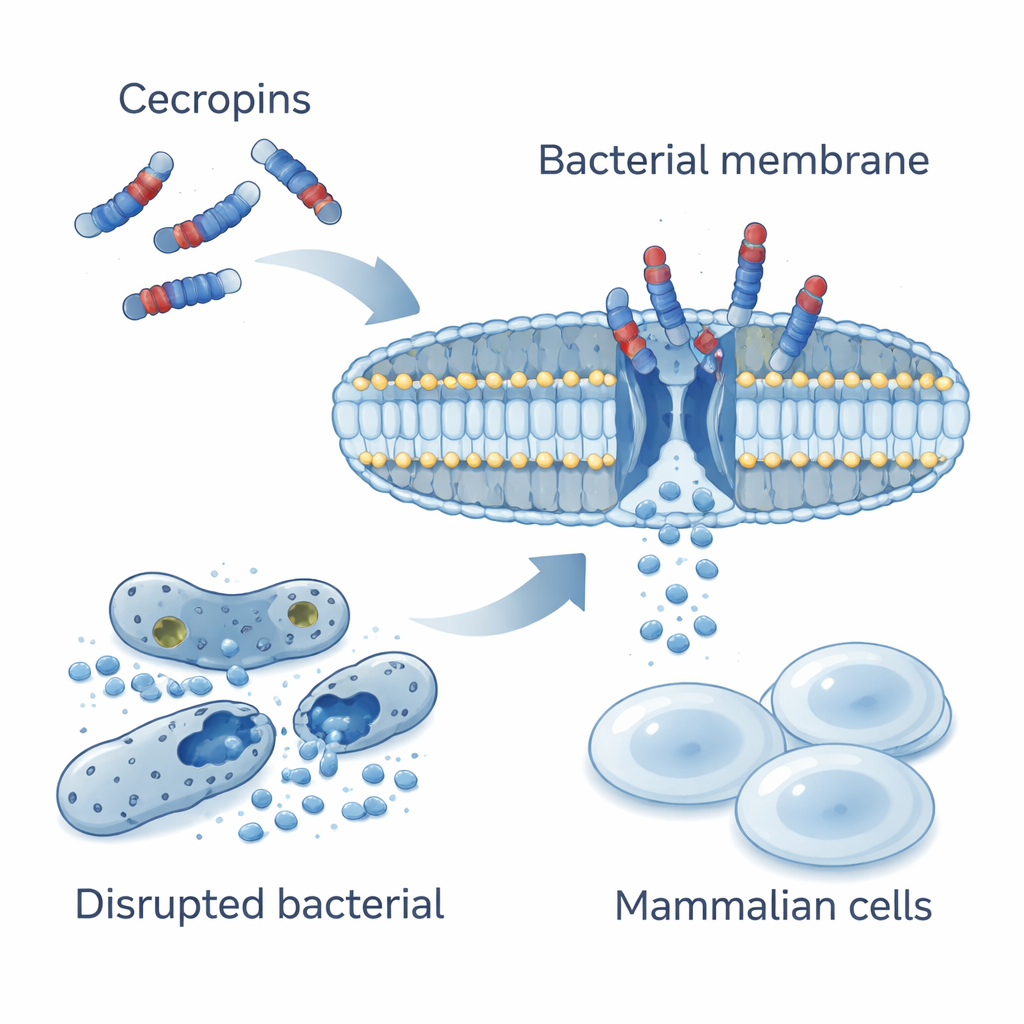
Among the immune-related molecules, the researchers discovered six previously unknown members of a peptide family called cecropins. These are short, positively charged strings of amino acids that tend to form corkscrew-like helices. Computer modeling suggested that each cecropin has a water-loving head and a greasy tail, with a flexible “hinge” in between—an arrangement well suited to slipping into and punching holes in bacterial membranes. Laboratory tests confirmed that several of these mosquito cecropins are highly potent against the gut bacterium Escherichia coli, blocking its growth at extremely low concentrations, while showing little to no harmful effect on mammalian blood cells or airway and kidney cell lines.
From bite biology to future medicines
To a lay reader, the main message is that the mosquito bite is not a simple prick: it is a finely tuned biochemical attack that keeps blood flowing, calms our defenses, and shapes which microbes thrive or die. This study shows that Aedes albopictus venom contains a surprisingly diverse set of enzymes and other proteins, plus newly identified antibacterial cecropin peptides that strongly target certain bacteria without damaging human cells. Understanding this venom system could help scientists design better mosquito-control strategies—by blocking key venom components—as well as inspire new kinds of antibiotics based on these mosquito-derived mini-weapons.
Citation: Dersch, L., Krämer, J., Hurka, S. et al. Vector venom: venomics of Aedes albopictus reveals a large enzyme repertoire and novel cecropins with activity against E. coli. npj Drug Discov. 3, 7 (2026). https://doi.org/10.1038/s44386-026-00041-w
Keywords: mosquito venom, Aedes albopictus, antimicrobial peptides, cecropins, vector-borne diseases