Clear Sky Science · en
Silent forces, hidden currents: the influence of static magnetic field stimulation on tumor biophysics
Hidden Helpers in the Fight Against Cancer
Modern cancer treatments like chemotherapy and radiation can save lives, but they often come with punishing side effects. This review explores an intriguing alternative: using steady, non‑pulsing magnetic fields—similar in spirit to those inside MRI scanners—as a gentle way to push and prod tumor cells. By subtly changing how cancer cells move, divide, and handle energy, static magnetic fields might one day become a low‑cost, non‑invasive partner to existing therapies.
How Still Magnetism Can Move Living Cells
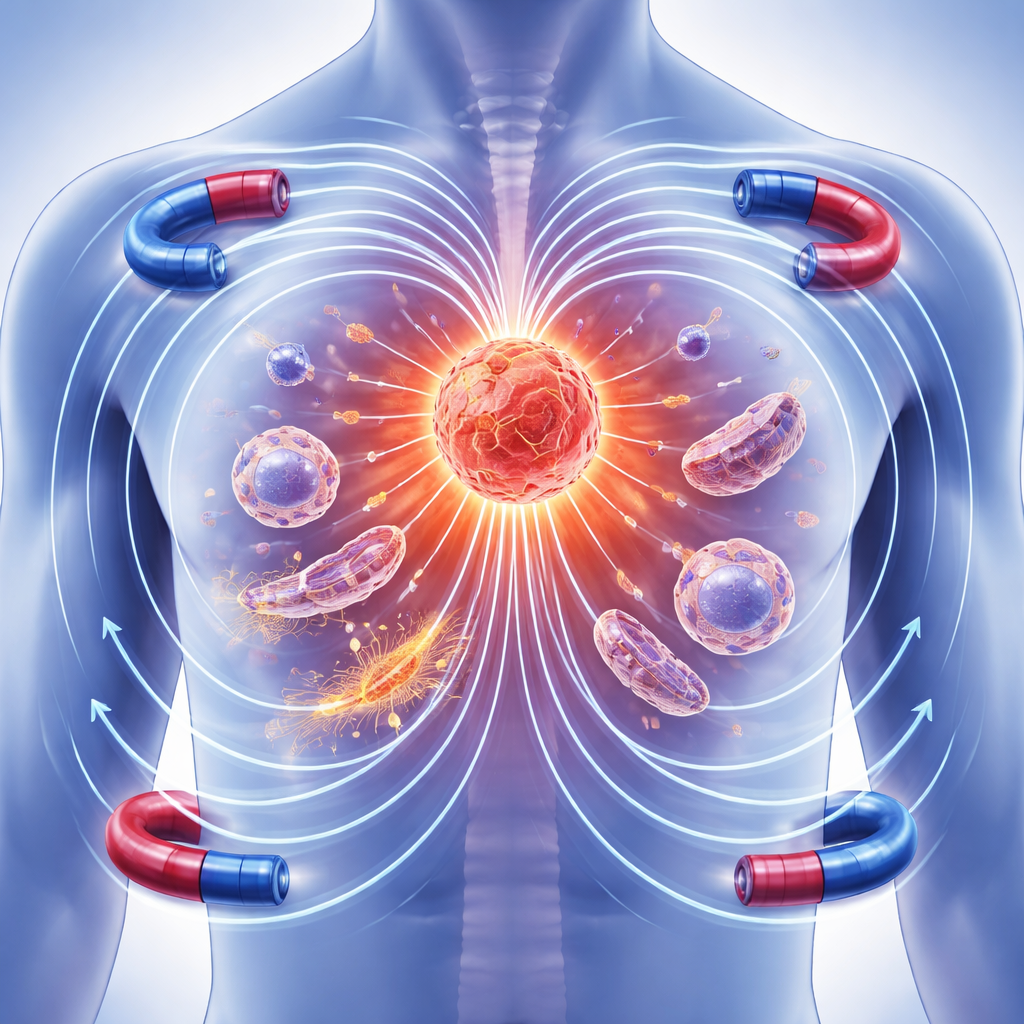
We usually picture magnets as pulling on metal, but inside the body they act on charged particles and molecules. The authors describe three main ways static magnetic fields can influence cells. First, moving charged particles like ions feel a sideways push called the Lorentz force, which can slightly alter their paths. Second, many cell structures—such as protein fibers and membranes—are very weakly repelled or aligned by magnetic fields and can twist to line up, like logs in a slow current. Third, magnets can tweak the behavior of short‑lived “radical pairs,” reactive chemical species that help set how much oxidative stress a cell experiences. Together, these effects can reshape cell architecture, energy use, and signaling.
Targeting the Tumor’s Scaffolding, Skin, and Skeleton
Inside tumors, static magnetic fields have been shown to realign collagen fibers—the protein scaffolding that tumor cells cling to—so that both the fibers and nearby cells change orientation. Cell membranes, including those of tiny power stations called mitochondria, also respond: ion channels can open or close more slowly, membrane voltage can shift, and the flow of calcium into cells can surge or drop. Deeper in the cell, the structural skeleton made of microtubules and actin filaments can re‑orient or break apart under strong fields, disturbing the orderly separation of chromosomes during cell division. In many experiments, these changes slow cancer cell growth, trigger cell death programs, or make cells less able to migrate and invade.
Turning Up Oxidative Pressure and Damaging Tumor DNA
Another major effect of static magnetic fields is on reactive oxygen species—chemically reactive forms of oxygen that can either signal cells to adapt or, at high levels, push them toward death. Across many cancer cell types, exposure to moderate or strong fields increases these reactive molecules or depletes the antioxidants that normally neutralize them. This oxidative pressure can injure DNA, shorten protective chromosome ends called telomeres, and stall DNA copying, leading to arrest in sensitive phases of the cell cycle. However, the response is not uniform: in some contexts or field strengths, magnetic exposure lowers oxidative stress and actually boosts tumor cell growth, underscoring how finely tuned the conditions must be.
Working Hand in Hand with Drugs and Radiation
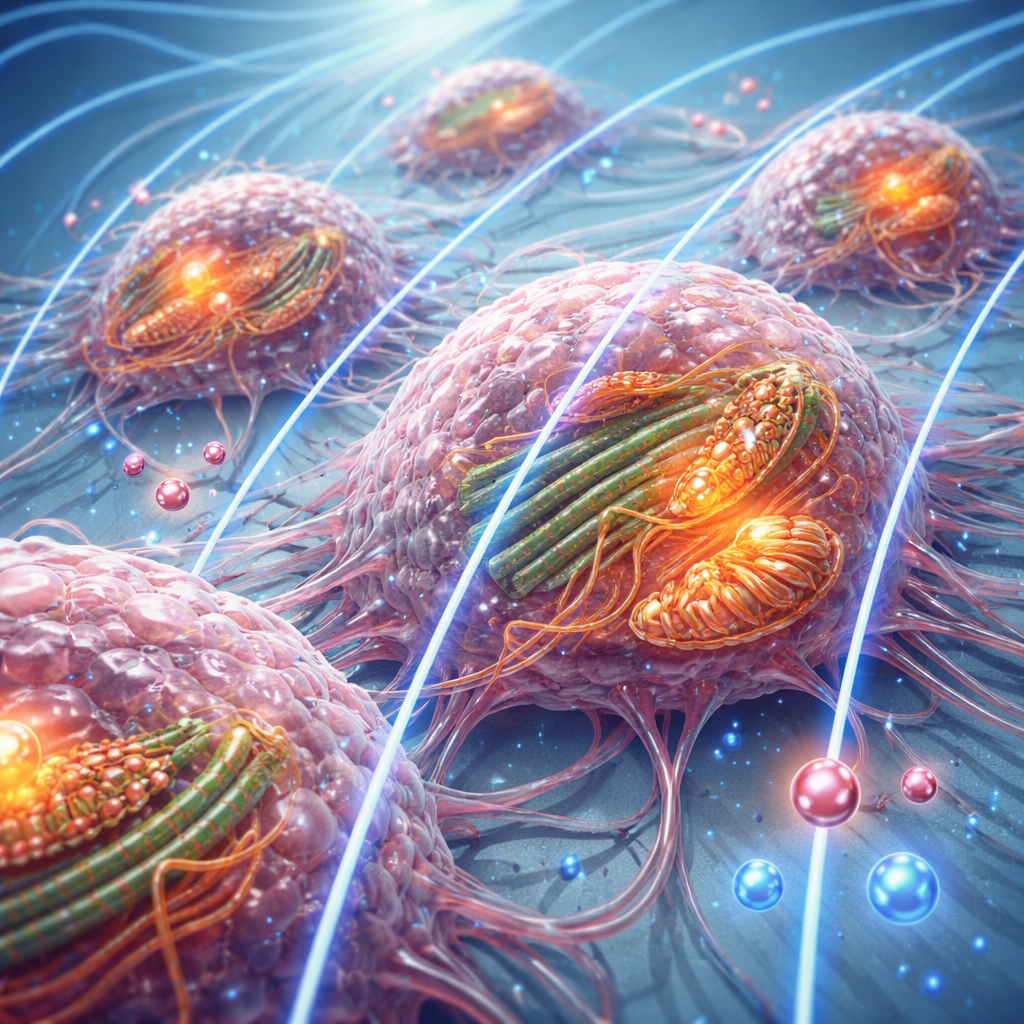
Because tumors are already stressed by chemotherapy and radiation, adding a static magnetic field can tip the balance toward cancer cell death. Studies show that such fields can make tumor cell membranes leakier, increasing the uptake of drugs like cisplatin, doxorubicin, and paclitaxel. They can also heighten drug‑induced oxidative damage, disrupt the microtubules that many drugs already target, and promote cell‑cycle arrest. In animals, carefully oriented magnets placed near tumors have reduced growth and, when paired with drugs, allowed lower doses to achieve similar or better tumor control, sometimes with fewer side effects. Yet magnetic direction, intensity, exposure time, and even tumor cell density all strongly influence outcomes, and in a few cases magnets appear to blunt treatment benefits.
Promise, Pitfalls, and the Road to Real Treatments
For non‑cancerous cells and whole animals, static magnetic fields up to and beyond MRI strengths generally appear safe in short‑term studies, though some cell types show slowed growth while others grow faster or reorient in the field. The review concludes that static magnetic fields are not a magic bullet but a subtle tool: under the right conditions they can strain tumor scaffolds, scramble cell division, and amplify oxidative damage, especially when combined with standard drugs or X‑rays. To turn these “silent forces” into reliable cancer therapies, researchers must map out which field strengths, directions, and exposure patterns selectively hurt tumors while sparing healthy tissues, and must standardize how such experiments are reported so that promising lab findings can be translated into carefully designed clinical trials.
Citation: Verma, P., Varshney, A., Lais, M. et al. Silent forces, hidden currents: the influence of static magnetic field stimulation on tumor biophysics. npj Biomed. Innov. 3, 19 (2026). https://doi.org/10.1038/s44385-026-00071-z
Keywords: static magnetic fields, cancer biophysics, reactive oxygen species, combination therapy, tumor microenvironment