Clear Sky Science · en
Soundscape experience activities and mapping
Why the sounds in our homes matter
Most of us barely notice the sounds that fill our homes—buzzing fridges, passing cars, birds outside the window—until something is too loud or strangely quiet. For older adults who are spending more of their lives at home, these everyday sounds can strongly affect comfort, independence, sleep, and even health. This study introduces a new way to listen to home life through sound, showing how noises and quiet moments shape routines, memories, and the feeling of being at home.
A new way to study everyday listening
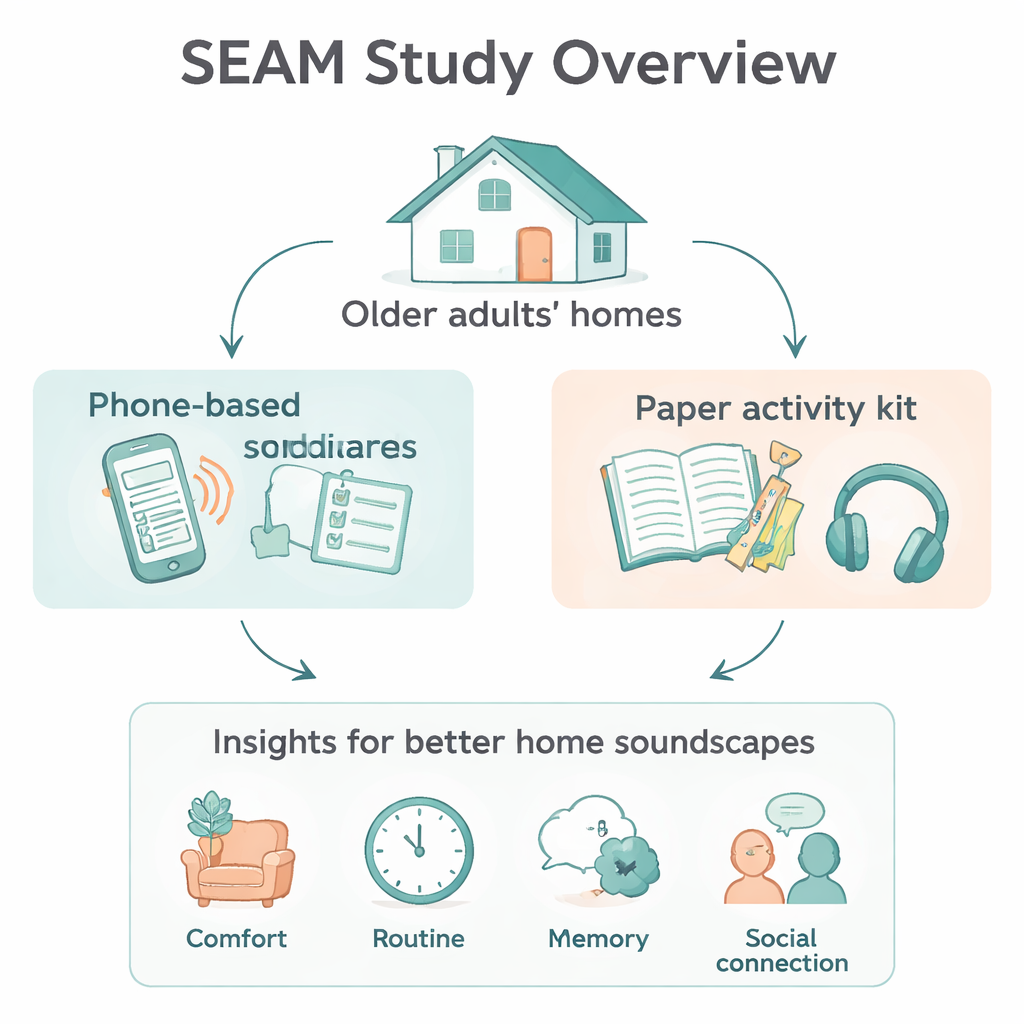
The researchers developed a method called Soundscape Experience Activities and Mapping, or SEAM, to explore how people in their late fifties to mid‑seventies experience sound in their own homes. Eight volunteers in Belgium took part over several weeks. Instead of bringing them into a lab, the team went to where life actually happens: living rooms, kitchens, gardens, and nearby streets. Participants used a smartphone app to make short recordings, rate how pleasant or annoying their surroundings sounded, and write or speak about how those sounds made them feel. They also received a physical “listening kit” with a notebook and simple exercises that encouraged them to pause, listen closely, and jot down what they heard.
How home sounds shape comfort and control
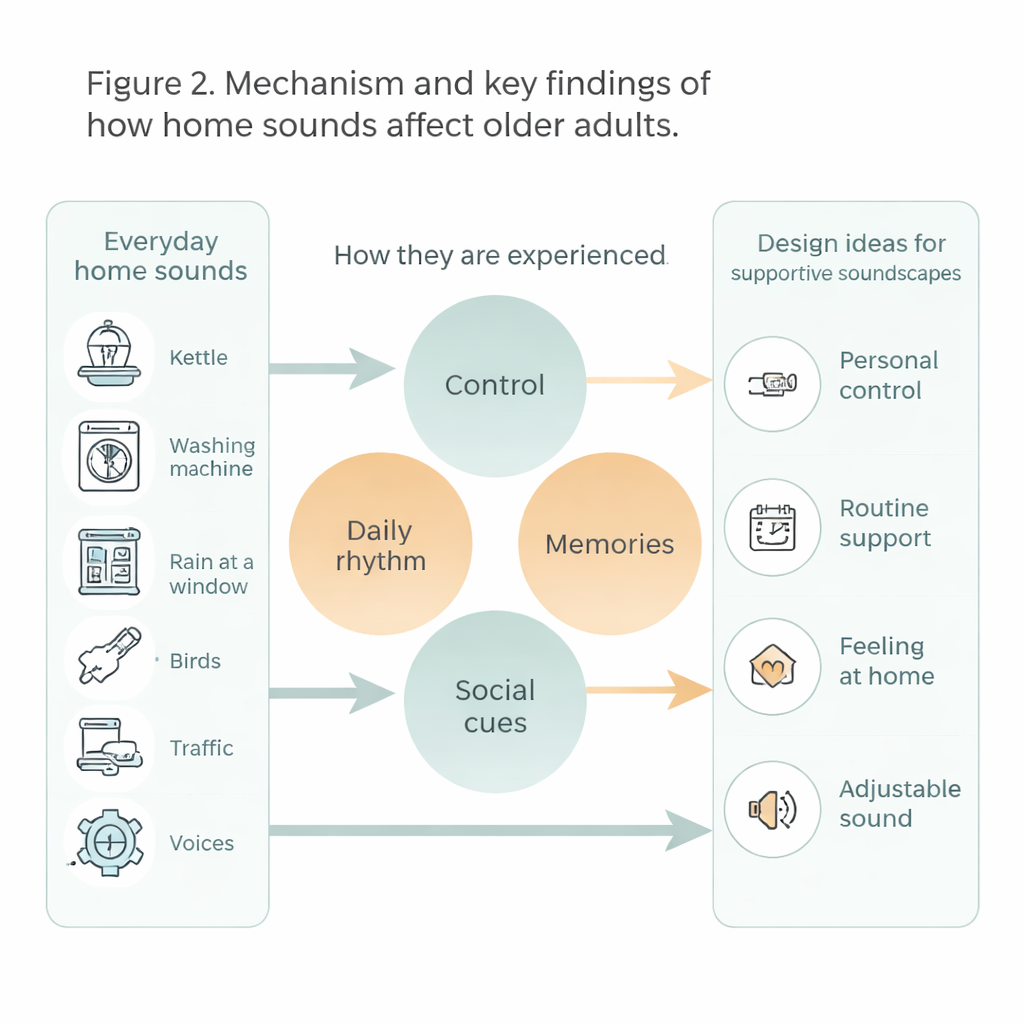
One of the clearest patterns was the tug‑of‑war between sounds people could control and sounds they could not. Many participants described choosing music or natural sounds—like wind or crunching autumn leaves—to create a sense of calm and comfort. Others were bothered by traffic, planes, or loud machines they could not escape. Interestingly, the same sound could feel soothing at one moment and irritating at another. A humming fridge, for example, was sometimes described as a gentle sign of a cozy kitchen and at other times as a sharp, intrusive noise. This showed that how a sound is felt depends not just on its volume, but on mood, activity, and expectations.
The rhythm of daily life in sound
Another strong theme was how sound gives structure to the day. Familiar noises acted like timekeepers: the coffee machine marked the start of the morning, the washing machine signaled chores in progress, cooking sounds meant meals were coming, and the crackle of a wood fire marked the quiet shift into evening. These acoustic cues helped people remember what needed doing and offered reassurance that life was following its usual pattern. For some, hearing a machine finish a cycle brought a sense of satisfaction and independence—proof that they were still managing their own household and routines.
Memories, meaning, and social connection
Home sounds also turned out to be powerful triggers of memory and feeling. Rain on windows brought back childhood scenes; the crunch of leaves recalled walks from decades earlier; a particular piece of music reopened family stories. These moments strengthened people’s attachment to their homes, turning ordinary rooms into places rich with personal history. Sounds also worked as social signals. Footsteps, distant voices, and pets moving around let people keep track of loved ones without needing to see them. Even outdoor noises—like migrating geese or airplanes overhead—sparked reflections on nature, travel, and local politics, linking private homes to the wider world.
Listening as both research and gentle support
Many participants reported that SEAM changed how they listened. Simple tasks like “stop and listen” or writing a short sound diary made everyday noises more noticeable and sometimes more enjoyable. People described feeling more present, more appreciative of quiet moments, and more aware of how sound affected their mood. At the same time, the study revealed practical challenges: smartphone apps can be confusing, frequent prompts can feel demanding, and not everyone enjoys long reflection tasks. The authors suggest refining the method with simpler tools, flexible timing, and better support for older users.
What this means for better homes as we age
In plain terms, this work shows that sound in the home is not just background noise—it is part of how older adults feel safe, capable, and at home in their own space. Supportive sound design will need to do more than just reduce loudness. It should help people control what they hear, protect quiet when they need rest, highlight comforting and meaningful sounds, and keep them connected to people and places they care about. By carefully listening to how older adults talk about their everyday soundscapes, SEAM offers a roadmap for future audio technologies and housing designs that make ageing at home healthier and more satisfying.
Citation: Deacon, T., Frohlich, D. & Plumbley, M.D. Soundscape experience activities and mapping. npj Acoust. 2, 7 (2026). https://doi.org/10.1038/s44384-025-00041-6
Keywords: indoor soundscape, ageing in place, older adults, audio AI, home environment