Clear Sky Science · en
Benefit of physical activity initiatives for climate change mitigation and adaptation
Why Moving Our Bodies Can Help a Warming Planet
Most of us have heard that regular movement is good for our hearts, minds and waistlines. Separately, we are also warned about the growing dangers of climate change. This article brings those two stories together. It explains how the ways we walk, cycle, play, go to school, work and use our cities can both protect our health and ease the strain on a heating planet—if they are designed with fairness and local needs in mind.
A New Way to Connect Exercise and the Climate
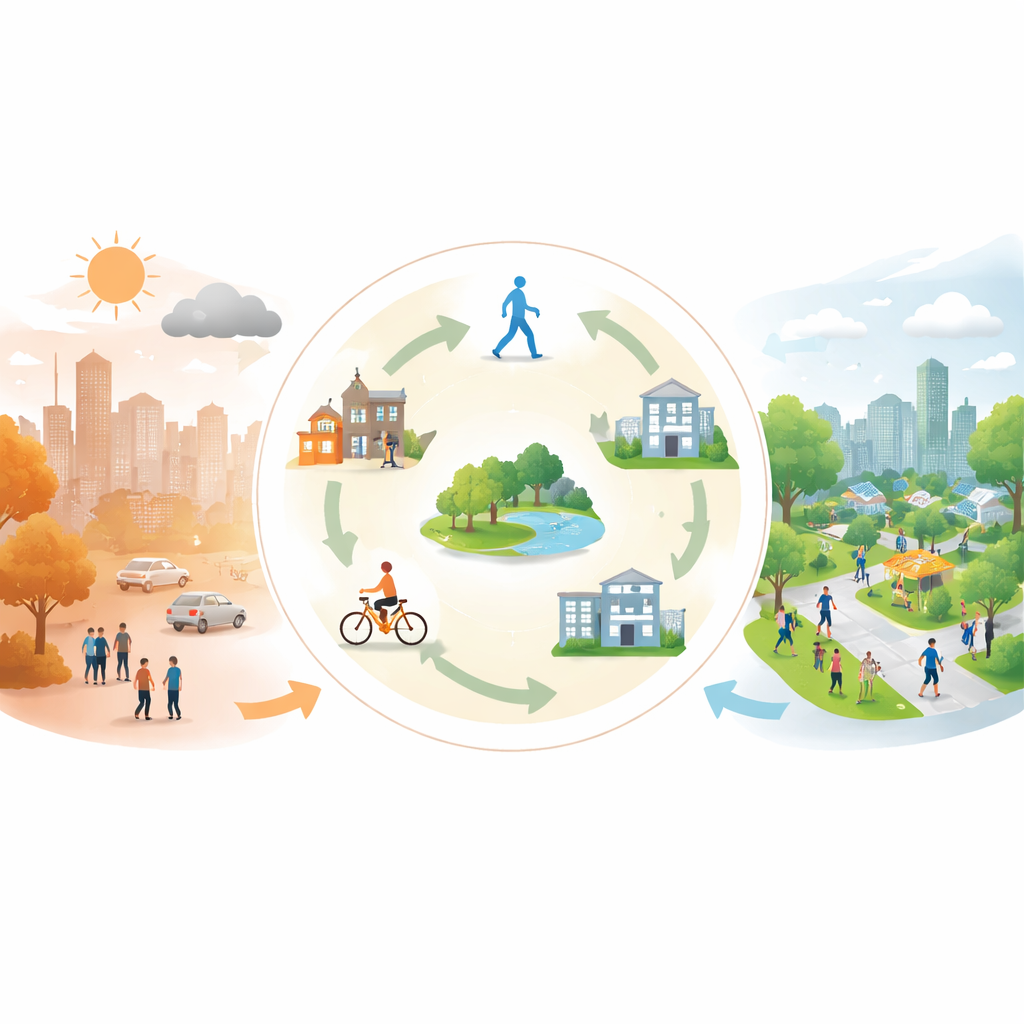
The authors introduce the Physical Activity and Climate Change (PACC) model, a big-picture map of how everyday movement and climate forces influence each other. Climate change, through heatwaves, storms, flooding and polluted air, can make it harder and more dangerous to be active outdoors. At the same time, the choices societies make about transport, buildings, schools, workplaces and sport can either cut or increase greenhouse gas emissions. The model highlights eight major areas where investment in physical activity is known to work—such as safe routes to school, walking and cycling networks, parks, workplace programs and community sport—and shows how each can support both climate action and better health, or unintentionally make things worse if planned poorly.
Designing Cities That Help People Move and Breathe
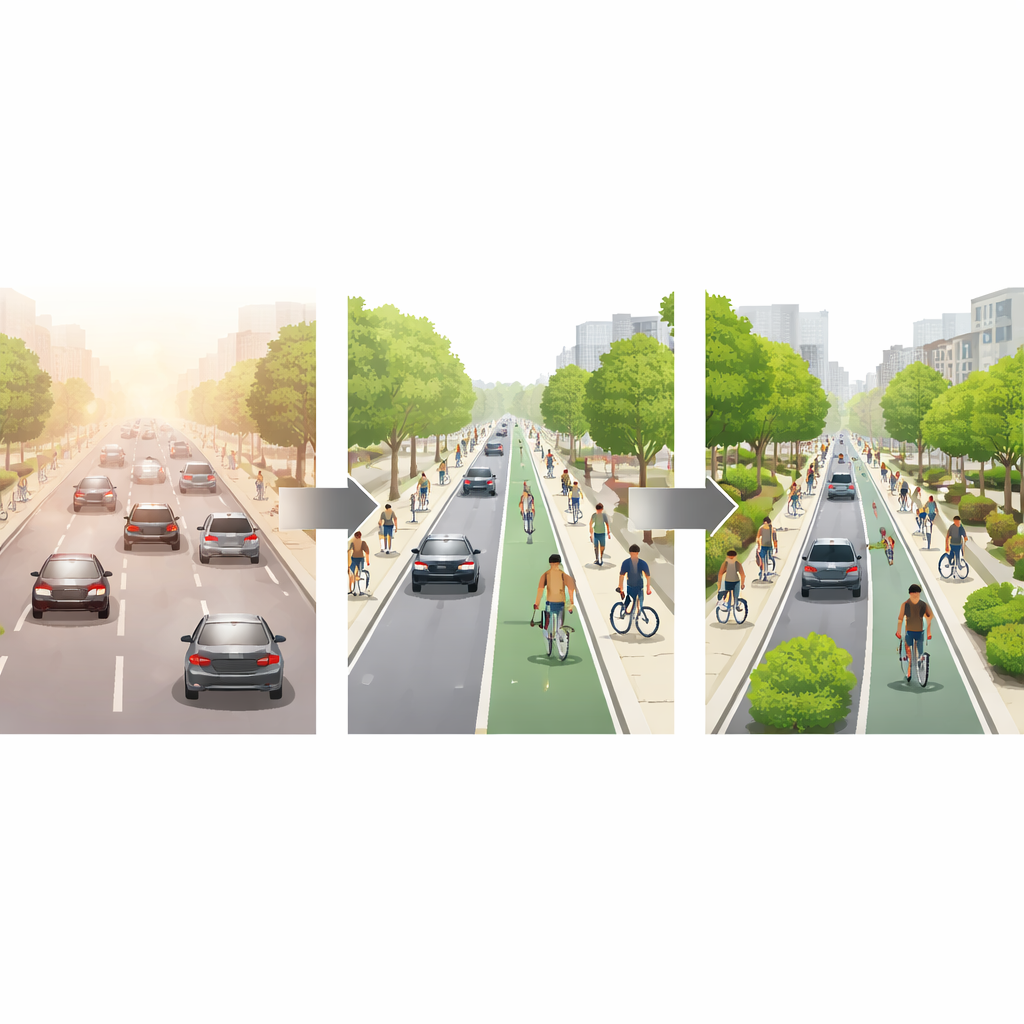
A key focus of the paper is the built environment—the streets, parks and buildings that shape how we move. Drawing on dozens of studies, the authors show that dense, mixed-use neighborhoods with safe sidewalks, bike lanes, trees and nearby shops encourage people to walk and cycle more. A smaller set of studies, mostly from high-income countries, also links these same design choices to lower emissions from cars. However, most of this research comes from wealthier cities, leaving big gaps in knowledge about fast-growing and highly vulnerable regions in the global south. The authors argue that planning for compact, “liveable” neighborhoods can cut car trips and pollution, but must be paired with strong housing and social policies to avoid pushing low-income residents to the outskirts, far from services and safe places to be active.
Keeping People Safely Active in a Hotter World
As extreme heat becomes more common, simply telling people to go outside and move is no longer enough. The paper describes how high temperatures can increase the risk of heat stress and discourage outdoor activity, especially among those who have little choice but to work or travel on foot or by bicycle. A case study from Denver uses cycling app data and weather records to explore how days above 37.7°C affect riding levels. Among enthusiastic cyclists, activity hardly dropped, likely because they shifted their rides to cooler hours. But the authors note that this does not reflect the reality for the broader public, many of whom have fewer options to adapt. They propose climate-smart solutions such as shaded routes, drinking water along walking and cycling paths, cooler work schedules, and more trees and water features to reduce urban heat, rather than relying solely on air-conditioned indoor spaces.
Learning from Local Knowledge and Community Sport
The article stresses that those who contribute least to climate change—such as low- and middle-income countries, Indigenous peoples, migrants and refugees—often suffer its worst health impacts and have the least access to safe, pleasant places to be active. The authors highlight examples where communities are already responding in creative ways. Māori communities in Aotearoa New Zealand draw on ancestral knowledge that treats land and people as one family, using culturally grounded physical activity programs to strengthen both resilience and identity. In Kenya, the Turkana people are combining traditional practices with new efforts like large-scale tree planting to adapt to drought and changing livelihoods. Sport-for-development programs in refugee and low-income settings use games and play to build skills, hope and social ties while encouraging climate awareness.
Avoiding Pitfalls on the Road to Cleaner, Healthier Lives
Even well-meaning initiatives can backfire. The authors warn that major sporting events and energy-hungry facilities can add substantially to emissions, and that compact, trendy neighborhoods or electric-car subsidies can deepen inequality if they mainly benefit the wealthy. Replacing every fossil-fuel car with an electric one does little to ease traffic jams, stress or physical inactivity. In contrast, prioritizing safe walking, cycling and public transport can cut emissions, reduce chronic disease and improve air quality at the same time—provided that older adults, people with disabilities and low-income communities are not left behind. This requires “whole system” collaboration among health, transport, housing, education, business and community groups, with affected communities at the decision-making table.
Moving Together Toward a Fairer, Cooler Future
In everyday terms, the article’s message is simple: if we redesign our streets, schools, parks, workplaces and sports in smart, inclusive ways, we can help people move more while also easing pressure on the climate. Physical activity alone will not solve global warming, and climate policy alone will not fix inactivity. But when these efforts are planned together—with strong community voices, especially from the most affected groups—they can produce healthier bodies, cleaner air, more connected neighborhoods and cities that are better prepared for a hotter, more uncertain future.
Citation: Hinckson, E., Reis, R., Romanello, M. et al. Benefit of physical activity initiatives for climate change mitigation and adaptation. Nat. Health 1, 300–315 (2026). https://doi.org/10.1038/s44360-026-00057-6
Keywords: physical activity, climate change, active transport, urban design, health equity