Clear Sky Science · en
Endocrine disruptors reprogram hepatic metabolic and immune gene networks to promote hepatocellular carcinoma
Hidden chemicals and the liver’s silent struggle
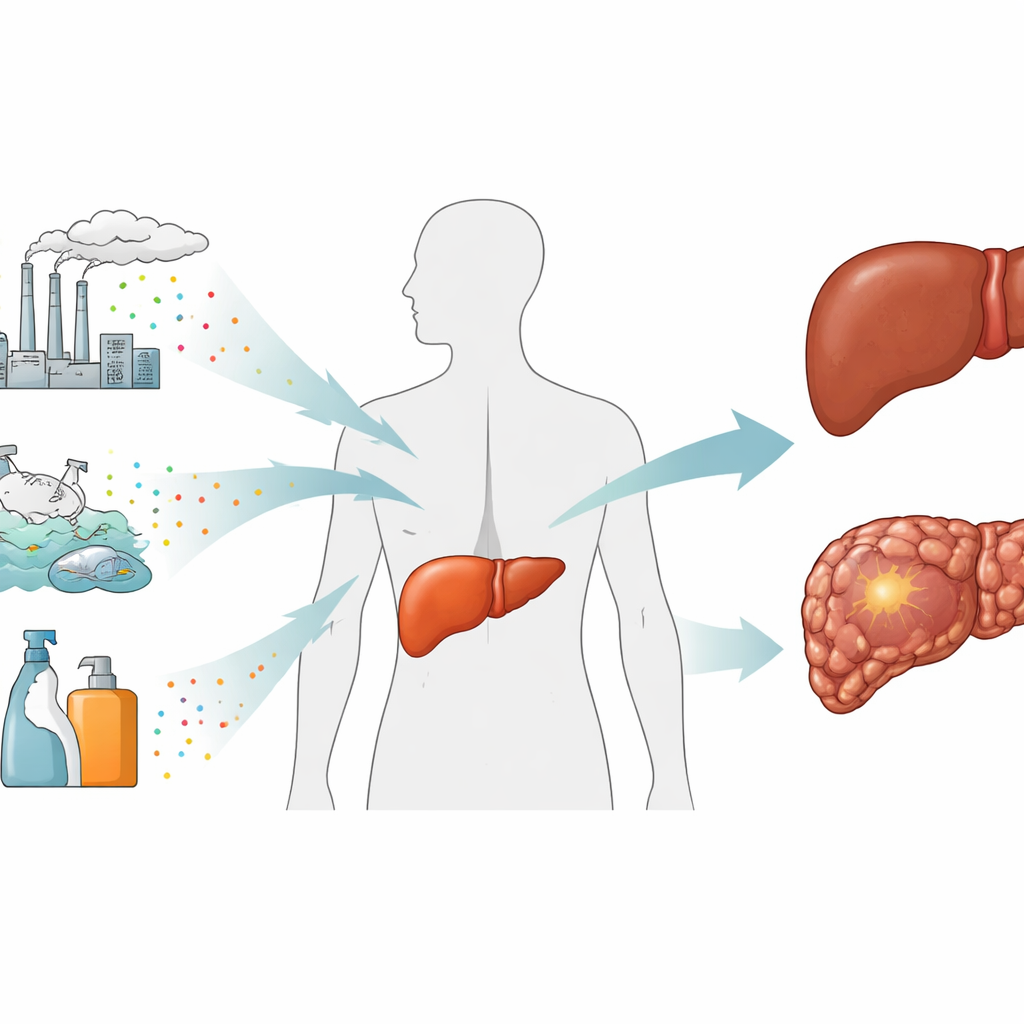
Every day we encounter invisible chemicals in plastics, cosmetics, food packaging, and polluted air and water. Some of these compounds can interfere with our hormones and are known as endocrine-disrupting chemicals. This study asks a pressing question: could long-term exposure to such chemicals quietly rewire the liver and nudge it toward cancer? By sifting through massive genetic and cellular datasets, the authors trace how these contaminants may help drive hepatocellular carcinoma, the most common form of liver cancer.
Modern pollutants meet a vulnerable organ
The liver is the body’s main detox factory, breaking down drugs, processing fats and sugars, and responding to hormones. It is also the primary target of hepatocellular carcinoma, a cancer that is rising worldwide alongside obesity and fatty liver disease. Beyond well-known causes like viral hepatitis and heavy drinking, there is growing concern that hormone-disrupting pollutants such as bisphenol A, phthalates, and certain pesticides contribute to liver damage. These chemicals can mimic or block natural hormones, build up in fatty tissues, and have been detected in human blood and liver samples, making their potential role in liver cancer more than a theoretical risk.
Connecting exposure to gene activity
To explore this link, the researchers built an integrative “multi-omics” framework that layers together several types of biological data. They first compiled thousands of human genes known to respond experimentally to endocrine-disrupting chemicals. They then compared this list with genes that behave abnormally in liver tumors versus nearby healthy tissue from a large cancer database. This overlap yielded 513 genes that are both altered in liver cancer and sensitive to these pollutants. When the team examined what these genes do, they clustered around four major themes: hormone signaling, detoxification of foreign chemicals, fat metabolism, and inflammation and stress responses—all processes that sit at the heart of liver health.
Five key genetic gatekeepers
Finding an overlap was not enough; the authors also asked which genes are likely to play a causal role in cancer risk. Using a genetic technique called Mendelian randomization, which leverages natural DNA variations as a kind of lifelong experiment, they tested whether changes in gene activity are statistically linked to the odds of developing liver cancer. Five genes stood out: ESR1, TP53I3, PLIN2, SLC6A12, and SOCS2. Subtle genetic differences that reduce the activity of four of these genes were associated with higher cancer risk, suggesting protective roles, while higher activity of TP53I3 appeared harmful. Database mining showed that all five genes have been experimentally affected by multiple endocrine disruptors, including well-known pollutants like bisphenol A, diethylhexyl phthalate, and cadmium compounds, implying that many different chemicals may converge on the same critical control points.
What happens inside individual liver cells
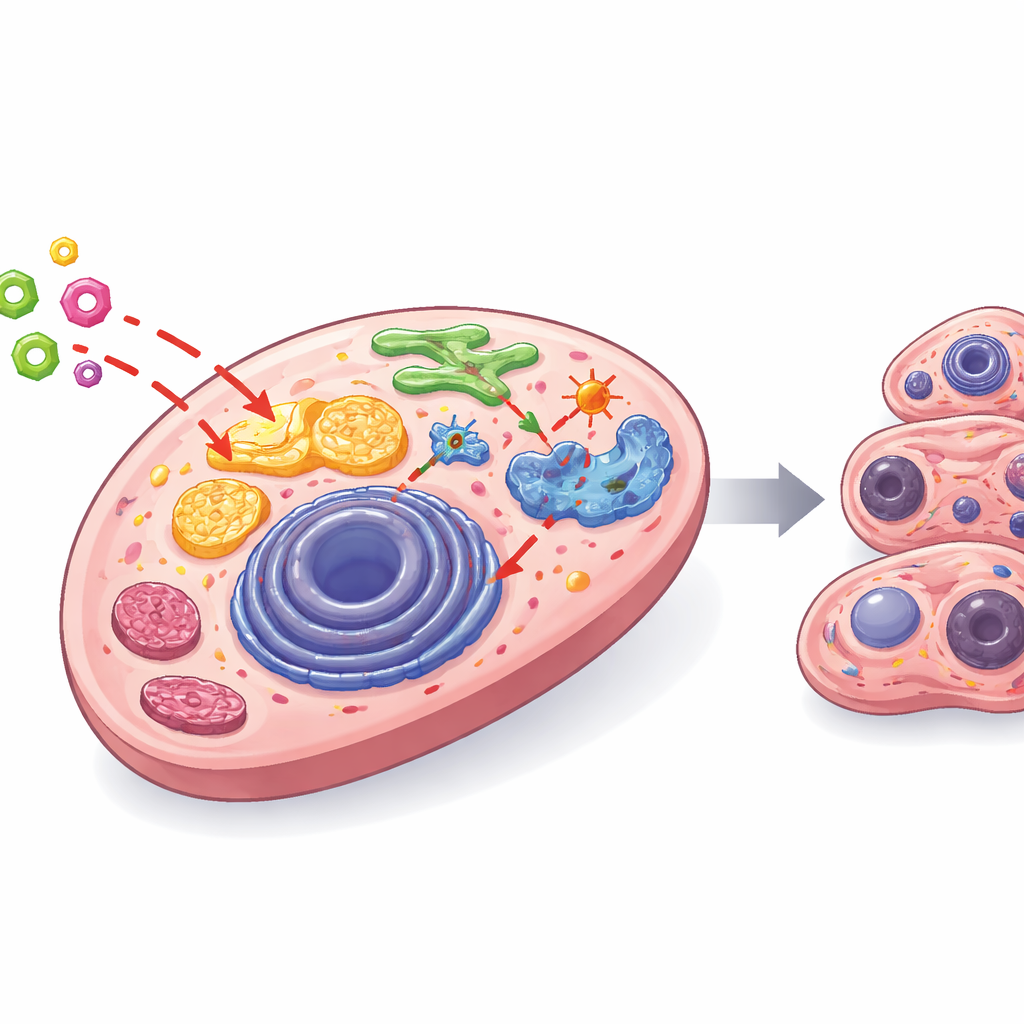
To see where in the liver these genes matter most, the team turned to single-cell RNA sequencing, which measures gene activity in tens of thousands of individual cells from liver tumors. They found that SOCS2 is most active in the cells lining blood vessels, hinting that pollutant-driven changes in blood flow or immune signals in the tumor’s microenvironment could be important. PLIN2 was abundant in immune cells called myeloid cells as well as in liver cells themselves, tying together fat storage and immune responses. ESR1, the gene encoding the estrogen receptor, showed a striking sex pattern: in healthy liver tissue it was higher in women, but in tumors it was lower in women than in men. This flip suggests that endocrine disruptors may weaken a natural estrogen-related shield that often gives women some protection against liver cancer.
Why this matters for health and prevention
Taken together, the findings support a picture in which chronic exposure to hormone-disrupting pollutants gradually disrupts the liver’s hormone responses, fat handling, and immune balance. Over time, this coordinated “reprogramming” of gene networks may create a fertile ground for liver cancer to arise and grow. While the study relies on existing data and still needs experimental confirmation, it highlights specific genes and cell types that could serve as early warning markers of harmful exposure, or as future drug targets. Most importantly for the general public, it strengthens the case for treating endocrine-disrupting chemicals as a modifiable risk factor—something that can be reduced through smarter regulation, safer product design, and informed personal choices to help protect the liver long before cancer appears.
Citation: Hong, Y., Wang, Y., Chen, Q. et al. Endocrine disruptors reprogram hepatic metabolic and immune gene networks to promote hepatocellular carcinoma. npj Gut Liver 3, 11 (2026). https://doi.org/10.1038/s44355-026-00060-4
Keywords: endocrine disruptors, liver cancer, hepatocellular carcinoma, environmental pollutants, hormone disruption