Clear Sky Science · en
Assessing subway ridership resilience under extreme weather with vine copula modeling
Why Weather and Subways Matter to City Life
When the weather turns nasty, city life does not stop—but it does change. For millions of people who rely on the New York City subway, heavy rain, heat waves, or bitter cold can make the difference between boarding a train as usual or staying home. This study looks closely at how subway ridership in New York responds to extreme weather, and how those responses differ from station to station and from rush hour to the quiet middle of the day. By understanding these patterns, planners can better prepare the system for a warming, wetter, and more volatile climate.
Following People Through the Underground Web
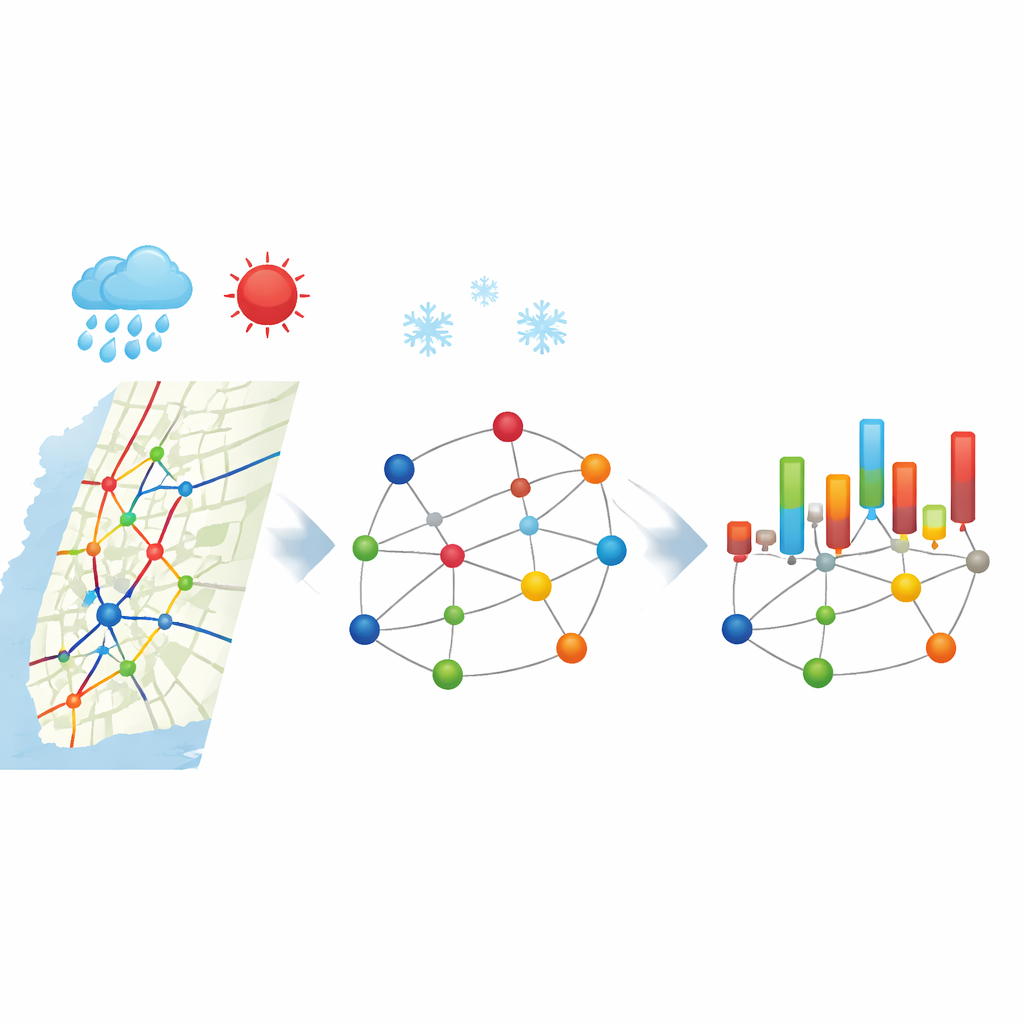
The subway is more than a set of separate stations: it is a web of linked places whose fortunes rise and fall together. Ridership at one stop often moves in tandem with nearby hubs or with stations that share many of the same riders. Past research typically treated stations as if they reacted to weather in isolation, or relied on black-box machine learning tools that are hard to interpret. In contrast, this study focuses on how groups of key stations in Manhattan, Queens, and Brooklyn move together over the course of each hour, and how those relationships change when the weather turns extreme.
A Flexible Map of Hidden Connections
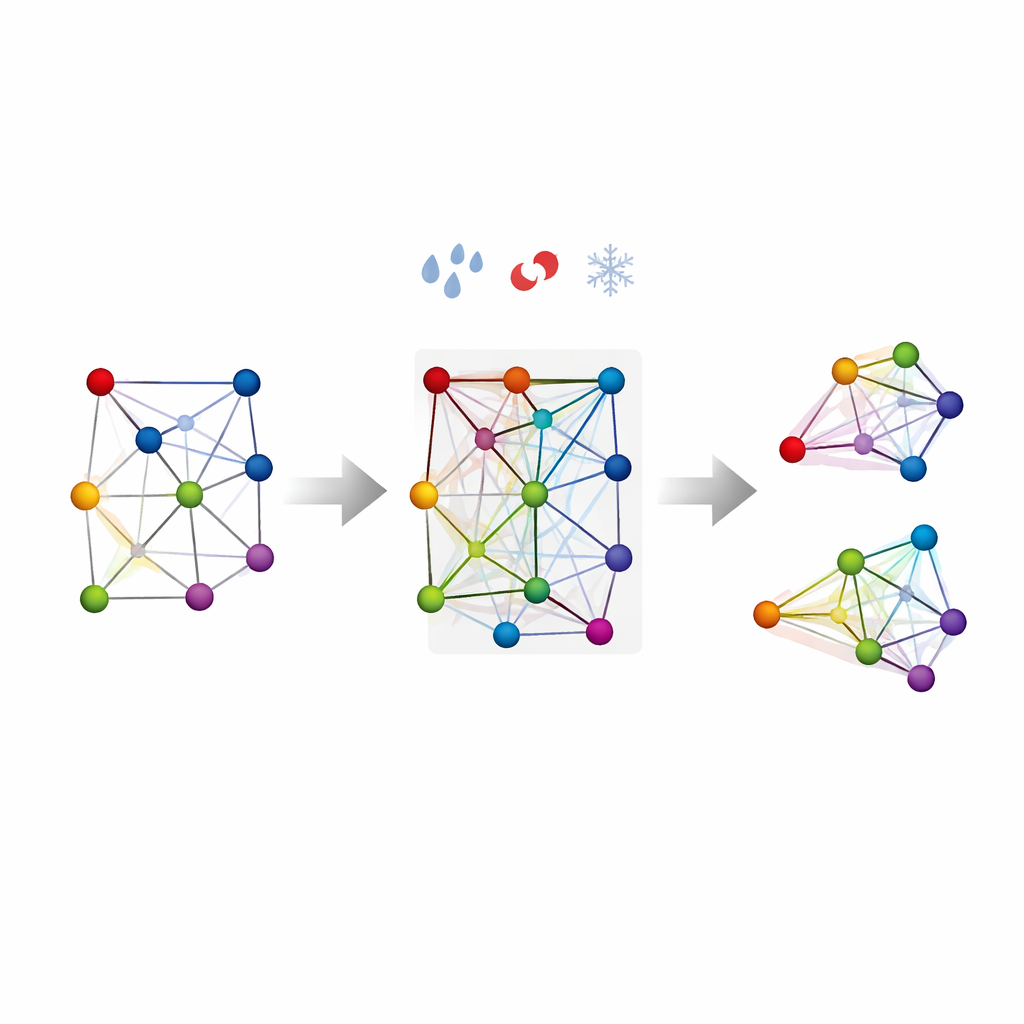
To reveal those hidden links, the researchers used a statistical approach known as a vine copula. Rather than assuming simple, straight-line relationships, this method builds a flexible network of pairwise connections between stations and between neighboring hours of the day. It starts by modeling each station’s hourly ridership pattern on its own, then stitches them together into a full joint picture that captures both typical days and rare events. With this structure in hand, the team can generate realistic synthetic ridership patterns under many kinds of weather, including conditions that occur only a handful of times in the real data. Tests show that these simulated patterns closely match observed ridership, especially during morning and evening rush hours.
How Riders React When Weather Turns Extreme
Armed with this model, the authors compared ridership distributions under three types of extreme weather—very cold days, very hot days, and heavy rain—to baseline conditions with mild temperatures and no rain. They examined both peak hours, when commuters crowd trains, and off-peak periods, when trips are more optional. Heavy rain during peak hours produced the steepest drops in ridership, with some busy stations seeing typical declines of around one-fifth to nearly one-third compared with normal weather, and a wide range of possible outcomes. In contrast, freezing temperatures had only modest effects on rush-hour trips but cut more deeply into off-peak travel, suggesting that people are more willing to skip shopping or social visits than to miss work or school on cold days. Extreme heat reduced ridership in both peak and off-peak periods, with somewhat stronger impacts when trains and platforms were most crowded.
Stronger Hubs, More Exposed Edges
The study also shows that not all stations are equally vulnerable. Major hubs in Manhattan’s core—such as Grand Central and Union Square—tend to bounce back better under stress, with smaller median declines and more predictable behavior. Outer-borough stations, including busy terminals in Queens and Brooklyn, often experience larger and more uncertain drops. Stations that sit at the center of the model’s network of dependencies, meaning that their ridership is tightly linked with many others, generally show greater resilience and more stable responses to bad weather, particularly outside peak hours. Still, the picture is nuanced: some central Manhattan locations, like Columbus Circle, can be hit especially hard by heavy rain, reflecting local station design, crowding, and access conditions.
What This Means for Riders and Planners
For everyday riders, the results confirm an intuitive story: when the weather is dreadful, the subway remains a lifeline for essential trips but discretionary travel drops, and the pain is unevenly shared across the network. For planners and decision-makers, the vine copula framework offers a powerful way to test “what if” scenarios for rare but damaging events, even when historical data are sparse. By pinpointing which stations and time periods are most exposed—to downpours, heat waves, or cold snaps—the method can guide targeted upgrades such as better shelter, improved drainage, cooling and ventilation, or added service where it is needed most. In short, the work provides a data-driven map of how weather and human behavior interact underground, helping cities invest wisely in a more climate-resilient transit system.
Citation: Guo, Y., He, B.Y., Chow, J.Y.J. et al. Assessing subway ridership resilience under extreme weather with vine copula modeling. npj. Sustain. Mobil. Transp. 3, 25 (2026). https://doi.org/10.1038/s44333-026-00094-4
Keywords: subway ridership, extreme weather, urban resilience, New York City transit, demand modeling